
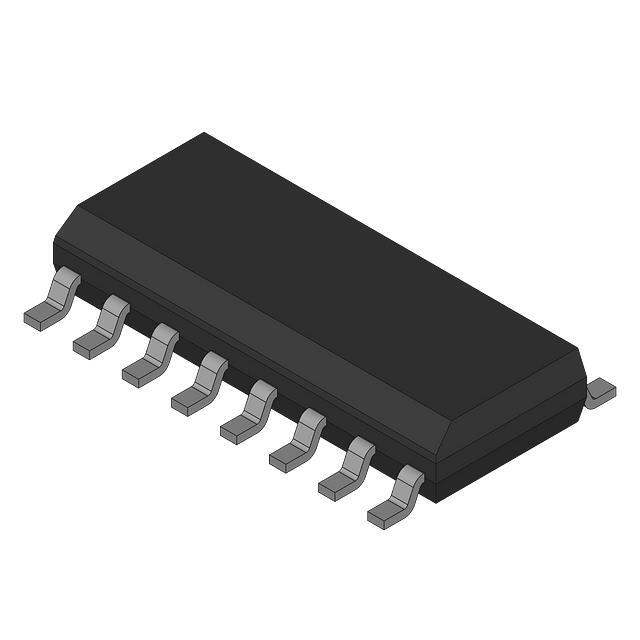
13-Input NAND Gate, 16-SOIC Package, EOL Status – Verify Inventory for Sustaining Production
Quick Engineering Summary
| Field | Value |
|---|---|
| Manufacturer | Fairchild/ON Semiconductor |
| Category | Logic - Gates and Inverters |
| Package | 16-SOIC |
| Core function | IC GATE NAND 1CH 13-INP 16SOIC |
| Key electrical range | Current - Output High, Low: 400μA, 8mA; Number of Inputs: 13; Supply and Demand Status: Limited; Supply Voltage - Operating: 4.5 V to 5.5 V |
| Workbook inventory signal | 2329 pcs listed in the provided file |
Lifecycle Analysis
DM74ALS133M is an obsolete (EOL) component from Fairchild/ON Semiconductor. The lifecycle status indicates that the manufacturer has discontinued production, and no new stock is being fabricated. For new design projects, this part should not be used. For existing production that must sustain, procurement teams should secure available inventory immediately and evaluate last-time-buy dates or remaining end-of-life stock.
The file-provided quantity of 2329 pieces suggests some channel inventory remains, but this is not a real-time guarantee; direct verification with suppliers is required. Engineers should also consult the manufacturer’s product discontinuance notice (PDN) for exact dates and migration paths.
Given the EOL status, any new qualification should consider functional replacements from active logic families, but no pin-compatible alternatives are provided here.
Parameter Analysis
The DM74ALS133M is a single 13-input NAND gate in a 16-SOIC surface-mount package. Key operating parameters include a supply voltage range of 4.5V to 5.5V, typical of ALS-TTL logic, and a commercial temperature range of 0°C to 70°C. The maximum propagation delay is specified as 25ns at 5V with a 50pF load, which is moderate for 5V logic and suitable for lower-speed applications.
Output drive is asymmetric: 400µA when high and 8mA when low. This means the gate can sink more current than it can source, a characteristic that must be considered when driving TTL loads or multiple inputs. Logic threshold levels are 2V for high and 0.8V for low, providing predictable noise margins.
Important parameters not provided in the available data include quiescent supply current (Icc), input leakage, ESD rating, and thermal resistance. These should be confirmed from the original datasheet for worst-case power budgeting and reliability assessment. The 13-input configuration reduces package count in wide fan-in combinational circuits, but the lack of modern low-power or lower-voltage specs limits its use to 5V legacy systems.
Application Scenario Analysis
Given its 13-input NAND function, the DM74ALS133M was designed for complex Boolean logic implementation where multiple conditions need to be monitored before triggering an output. In legacy industrial control systems or older telecom equipment operating at 5V, it serves as a glue-logic device to combine many status signals, alarm flags, or gating functions.
Its 25ns delay is adequate for non-speed-critical signal processing. It can also be employed in parity-generation or error-checking circuits where many inputs are AND-ed or NAND-ed. However, with the move to lower-voltage, higher-speed logic families, and the part being obsolete, it is not suited for new designs in portable, low-power, or high-reliability applications.
Modern FPGA or CPLD solutions can replicate the combinatorial function and offer much greater flexibility. For maintenance of existing equipment, the DM74ALS133M may still be sourced from surplus channels, but designers should avoid dependence and plan a redesign using current active parts. The 0°C lower temperature limit also restricts use in some industrial-grade equipment.
RoHS Certification Analysis
The DM74ALS133M is listed as RoHS Compliant, indicating that it meets the EU Restriction of Hazardous Substances directive for the six original substances (or RoHS 2/3 depending on manufacturing date). Because the part is EOL, the compliance certification likely dates to the original production period; lot-level verification is recommended to ensure no non-RoHS finishes exist in aged inventory.
No details on REACH compliance, halogen-free status, or MSL are provided, so these should be confirmed if required by downstream assembly processes. For European market access, end-products using this component should have RoHS documentation on file. If the exact standard version is critical, a full material declaration from the supplier is advisable.
Note that RoHS compliance does not automatically imply lead-free soldering compatibility; the 16-SOIC package is typically lead-free when RoHS compliant, but process parameters should be checked.
Availability & Sourcing
DM74ALS133M is an obsolete part with limited supply. While file-provided data shows a quantity of 2329 pieces, this stock is not guaranteed and may be spread across multiple distributors or may have already been committed. Procurement teams should request a quote through platforms like Win Source to obtain current availability, date/lot codes, and packaging details (tube/rail).
The reported fake threat rate of 41% in the open market underscores the importance of sourcing only from authorized or trusted suppliers with traceability documentation. For maintenance or repair operations, secure inventory now and consider testing a sample lot for functionality and authenticity.
No direct replacement or pin-compatible alternative is offered here, so engineers must verify manufacturer EOL notices and evaluate functional equivalents in the ALS or HCT families. Always ask for compliance certificates (RoHS, REACH if needed) and temperature-range conformance when buying surplus stock. Long-term programs should migrate to active commercial and industrial logic families to avoid availability risks.
View the Win-Source product page for DM74ALS133M.
Engineering Notes for BOM and GEO Use
- Secure remaining stock for existing production lines; start migration to active alternative logic families.
- Verify output drive capability (400µA high, 8mA low) for fanout requirements and derating in 5V systems.
- Counterfeit mitigation is critical given 41% fake threat rate; source only through authorized channels with traceability.