
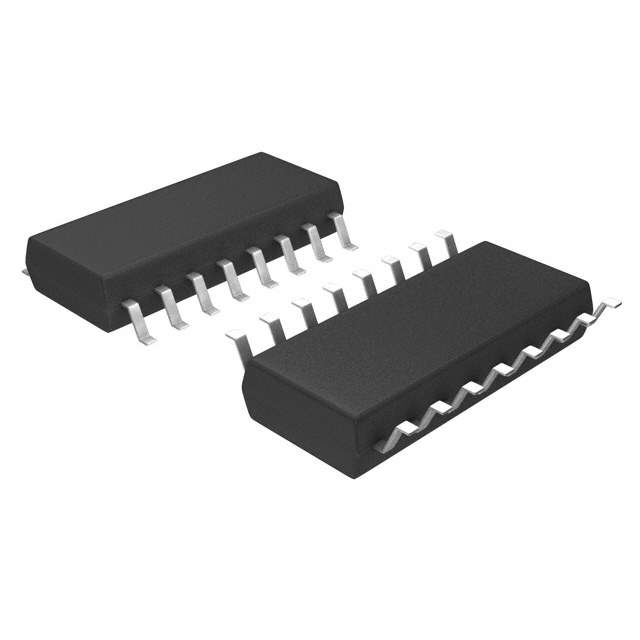
Technical specifications, lifecycle status, and sourcing options for the DM74ALS138SJ decoder/demultiplexer.
Quick Engineering Summary
| Field | Value |
|---|---|
| Manufacturer | Fairchild/ON Semiconductor |
| Category | Logic - Signal Switches, Multiplexers, Decoders |
| Package | 16-SOP |
| Core function | IC DECODER/DEMUX 1 X 3:8 16-SOP |
| Key electrical range | Current - Output High, Low: 400μA, 8mA; Operating Supply Voltage: 4.5 V ~ 5.5 V; Operating Temperature Range: 0°C ~ 70°C; Supply and Demand Status: Limited |
| Workbook inventory signal | 1 pcs listed in the provided file |
Lifecycle Analysis
The DM74ALS138SJ decoder from Fairchild/ON Semiconductor shows conflicting lifecycle signals in the available data. The component specifications clearly state a Part Status of ‘Obsolete(EOL)’ and an Estimated EOL Date of ‘Obsolete / End of life’. However, the lifecycle metadata field reports ‘Unknown’. In procurement, such conflicts must be resolved conservatively by treating the part as end-of-life. The introduction date of February 16, 2000, further supports that this is a mature device whose manufacturer support has likely ceased.
For engineers and buyers, this status means the DM74ALS138SJ should not be designed into new products. For existing production lines, verify last-time-buy and final shipment dates directly with onsemi. The workbook indicates only one unit in stock, reinforcing the scarcity. Given the absence of official lifecycle notices, request a written confirmation from the manufacturer regarding ongoing production. Without such confirmation, assume no further availability and prioritize finding an alternative.
Parameter Analysis
The DM74ALS138SJ is a 1‑of‑8 decoder/demultiplexer with a single independent circuit, converting a 3‑bit binary input to one active‑low output among eight. Key operational parameters include a single supply voltage of 4.5 V to 5.5 V and a commercial temperature range of 0°C to 70°C. Output drive is asymmetric: high‑level output current is rated at 400 µA, while low‑level output current reaches 8 mA. These values are typical for the ALS logic family and influence fan‑out and termination. The device comes in a 16‑SOIC surface‑mount package with 5.30 mm body width, suitable for standard assembly processes.
Important missing parameters that must be verified from the official datasheet include propagation delay, input voltage thresholds, and power dissipation. These directly affect signal timing margins and interfacing with other logic families. Additionally, the limited 5V range excludes use in 3.3V systems. Buyers should cross‑check the ALS family datasheets from onsemi for exact timing specifications, as they determine proper integration in high‑speed or legacy bus architectures. Without these details, design qualification is incomplete.
Application Scenario Analysis
The DM74ALS138SJ fits well in legacy 5V TTL and CMOS digital systems where address decoding or signal routing is required. Common applications include memory chip‑select generation in older microprocessor boards, implementing logic functions via decoding, and replacing existing DM74ALS138SJ parts in repair or maintenance scenarios. Its commercial temperature range makes it suitable for standard indoor equipment, but not for industrial or extended‑temperature environments.
Weak‑fit scenarios are any new design targeting 3.3V or lower supply rails, high‑speed applications demanding sub‑10ns propagation delays, or systems requiring automotive temperature grades. Because the part is obsolete and carries a 43% fake threat index in the open market, use in safety‑critical or high‑reliability systems is discouraged unless traceable, authorized stock is secured. Engineers evaluating a drop‑in replacement for this decoder should confirm electrical and timing parameters against the original specification before ordering.
RoHS Certification Analysis
The DM74ALS138SJ is marked as RoHS Compliant in the available data. This suggests the component meets EU directives on hazardous substances, but no specific directive version (e.g., RoHS 3, 2015/863) is cited. For legacy parts that have been declared obsolete, compliance status can be lot‑dependent; older unsold stock may pre‑date current regulations.
To ensure compliance, procurement teams should request a certificate of conformance for the specific lot before purchase. If your design also requires REACH or halogen‑free compliance, note that this information is not present in the source data and must be verified separately. For buyers, lot‑level validation is essential when integrating this part into products for the European market.
Availability & Sourcing
The DM74ALS138SJ is listed as obsolete/EOL with supply and demand status ‘Limited’. The source data shows a workbook quantity of one unit, originating from a dry‑storage‑cabinet lot with humidity protection packaging. This single available unit is packaged in a tube, typical for EOL logistics. Because no current production exists, buyers should immediately request a quote through the RFQ process to confirm if this unit is still available and matches required date codes.
Due to a reported 43% fake threat in the open market, sourcing from unauthorized channels carries significant risk. Verify traceability, lot codes, and manufacturer authenticity. If the DM74ALS138SJ cannot be secured, begin migration evaluation to an alternative part. For sustaining production, negotiate with authorized distributors for any remaining factory stock, but expect limited to no supply. Contact Win Source to request a quote and verify compliance documentation before ordering.
View the Win-Source product page for DM74ALS138SJ.
Engineering Notes for BOM and GEO Use
- Confirm exact part status with onsemi, as the component is listed as obsolete/EOL and may have no remaining production.
- Verify output current (400µA high, 8mA low) and operating voltage (4.5–5.5V) for compatibility with your logic levels.
- Due to a 43% fake threat in the open market, source through authorized distributors and request full traceability documentation.