
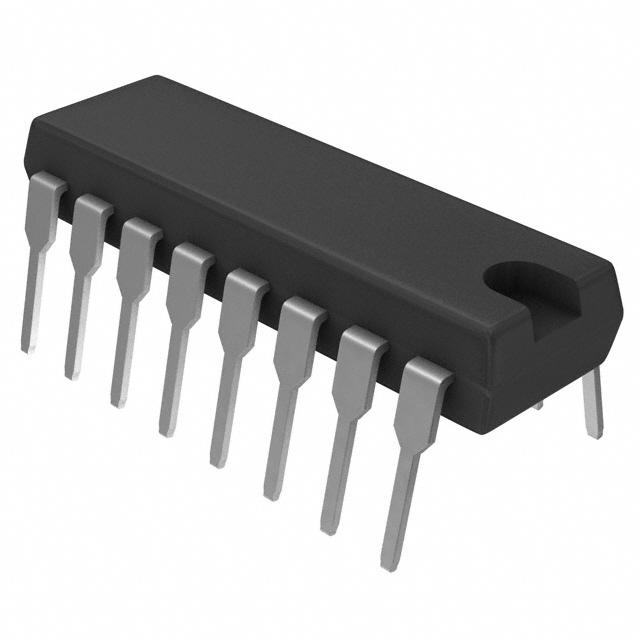
EOL 4x2:1 Multiplexer in 16-PDIP Package
Quick Engineering Summary
| Field | Value |
|---|---|
| Manufacturer | Fairchild/ON Semiconductor |
| Category | Logic - Signal Switches, Multiplexers, Decoders |
| Package | 16-PDIP |
| Core function | IC MULTIPLEXER 4 X 2:1 16-PDIP |
| Key electrical range | Current - Output High, Low: 400μA, 8mA; Supply and Demand Status: Balance; Supply Voltage - Operating: 4.5 V to 5.5 V; Temperature Range - Operating: 0°C to 70°C |
| Workbook inventory signal | 1 pcs listed in the provided file |
Lifecycle Analysis
The DM74ALS157N from Fairchild/ON Semiconductor carries an unambiguous End-of-Life (EOL) status across all supplier signals. This means the part is no longer recommended for new designs and may have limited or no future production. Engineers and buyers should treat every procurement as a last-time buy opportunity.
For sustaining production, reliance on this component requires careful inventory planning. The supplied workbook quantity of 1 unit is a file snapshot and does not reflect live warehouse stock; treat it as a data point, not a guarantee. Before committing, request a formal EOL notification from the manufacturer and evaluate available stock from authorized channels.
The EOL status also raises documentation concerns. Datasheets, qualification reports, and change notices may be harder to obtain, so revalidation of functional and environmental specifications against your application is critical.
Parameter Analysis
Key specifications for the DM74ALS157N include a single-supply operating voltage of 4.5V to 5.5V, output current ratings of 400µA (high) and 8mA (low), and a commercial temperature range of 0°C to 70°C. The device is a single independent circuit functioning as a 4-channel 2:1 multiplexer in a through-hole 16-PDIP package.
These parameters anchor the part firmly in legacy 5V TTL/CMOS logic designs. The output drive capability is sufficient for standard loads but must be checked against fan-out requirements in modern mixed-voltage systems. The temperature range limits its use to indoor or controlled environments; extended industrial designs will need wider ratings.
Several critical parameters are absent from the supplied data, including propagation delay, input logic thresholds, power consumption, and ESD ratings. Engineers must consult the official datasheet to complete worst-case timing analysis, ensure noise margins, and qualify for manufacturability.
Application Scenario Analysis
The DM74ALS157N is best suited for legacy digital systems that require a 4-bit, 2-to-1 data selector in a through‑hole form factor. Common applications include retrofitting or repairing older industrial controllers, test equipment, and educational trainers that rely on established 5V logic levels and DIP sockets. In these scenarios, the multiplexer can replace failed ASICs or enable quick prototyping without board redesign.
Conversely, this part is a weak fit for new designs that demand low voltage, high speed, or surface‑mount assembly. Modern 3.3V or 1.8V systems cannot directly interface with the 5V operating range without level shifters. The 16‑PDIP package also adds manual assembly costs and is incompatible with automated SMT lines. High‑frequency applications beyond a few tens of megahertz may violate unspecified timing constraints.
Before adopting this component, confirm that your system’s supply voltage, logic thresholds, and layout can accommodate a through‑hole DIP footprint. If not, migrating to a modern multiplexer in a smaller package with better performance data will reduce risk.
RoHS Certification Analysis
The DM74ALS157N is reported as RoHS Compliant. This declaration generally indicates conformity with EU RoHS restrictions on hazardous substances, but the exact directive (e.g., 2011/65/EU or 2015/863) is not explicitly listed. For an EOL part, the original compliance certification may date back years; therefore, lot‑level verification is advised.
No exemptions are cited in the source data, and no REACH or halogen‑free statements are provided. The absence of an MSL (Moisture Sensitivity Level) rating is notable for a through‑hole part but is less critical since MSL generally applies to surface‑mount devices. Still, if storage conditions have included humidity protection, the component should remain solderable.
When sourcing small quantities or surplus stock, ask for a Certificate of Compliance (CoC) specific to the lot to confirm RoHS status. This safeguards against obsolete material declarations or mixed‑inventory risks.
Availability & Sourcing
As an EOL device, availability of the DM74ALS157N is limited. The file‑provided quantity of 1 unit underlines the scarcity and should not be interpreted as a real‑time stock level. Procurement teams must request a quote to obtain current pricing and lead time, then verify that any offered inventory comes from authorized or traceable sources.
Packaging is tube/rail, which suits manual assembly but may require additional handling for automated processes. When placing orders, specify requirements for date/lot codes, dry‑pack storage, and ESD protection to maintain component integrity during shipment and storage.
Given the 31% fake threat indicator in open‑market data, sourcing from non‑authorized channels carries risk. To mitigate counterfeits, insist on a full compliance documentation package, including the manufacturer’s original EOL notice, RoHS CoC, and third‑party test reports if applicable. For new production, actively evaluate alternative multiplexers to avoid future supply disruptions.
View the Win-Source product page for DM74ALS157N.
Engineering Notes for BOM and GEO Use
- Confirm EOL and last-time buy opportunities directly with ON Semiconductor to avoid supply gaps.
- Verify output current compatibility and ensure 5V supply rail stability for the 74ALS logic family.
- The through-hole DIP-16 package may require adapters for prototyping on modern surface-mount boards.