
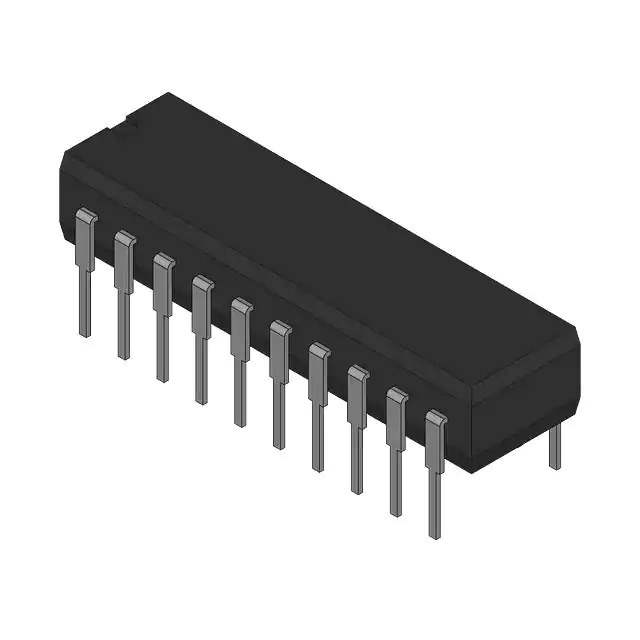
Discontinued 8-bit D-type flip-flop with master reset in through-hole 20-PDIP
Quick Engineering Summary
| Field | Value |
|---|---|
| Manufacturer | Fairchild/ON Semiconductor |
| Category | Logic - Flip Flops |
| Package | Tube |
| Core function | IC FF D-TYPE SINGLE 8BIT 20PDIP |
| Key electrical range | Clock Frequency: 35 MHz; Current - Output High, Low: 2.6mA, 24mA; Current - Quiescent (Iq): 20 mA; Output Type: Non-Inverted |
| Workbook inventory signal | 1 pcs listed in the provided file |
Lifecycle Analysis
The DM74ALS273N from Fairchild/ON Semiconductor has been officially discontinued according to multiple lifecycle indicators. This part should not be used in new designs; any new requirement should consider alternative active components. The lifecycle status is consistent across data sources, showing EOL and Discontinued signals without contradiction. Risk level is high for sustained production planning.
For existing designs, procurement teams must review remaining inventory levels. The provided workbook indicates a quantity of 1 unit, which is a file snapshot and not a real‑time availability guarantee. A formal request for quote is necessary to confirm current stock and to evaluate the feasibility of a last‑time buy if found.
Verify the manufacturer’s product change notice (PCN) or end‑of‑life notification to confirm the exact discontinuation timeline. Without an official notice, conservative sourcing practices recommend treating the part as no longer available for new production and pursuing a redesign path.
Parameter Analysis
The DM74ALS273N is an 8‑bit D‑type edge‑triggered flip‑flop with a master reset function. Key electrical parameters include a maximum clock frequency of 35 MHz and a maximum propagation delay of 15 ns at 5 V with a 50 pF load. Supply voltage ranges from 4.5 V to 5.5 V, making it suitable for standard 5 V logic. Output drive levels are 2.6 mA high and 24 mA low, which should be checked against downstream input requirements to ensure adequate fan‑out.
Critical datasheet specifications such as input capacitance, setup and hold times, and propagation delay vs. temperature are not present in the supplied data. Engineers must reference the original manufacturer datasheet to obtain timing diagrams and full AC characteristics for proper timing closure. The through‑hole 20‑DIP package offers ease of prototyping but imposes layout constraints compared to surface‑mount alternatives.
For reliable operation, verify that the system’s power‑on reset sequence accounts for the master reset input, and that capacitive loading on outputs stays within the test condition value of 50 pF to maintain specified propagation delay. The quiescent current of 20 mA may affect power budgeting in low‑power designs.
Application Scenario Analysis
This D‑type flip‑flop finds use in classic 5 V digital systems such as register banks, address latching, status storage, and simple state machines. Its master reset feature simplifies initialization of 8‑bit storage elements. The 35 MHz maximum clock rate supports many industrial, instrumentation, and legacy control applications but falls short for high‑speed modern interfaces.
The operating temperature range of 0 °C to 70 °C limits the device to commercial (non‑extended) environments. It is not suitable for automotive, military, or outdoor equipment that requires industrial or wider temperature ratings. The through‑hole 20‑PDIP package is convenient for breadboarding, repair of older PCBs, and educational projects, but may be incompatible with dense surface‑mount assembly.
If used in a new design, engineers should consider the part’s discontinued status and plan for an alternative device. For repairs or small production runs of legacy equipment, the DM74ALS273N can be sourced, but emphasis must be placed on authenticity verification given a reported 43% counterfeit risk in the open market.
RoHS Certification Analysis
The DM74ALS273N is listed as RoHS Compliant based on supplier data. While the specific RoHS directive revision is not detailed, it is presumed to meet current EU RoHS requirements (typically RoHS 3, EU 2015/863). No exemptions are noted, and lead‑free construction can be inferred from the compliance claim.
Given that RoHS status is provided at the part number level, it is advisable to request a certificate of compliance or test report for the specific production lot being purchased. This ensures that no changes occurred in later batches, particularly for a discontinued device where residual inventory may span different manufacturing dates.
Without explicit REACH or halogen‑free statements, these credentials cannot be assumed. Buyers should specifically request REACH compliance documentation if required by their organization’s environmental policies.
Availability & Sourcing
DM74ALS273N is a discontinued component, meaning factory production has ceased. The workbook indicates a file‑provided quantity of 1 piece; actual availability is subject to change and must be verified through a request for quote (RFQ). Buyers should contact Win Source or other distributors to confirm current stock levels and lead times.
Due to the part’s obsolescence, sourcing presents a high risk of counterfeit or non‑conforming parts. The open‑market fake threat rate was reported at 43%, making stringent incoming inspection and traceability essential. Always request date/lot code information, manufacturer‑original packaging, and authenticity documentation.
For long‑term production, plan a lifecycle buy while stock exists or redesign with an active alternate. For repair and maintenance, prioritize purchasing from authorized or reputable brokers that provide full traceability. Verify RoHS compliance at the lot level and ensure the device meets the required standards before integration.
View the Win-Source product page for DM74ALS273N.
Engineering Notes for BOM and GEO Use
- Discontinued part; validate manufacturer obsolescence notice and consider lifetime buy for long-term needs.
- Fake threat rate of 43% in open market demands rigorous authentication procedures.
- Verify output drive strength margins in your design given 2.6mA high and 24mA low output currents.