
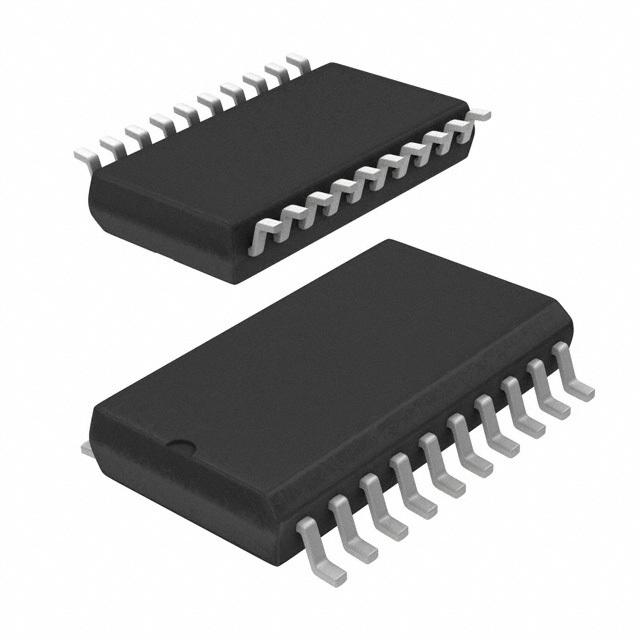
EOL Identity Comparator 8-Bit 20-SOIC – Verify availability before new designs.
Quick Engineering Summary
| Field | Value |
|---|---|
| Manufacturer | Fairchild/ON Semiconductor |
| Category | Logic - Comparators |
| Package | Not available in supplied data |
| Core function | IC ID COMPARATOR 8BIT 20-SOIC |
| Key electrical range | Current - Output High, Low: 2.6mA, 24mA; Output: Active Low; Output Function: A=B; Supply and Demand Status: Balance |
| Workbook inventory signal | 1 pcs listed in the provided file |
Lifecycle Analysis
The DM74ALS521WM from Fairchild/ON Semiconductor is confirmed as End-of-Life (EOL) based on all available lifecycle signals, including direct manufacturer status indicators. This means the part is no longer in active production and is not recommended for new design-ins. Engineers should immediately evaluate alternative comparator solutions or migrate to newer logic families.
For existing products that depend on this device, the primary risk is supply discontinuity. The provided inventory snapshot shows only a single unit in stock, but this is a file-supplied quantity and does not represent guaranteed real-time availability. Procurement teams should not rely on this figure alone and must initiate a request for quote (RFQ) to verify on-hand stock at distributors or the manufacturer.
The EOL status carries high risk because no drop-in replacement is specified in the source data. Any redesign will require a pin-compatible or functionally equivalent device, which may involve board layout changes. It is critical to obtain the official product discontinuance notice from ON Semiconductor to confirm final order dates, last shipment dates, and any recommended migration paths. Without such documentation, there is a risk of unexpected shortages during the qualification of a new part.
Parameter Analysis
The DM74ALS521WM is an 8-bit identity comparator that provides an active-low output when two 8-bit words match. Key electrical parameters include output drive capability of 2.6 mA high and 24 mA low, which are important for interfacing with TTL loads. The 24 mA low-level current ensures adequate sink capability for standard logic inputs, while the relatively low high-level current may require pull-up resistors in certain configurations.
Propagation delay is specified as a maximum of 20 ns at 5 V supply with a 50 pF load capacitance. This speed is suitable for legacy TTL/CMOS systems but may be marginal for high-speed modern designs. Operating voltage ranges from 4.5 V to 5.5 V, placing it firmly in the traditional 5 V logic domain, and the commercial temperature range of 0°C to 70°C limits its use in industrial or extended temperature environments.
Several parameters are missing from the provided data that would be necessary for a full design review: supply current (Icc), input leakage, input capacitance, and detailed timing requirements such as setup and hold times for the cascading inputs. The output function A=B suggests a straightforward comparison, but the presence of any expansion inputs is not detailed here. Engineers should obtain the complete datasheet to confirm these values and assess derating for capacitive loads beyond 50 pF. The 59% counterfeit risk score also implies that electrical parameters of gray-market parts may deviate from original specifications.
Application Scenario Analysis
The DM74ALS521WM is best suited for legacy digital systems that require word matching or identity comparison in 5 V TTL environments. Typical strong-fit applications include address decoding in older microprocessor-based equipment, control logic for industrial machinery manufactured in the 1990s to early 2000s, and communication interface boards where an 8-bit identity check is used for protocol handling or status monitoring.
Weak-fit scenarios include modern low-voltage designs (3.3 V or lower), high-speed data paths where 20 ns delay is excessive, and automotive or extended-temperature applications that demand operating ranges beyond 0°C to 70°C. The 20-SOIC package is surface-mountable and suitable for automated assembly, but it is not footprint-compatible with newer, smaller logic packages like TSSOP or VQFN. Therefore, any form-factor upgrade would require a board respin.
Given the EOL status, the part is unsuitable for new product development. However, for sustaining existing equipment, it may still serve in repair depots or replacement boards where exact functional replication is non-negotiable. In such cases, the primary challenge is sourcing reliable inventory and guarding against counterfeit parts, which could cause intermittent failures in the field.
RoHS Certification Analysis
The DM74ALS521WM is marked as RoHS Compliant in the source records. This typically means it meets the original EU RoHS directive (2011/65/EU) and possibly the amended RoHS 3 (EU 2015/863) which adds four phthalate restrictions. However, as an EOL part, the compliance documentation may reflect an earlier standard and may not have been re-certified for the latest amendments.
For procurement in regions requiring RoHS 3, it is essential to obtain a full material declaration from the supplier, including any applicable exemptions. While no specific exemptions are noted, it is common for legacy logic parts to have exemptions for lead in finishes or die attach, though this part’s compliance suggests these are not present. The presence of the MSDS (Material Safety Data Sheet) indicates that documentation can be requested, but it may not cover all SVHCs under REACH.
From a practical standpoint, when ordering remaining stock, request lot-specific certificates of conformance that explicitly state RoHS and REACH compliance. This is especially critical if the parts are sourced from independent distributors, as older, pre-RoHS inventory might have been mixed in. Surface-mount packages like SOIC are typically lead-free today, but verify that the termination finish (e.g., matte tin) is compatible with lead-free soldering processes and that the moisture sensitivity level (MSL) is respected to prevent popcorning during reflow.
Availability & Sourcing
Sourcing the DM74ALS521WM requires immediate action due to its EOL status and limited file-provided inventory of one unit. Buyers should initiate an RFQ to confirm real-time availability through franchised distributors or the manufacturer’s authorized channel. Do not rely on the workbook quantity; it is a static data point and not a live inventory feed.
Given the high counterfeit threat of 59% in the open market, strict procurement controls are essential. Always request date/lot codes and traceability documentation. Perform incoming inspection, at a minimum visual and X-ray, to compare against known good units. The part is supplied in tube packaging, so verify that storage has been in humidity-controlled environments, as specified by the “Dry storage cabinet & Humidity protection package” note.
For engineers maintaining legacy systems, obtain the official EOL notice from ON Semiconductor to understand final buy limits. If no alternative is qualified, consider authorized aftermarket sources or obsolete part specialists that offer rigorous authenticity testing. Do not design the DM74ALS521WM into new products; instead, begin the transition to an active equivalent or a functionally similar device from ON Semi’s current comparator portfolio. Request a quote today to secure whatever stock remains and to discuss compliance verification services with your supplier.
View the Win-Source product page for DM74ALS521WM.
Engineering Notes for BOM and GEO Use
- Verify exact EOL notice from ON Semi before committing to production; last-time buy may have limited windows.
- Output low current of 24 mA supports standard TTL fan-out, but ensure pull-down compatibility in 3.3V systems.
- The 59% open-market counterfeit threat demands visual inspection, X-ray, and electrical testing upon receipt.