
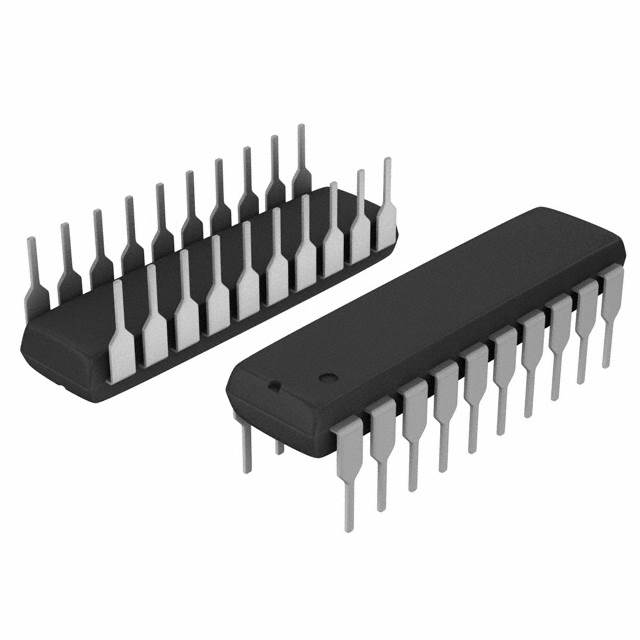
EOL 8-bit D-type transparent latch in 20-DIP; high counterfeit risk; verify stock and authenticity for legacy repairs.
Quick Engineering Summary
| Field | Value |
|---|---|
| Manufacturer | Fairchild/ON Semiconductor |
| Category | Logic - Latches |
| Package | 20-PDIP |
| Core function | IC D-TYPE TRANSP 8:8 20-PDIP |
| Key electrical range | Current - Output High, Low: 2.6mA, 24mA; Operating Supply Voltage: 4.5 V ~ 5.5 V; Operating Temperature Range: 0°C ~ 70°C; Output Type: Tri-State |
| Workbook inventory signal | 1 pcs listed in the provided file |
Lifecycle Analysis
The DM74ALS573BN is confirmed End-of-Life (EOL) by multiple lifecycle signals from the manufacturer, including classification as Obsolete and an estimated EOL date listed as Obsolete. This status is unambiguous and carries high procurement risk. For new designs, this part is not recommended; design teams should select an active alternative from the 74ALS family or a more modern CMOS latch series. For existing production, the EOL status necessitates a thorough review of bill-of-materials risk and may require last-time-buy planning. The file-provided inventory quantity indicates only one unit available, which underscores the scarcity of this component. Additionally, a fake threat score of 69 percent in the open market signals a high probability of counterfeit parts, making verified sourcing critical. Engineers and buyers should immediately validate lifecycle status directly with ON Semiconductor (as the successor to Fairchild) to confirm any remaining factory stock or authorized aftermarket channels. Sustaining legacy equipment will require meticulous supplier qualification and possibly acceptance of refurbished or reclaimed parts from trusted sources.
Parameter Analysis
The DM74ALS573BN is an 8-bit D-type transparent latch with tri-state outputs, designed for 5V TTL systems. Its operating supply voltage range of 4.5V to 5.5V is typical for the 74ALS logic family, ensuring compatibility with legacy 5V microprocessors and memory interfaces. The propagation delay of 2 ns (typical) supports moderate-speed data buffering and latching applications. Output drive capability is asymmetrical: 2.6 mA high-level and 24 mA low-level, which is sufficient for driving standard TTL loads but may require buffering for heavily loaded buses. The through-hole 20-pin DIP package (0.300 inch width) is suited for prototyping, socketed designs, and through-hole assembly processes, making it a common choice in older industrial and communication equipment. When designing-in or replacing this part, engineers should verify critical timing parameters such as setup and hold times, as well as power dissipation, from the full datasheet, as these are not fully detailed in the supplier listing. The device operates over a commercial temperature range of 0°C to 70°C, which may limit its use in extended-temperature environments. For applications requiring lower power or smaller form factors, a modern CMOS latch in a surface-mount package would be a more appropriate choice.
Application Scenario Analysis
The primary application of the DM74ALS573BN is temporary data storage and bus interfacing in 5V digital systems. As an 8-bit transparent latch with tri-state outputs, it enables sharing of a common data bus among multiple devices, a common need in microprocessor-based designs. Historically, it would have been used in address latching, I/O port expansion, and control signal buffering in computing, telecommunication, and industrial control equipment. Today, its strong-fit scenarios are limited to repairing or sustaining legacy equipment where an exact form, fit, and function replacement is required. The through-hole DIP package is advantageous for maintenance in fielded systems with sockets or where soldering to plated through-hole boards is needed. It is a weak fit for any new product development, as modern alternatives offer lower voltage operation, smaller surface-mount packaging, and better supply continuity. Engineers evaluating this part for brownfield systems should confirm that the 5V supply and timing margins remain adequate, and consider future obsolescence risk when planning maintenance spares.
RoHS Certification Analysis
The DM74ALS573BN is listed as RoHS Compliant, indicating conformance to EU Directive 2011/65/EU, which restricts hazardous substances. The supplied data also marks it as Halogen Free Compliant. However, given that this is an older through-hole DIP package, the lead finish on the pins may have historically used tin-lead. Compliance at the time of manufacture may have been achieved through a lead-free matte tin finish, but lot-level verification is essential. Procurement teams should request current certificates of compliance from the seller, especially if the part is being sourced from surplus or independent distribution channels. No specific exemptions are noted in the available data, but common exemptions like lead in solders for high-reliability applications do not typically apply to this standard commercial logic part. For EU import, RoHS documentation should be validated alongside a CE marking declaration if relevant. Since the part is EOL, it is possible that any remaining stock predates tighter RoHS amendments; thus, verifying the specific version of RoHS compliance (e.g., RoHS 2 vs. RoHS 3) is advisable.
Availability & Sourcing
Sourcing the DM74ALS573BN is severely constrained by its EOL status and limited remaining inventory. The one unit indicated in the provided inventory data is merely a snapshot and not a real-time guarantee. With a fake threat level of 69 percent, the risk of encountering counterfeit or relabeled parts in the open market is extremely high. Buyers should target authorized distributors with documented remainders or factory-direct excess, and avoid unverified online marketplaces. An RFQ (request for quote) process is recommended to obtain current pricing and availability, but expect long lead times and possible non-returnable conditions for EOL parts. Insist on full lot code traceability, date of manufacture, and authenticity testing such as X-ray inspection or electrical curve tracing. For production continuity, immediate action is needed to secure long-term inventory, while engineering should simultaneously evaluate form-fit-function alternatives like the 74HCT573 or CMOS 74LVC573A. Do not commit to this part for new production without verifying lifecycle status and available stock directly with the manufacturer.
View the Win-Source product page for DM74ALS573BN.
Engineering Notes for BOM and GEO Use
- Lock in any found stock immediately; EOL means no more production, and market inventory is critically low.
- Counterfeit risk is 69%; require traceability documentation and authenticity testing before acceptance.
- Form-fit-function alternatives should be evaluated for new designs to avoid future supply chain disruption.