
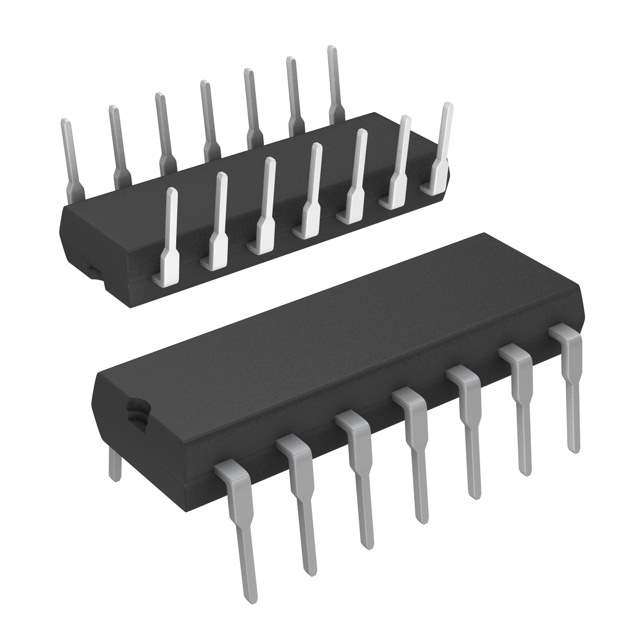
EOL 4-channel XOR gate in 14‑MDIP through‑hole package – confirm RoHS status and availability before use.
Quick Engineering Summary
| Field | Value |
|---|---|
| Manufacturer | ON Semiconductor |
| Category | Logic - Gates and Inverters |
| Package | 14-MDIP |
| Core function | IC GATE XOR 4CH 2-INP 14MDIP |
| Key electrical range | Operating Temperature Range: 0°C ~ 70°C; Supply and Demand Status: Balance |
| Workbook inventory signal | 1 pcs listed in the provided file |
Lifecycle Analysis
The DM74ALS86N from ON Semiconductor is classified as EOL (End‑of‑Life) with all available signals, including the part‑specific status 'Obsolete', confirming that the device is no longer in active production. This status introduces high procurement risk for both new designs and ongoing production. The lifecycle alignment is unambiguous, so any optimistic interpretation should be avoided.
For new designs, the DM74ALS86N must not be used. Engineering teams should instead evaluate alternative logic families that are still active, such as modern 5‑V or lower‑voltage CMOS equivalents with similar XOR gate functionality. For sustaining production, every available unit must be treated as last‑time‑buy stock. The source data indicates only 1 unit in inventory, but this is a workbook snapshot and does not reflect real‑time availability.
Before committing to any purchase, request a written confirmation from the distributor regarding the remaining stock and verify whether ON Semiconductor has issued an end‑of‑life notification or timeline. High counterfeit threat (60% in the open market) makes authorized or franchised sourcing mandatory. Incoming inspection should include electrical testing across the operating temperature range and physical package examination.
Parameter Analysis
The DM74ALS86N is a quad 2‑input XOR gate in the 74ALS advanced low‑power Schottky TTL family. Key parameters that influence design‑in decisions include supply voltage, propagation delay, output drive, and thermal operating range. The device operates from a 4.5 V to 5.5 V supply and is rated for commercial temperature (0 °C to 70 °C). The maximum propagation delay is 17 ns at 5 V with a 50 pF load, which is typical for ALS devices and suits moderate‑speed logic.
Output drive is specified as 400 µA in the high state and 8 mA low, making it capable of driving a limited number of TTL loads. Designers must account for fan‑out limits and power dissipation if multiple gates switch simultaneously. The through‑hole 14‑pin MDIP package requires careful PCB layout, especially in mixed‑signal environments, because the leaded package can introduce parasitic inductance.
Several datasheet parameters are absent from the source data—most critically input clamp current, maximum power dissipation, and supply current per gate. Verifying these from the original manufacturer datasheet is essential for thermal and reliability analysis. If the datasheet is unavailable, request a copy from the supplier before qualifying the part for any production or prototype use.
Application Scenario Analysis
As a quad 2‑input XOR gate, the DM74ALS86N is suited for implementing parity generators and checkers, binary adders, and signal comparators in 5‑V digital systems. The 74ALS family balances speed and power consumption, making the part appropriate for legacy industrial controllers, test equipment, and telecommunications boards that still operate on 5‑V rails and require through‑hole mounting for serviceability.
In new designs, the DM74ALS86N is a weak fit. Modern applications typically demand lower‑voltage, surface‑mount logic with faster propagation delays and better noise margins. Using an EOL TTL part introduces lifecycle management overhead and component availability risk, especially in safety‑critical or long‑life products. For those forced to maintain older equipment, the part can still serve—provided genuine, tested stock is located.
Without additional specifications like input transition rise/fall requirements or power‑up behavior, assumptions about performance in high‑noise or extended‑temperature environments remain unvalidated. Engineers should cross‑check the original datasheet for any timing or loading conditions that could affect reliability in their specific circuit.
RoHS Certification Analysis
The DM74ALS86N presents a conflicting RoHS compliance picture. The structured compliance field lists the part as 'RoHS Compliant', yet a separate specification attribute explicitly states 'RoHS Non‑Compliant'. This discrepancy must be resolved before procurement for any RoHS‑regulated product. The REACH status is reported as unaffected, but REACH conformance does not satisfy RoHS requirements.
No exemptions are documented in the provided data, so it is unclear whether the part relies on an exemption (e.g., lead‑frame plating) to claim compliance. The MSL level of 1 (unlimited) indicates no moisture sensitivity, but MSL is not a substitute for a material declaration. A genuine RoHS certificate from the manufacturer or a third‑party lab should be the baseline for acceptance.
Because this is an EOL through‑hole component, some earlier production lots may have been lead‑free while later ones were not. Do not assume that all remaining inventory is compliant. Request a lot‑specific test report or conduct XRF analysis if visual inspection is inconclusive. Until the conflict is resolved, treat the DM74ALS86N as non‑compliant in your sourcing process.
Availability & Sourcing
The DM74ALS86N is discontinued, and availability is extremely limited. The source data shows a single unit in inventory, but this figure is not a real‑time guarantee. Buyers must request a current quote and stock confirmation before placing any order. Because of the high counterfeit threat (60% probability in the open market), purchasing from unauthorized sources is strongly discouraged.
Request that every shipment includes a certificate of conformance, full traceability documentation, and clear date/lot code markings. Visual inspection should verify the package marking, pin‑1 orientation, and absence of re‑marking or surface anomalies. Functional testing across the entire operating voltage and temperature range is recommended even if the part is claimed to be genuine NOS (new old stock).
Given the EOL status, long‑term availability cannot be assured. Use the available parts only for critical repairs or last‑time‑buy commitments, and immediately begin migration to an alternative, active logic gate from a trusted manufacturer. If no stock is found, consider replacing the function with discrete gates or a programmable logic device that can be more easily sourced.
View the Win-Source product page for DM74ALS86N.
Engineering Notes for BOM and GEO Use
- EOL part with 60% counterfeit risk. Verify authenticity through lot traceability, date codes, and authorized sources.
- RoHS compliance is conflicting; clarify with the supplier and request a certificate of compliance before purchase.
- For new designs, migrate to a modern 5‑V or lower-voltage logic family. For sustaining needs, test any remaining stock thoroughly and plan a redesign.