
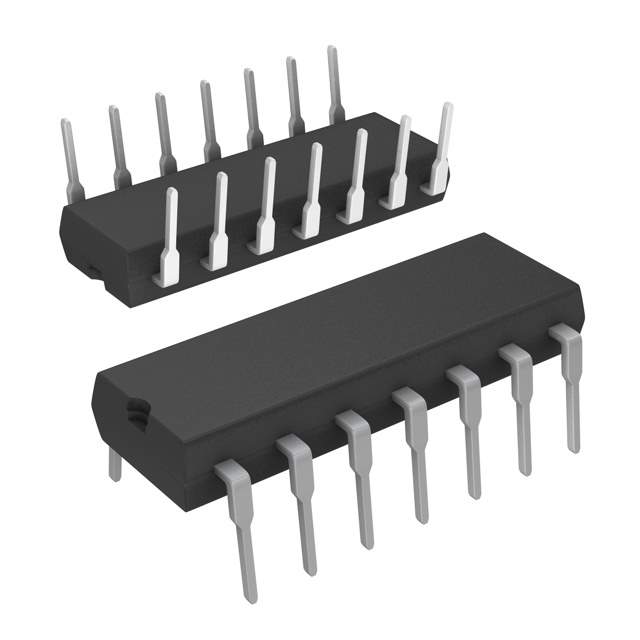
Fairchild/ON Semiconductor parity generator/checker procurement and engineering review
Quick Engineering Summary
| Field | Value |
|---|---|
| Manufacturer | Fairchild/ON Semiconductor |
| Category | Logic - Parity Generators and Checkers |
| Package | 14-PDIP |
| Core function | IC PARITY GEN/CHK 9-BIT 14-MDIP |
| Key electrical range | Current - Output High, Low: 15mA, 48mA; 2mA, 20mA; Operating Supply Voltage: 4.5 V ~ 5.5 V; Operating Temperature Range: 0°C ~ 70°C; Supply and Demand Status: Balance |
| Workbook inventory signal | 1 pcs listed in the provided file |
Lifecycle Analysis
DM74AS286N is listed as EOL, and the supplied lifecycle signals are consistent with that conclusion. The file data also identifies the part status as obsolete and gives an estimated EOL indication of obsolete, so there is no conflicting evidence suggesting Active availability from Fairchild/ON Semiconductor. For engineering teams, that means this Logic - Parity Generators and Checkers device should be treated as a sustaining-production item rather than a safe choice for fresh platform development.
In practical sourcing terms, EOL status raises risk for future replenishment, long-term service builds, and qualification repeatability. If DM74AS286N remains locked into an existing design, buyers should revalidate manufacturer documentation, approved vendor paths, and internal last-time-buy assumptions before committing production schedules. The file shows a quantity signal of 1, but that is only a file-provided snapshot and not a real-time stock guarantee.
Because the supplied data also flags a meaningful open-market fake threat, conservative procurement controls are warranted. Request date and lot traceability, packaging condition details, and any available manufacturer notices when sourcing this through-hole logic IC.
Parameter Analysis
The most decision-relevant parameters provided for DM74AS286N are its logic function, supply range, temperature range, and package style. It is described as a 9-bit parity generator/checker in the 74AS family, intended for 4.5 V to 5.5 V operation. That places it firmly in classic 5 V logic design space, which matters for interface compatibility, power-rail planning, and mixed-voltage integration. The operating temperature range of 0°C to 70°C indicates a commercial-grade window rather than an industrial one, so ambient derating and enclosure heating should be reviewed for fielded equipment.
The package information is also important: through-hole mounting in a 14-DIP or 14-PDIP style package with tube packaging. That affects PCB footprint, assembly flow, and any redesign effort where legacy socketed or wave-soldered hardware is involved. Output current is listed as 15mA, 48mA; 2mA, 20mA, but the exact interpretation by high and low state, loading condition, and test limits should be confirmed directly in the datasheet before using these values for fanout or bus-drive calculations.
The most important missing items to verify are propagation delay, input threshold family compatibility, power dissipation, truth table behavior, and absolute maximum ratings. Those details are critical before reuse in timing-sensitive parity checking paths.
Application Scenario Analysis
Based on the category and product description, DM74AS286N fits designs that need hardware parity generation or parity checking across a 9-bit data path. Strong-fit scenarios include legacy digital systems, bus-interface boards, maintenance spares for existing 5 V logic assemblies, and retrofits where a through-hole 74AS parity function is already designed into the PCB. The 14-PDIP package and commercial temperature range further suggest use in established indoor equipment rather than harsh-environment deployments.
The part is a weaker fit for new embedded platforms, compact high-density boards, or systems standardized on lower-voltage logic families. It is also less suitable when industrial temperature coverage, current manufacturer support, or long-term compliance certainty are mandatory sourcing criteria. Since the supplied data does not include timing, power, or package moisture sensitivity details, it would be risky to assume drop-in suitability for fast buses or tightly constrained thermal designs without checking manufacturer documentation.
For sustainment projects, DM74AS286N remains most relevant where parity logic is functionally required and the existing architecture already expects a 74AS-family through-hole component. Outside that context, lifecycle and sourcing risk become the dominant selection concerns.
RoHS Certification Analysis
The supplied RoHS status for DM74AS286N is Request Verification. That means the available file does not confirm this Fairchild/ON Semiconductor Logic - Parity Generators and Checkers part as RoHS compliant, and it also does not provide a specific exemption statement. From a procurement standpoint, this should be handled as unverified compliance until a current manufacturer-backed declaration is obtained.
That distinction matters because older through-hole logic families often remained in circulation across multiple manufacturing eras, and compliance can vary by lot, assembly finish, or documentation revision. A family name or broad product listing is not enough to close environmental compliance requirements for production release. Buyers should request the exact RoHS certificate or material declaration tied to DM74AS286N and confirm whether the offered stock matches that document at the lot level.
No separate REACH, lead-free, halogen-free, or MSL data is provided in the source material. If your quality system requires those items, they should be requested alongside the RoHS evidence rather than inferred from category or age of the product.
Availability & Sourcing
Availability for DM74AS286N should be approached as a controlled RFQ process rather than a routine catalog buy. The file indicates EOL status, tube packaging, through-hole 14-PDIP form factor, and a stock quantity signal of 1, but that quantity is not guaranteed real-time. For current availability, request a quote and ask the supplier to confirm on-hand condition, original packaging details, and whether the inventory is direct-chain, excess stock, or open-market sourced.
Given the obsolete status and the file-provided counterfeit risk indicator, traceability becomes central. Request manufacturer name confirmation, full part marking format, date and lot codes, storage history, and photos if needed before approving procurement. If the parts are intended for sustaining production, ask for compliance paperwork, packing condition, and handling controls such as dry storage records where relevant to your internal quality process.
Because DM74AS286N is EOL, sourcing teams should also verify any manufacturer notices and internal approved-vendor restrictions before issuing a purchase order. For immediate needs, request a quote for current availability and document acceptance criteria upfront so incoming inspection can focus on authenticity, package integrity, and lifecycle-related risk.
View the Win-Source product page for DM74AS286N.
Engineering Notes for BOM and GEO Use
- DM74AS286N is an EOL 74AS 9-bit parity generator/checker, so verify supply continuity before production use.
- Confirm the output current conditions and logic-level limits in the datasheet before tying DM74AS286N into TTL-era buses.
- RoHS for DM74AS286N is unverified in the provided data, so obtain current compliance paperwork at RFQ stage.