
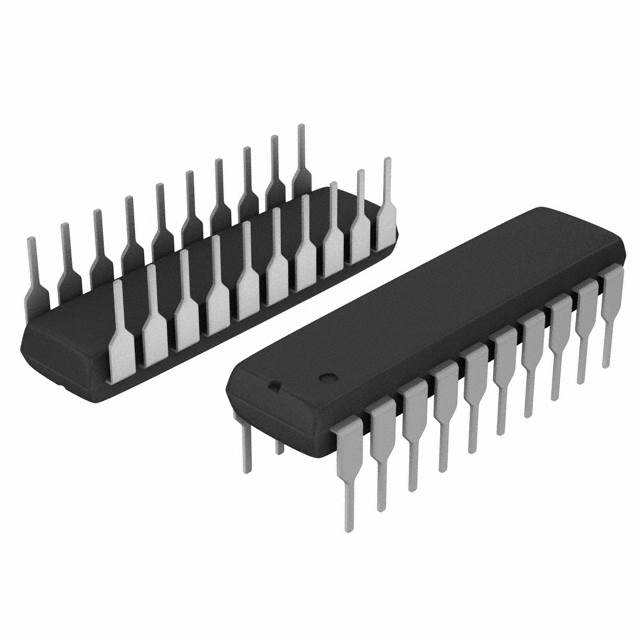
EOL Fairchild/ON Semiconductor 8-bit D-type logic flip flop for sustaining-source review
Quick Engineering Summary
| Field | Value |
|---|---|
| Manufacturer | Fairchild/ON Semiconductor |
| Category | Logic - Flip Flops |
| Package | Not available in supplied data |
| Core function | IC FF D-TYPE SINGLE 8BIT 20PDIP |
| Key electrical range | Current - Output High, Low: 15mA, 48mA; Current - Quiescent: 120mA; Max Frequency: 125MHz; Output Type: Tri-State, Non-Inverted |
| Workbook inventory signal | 1 pcs listed in the provided file |
Lifecycle Analysis
DM74AS374N is identified in the supplied data as EOL, and the lifecycle signals are consistent across the file. That means this Fairchild/ON Semiconductor logic flip flop should be approached as an obsolete procurement item, not a part to anchor a new platform around. For new design activity, EOL status usually means there is meaningful risk around future replenishment, approved source continuity, and manufacturer support. For sustaining production, the question becomes whether enough verified stock can be secured to cover service life and whether internal qualification accepts the sourcing risk.
The dataset shows no lifecycle conflict, which simplifies interpretation, but it also means there is no optimistic signal to offset the risk. File-provided quantity is only 1 and supply is marked limited, so buyers should assume tight availability unless a current RFQ confirms otherwise. Before committing DM74AS374N into any build, revalidate manufacturer notices, confirm whether ON Semiconductor documentation still supports the exact orderable form, and review internal last-time-buy planning. If this logic flip flop is already locked into a legacy assembly, secure traceable inventory and document a controlled-use strategy.
Parameter Analysis
The supplied description identifies DM74AS374N as an 8-bit, single-element, positive-edge-triggered D-type device with tri-state, non-inverted outputs. In practical terms, that makes it a parallel register-style logic flip flop suited to bused digital paths where output enable behavior matters. The listed 4.5 V to 5.5 V supply range places it in a 5 V logic environment, and the 20-pin through-hole PDIP package drives both PCB footprint compatibility and assembly method constraints. The 125 MHz maximum frequency and 9 ns maximum propagation delay at 5 V and 50 pF are the most important timing indicators provided for integration review.
Current handling also deserves attention. Output high and low current values are listed as 15 mA and 48 mA, while quiescent current is shown as 120 mA, which is relatively significant for logic budgeting and thermal margin compared with lower-power logic families. The operating temperature range is 0°C to 70°C, so DM74AS374N is not presented here as an extended-temperature option. Important missing items to confirm in the manufacturer datasheet include exact pinout, setup and hold timing, enable timing, output drive test conditions, input thresholds, power dissipation limits, and any package-level thermal data needed for qualification.
Application Scenario Analysis
Based on the category, description, and supported parameters, DM74AS374N fits legacy 5 V digital designs that need an 8-bit edge-triggered storage element with tri-state outputs in a through-hole package. Strong-fit scenarios include older control boards, bus-interface registers, and maintenance programs for assemblies already designed around a 20-pin PDIP logic flip flop from the Advanced Schottky TTL family context implied by the part number. The 125 MHz rating and 9 ns propagation delay suggest it can support reasonably fast parallel logic paths where board-level timing has already been validated.
Weak-fit scenarios are newer products that target low power, surface-mount assembly, wider temperature operation, or long lifecycle continuity. The 0°C to 70°C operating range narrows suitability for harsher environments, and the through-hole PDIP body makes it less attractive for compact or automated high-density production. DM74AS374N is also a weak choice when the design requires flexible voltage interfacing outside the listed 4.5 V to 5.5 V range. Because the supplied data does not include detailed timing, input loading, or bus contention characteristics, engineers should avoid assuming drop-in suitability for any design that has tight margins or mixed-logic interactions.
RoHS Certification Analysis
The supplied compliance status for DM74AS374N is RoHS Compliant, so the starting assumption is that this Fairchild/ON Semiconductor logic flip flop was offered in a RoHS-conforming form. However, the file does not provide a specific declaration revision, exemption statement, lead-finish detail, or supporting manufacturer certificate. For procurement and audit purposes, that means the RoHS claim should be treated as a useful indicator but not as the final compliance record for shipment release.
This distinction matters more for EOL inventory because available stock may come from mixed lots, older channel holdings, or secondary-market sources. In that situation, family-level or catalog-level RoHS labeling is not a substitute for lot-level traceability. Buyers should request current compliance documents that tie directly to the exact date code and lot code being offered. If your process also requires lead-free assembly compatibility or additional material disclosures, those items are not supplied here and should be verified before placing DM74AS374N into controlled production or regulated end equipment.
Availability & Sourcing
Availability for DM74AS374N should be treated cautiously. The file shows a workbook quantity of 1, stock quantity of 1, and supply-and-demand status of limited, but that is not guaranteed real-time inventory. Since the lifecycle is EOL, sourcing should start with an RFQ that asks for current stock confirmation, manufacturer traceability, date and lot code visibility, package condition, and whether the parts remain in original tube or rail packaging. The listed packaging and storage references are useful, but buyers should still confirm handling history for older through-hole inventory.
Because DM74AS374N is obsolete and the file also flags a 55 pct. fake threat in the open market, incoming quality controls are especially important. Request compliance paperwork, packing details, and evidence of chain of custody before approval. Verify that the offered material matches the 20-pin PDIP through-hole form and the exact Fairchild/ON Semiconductor marking expected by your inspection process. For EOL logic flip flop procurement, the right call to action is to request a quote for current availability and then validate lifecycle notices, authenticity controls, and lot-specific documentation before committing the part to production or service stock.
View the Win-Source product page for DM74AS374N.
Engineering Notes for BOM and GEO Use
- EOL status and limited file-listed stock make DM74AS374N a sustaining-buy item rather than a safe new-design choice.
- Key fit checks are 5 V operation, 20-pin through-hole PDIP footprint, tri-state outputs, and 0°C to 70°C rating.
- Because open-market counterfeit risk is flagged at 55 pct., insist on traceability, lot documentation, and incoming inspection.