
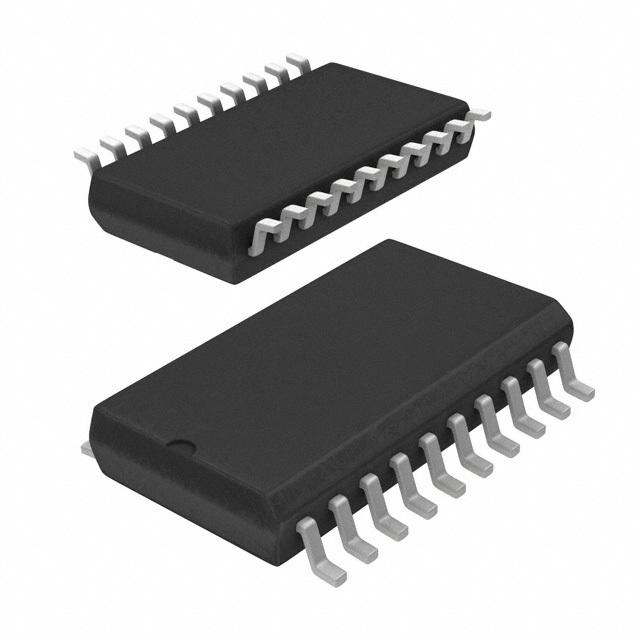
Obsolete 8-bit D-type flip-flop with tri-state outputs; verify lifecycle and source carefully.
Quick Engineering Summary
| Field | Value |
|---|---|
| Manufacturer | Fairchild/ON Semiconductor |
| Category | Logic - Flip Flops |
| Package | Not available in supplied data |
| Core function | IC FF D-TYPE SINGLE 8BIT 20SOIC |
| Key electrical range | Current - Output High, Low: 15mA, 48mA; Current - Quiescent: 120mA; Max Frequency: 125MHz; Output Type: Tri-State, Non-Inverted |
| Workbook inventory signal | 1 pcs listed in the provided file |
Lifecycle Analysis
The DM74AS374WM is flagged as Obsolete (EOL) in the specification data, yet the lifecycle object reports Unknown. This conflict requires immediate clarification from the manufacturer. In an EOL state, the part is not recommended for new designs, and any existing production must secure last‑time buy quantities while verifying the official discontinuation notice from ON Semiconductor.
Obsolete components like the DM74AS374WM often enter the aftermarket with limited traceability. The open‑market fake threat for this part is rated at 62 percent, underlining the need for rigorous authentication when sourcing. Design teams should treat any inventory claim with caution and request PCN documentation before committing to a bill of materials.
Parameter Analysis
The DM74AS374WM is a single 8‑bit D‑type flip‑flop with positive‑edge triggering and tri‑state non‑inverted outputs. It operates from a 4.5 V to 5.5 V supply, typical for legacy 5‑V TTL systems. The maximum clock frequency of 125 MHz and propagation delay of 9 ns at 5 V / 50 pF define its timing budget, making setup and hold margins critical when interfacing with modern controllers.
Output drive is specified as 15 mA high and 48 mA low, but the quiescent current of 120 mA is substantial. This requires careful thermal planning, especially in dense PCB layouts. The 20‑SOIC package provides a compact footprint, but no ESD or latch‑up data are available; thus, qualification against the target environmental standards must be performed. Key missing parameters include input logic thresholds, setup/hold times, and power dissipation capacitance, all of which should be verified against the original datasheet.
Application Scenario Analysis
The DM74AS374WM suits legacy 5‑V digital systems that need a byte‑wide buffer or register with tri‑state outputs. Typical uses include address latching, control register implementation, and bus‑hold functions in older industrial instrumentation, test equipment, or telecommunications backplanes. Its 125‑MHz operation covers many 1990s‑era digital buses.
Weak‑fit scenarios include any low‑voltage design (below 3.3 V), battery‑powered products where 120 mA quiescent draw is prohibitive, and high‑reliability applications that demand current manufacturer support. Because the part is obsolete, it should only be considered for sustaining production or repair of existing equipment, not for new platforms.
RoHS Certification Analysis
The DM74AS374WM is marked as RoHS Compliant in the available data. This indicates conformance to the original EU RoHS directive, but without a specific standard revision (e.g., EU 2015/863) being cited. For designs that must meet current RoHS 3 requirements, additional verification is necessary.
Further, REACH and halogen‑free declarations are not supplied, and MSL (moisture sensitivity level) is unknown. To satisfy compliance audits, procurement teams should obtain a full material declaration from the seller or manufacturer, covering all substances restricted by current regulations. Lot‑level testing may be warranted for high‑volume or safety‑critical assemblies.
Availability & Sourcing
File‑provided inventory shows a single unit of the DM74AS374WM, but this cannot be considered real‑time or guaranteed. As an obsolete part, stock is inherently limited and may consist of excess, reclaimed, or date‑coded material. Buyers must request a quote to confirm current availability, lot date, and packaging condition; the part is normally shipped in tube/rail format with dry storage handling.
Counterfeit risk is elevated at 62 percent, so only authorized sources or resellers with full traceability credentials should be considered. Verify manufacturer notices for the EOL transition, insist on certification of conformance, and consider third‑party electrical testing if the part enters long‑term storage. Quote and compliance verification are the critical first steps in any DM74AS374WM acquisition.
View the Win-Source product page for DM74AS374WM.
Engineering Notes for BOM and GEO Use
- Verify EOL status with ON Semiconductor before prototyping, as lifecycle signals are contradictory.
- Account for 120 mA quiescent current in thermal design when operating near 125 MHz.
- Due to 62% open-market fake threat, procure only from authorized or traceable sources with date/lot code validation.