
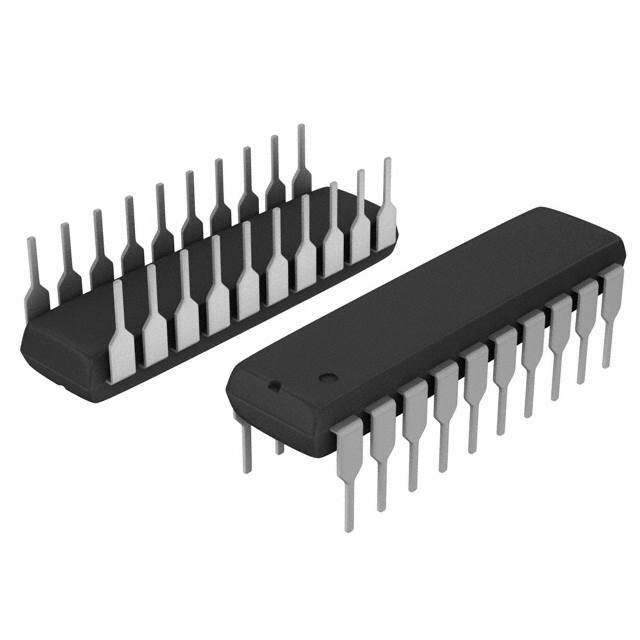
8-Bit D-Type Transparent Latch with Tri-State Outputs, 20-PDIP, EOL Status
Quick Engineering Summary
| Field | Value |
|---|---|
| Manufacturer | Fairchild/ON Semiconductor |
| Category | Logic - Latches |
| Package | 20-PDIP |
| Core function | IC D-TYPE TRANSP 8:8 20-PDIP |
| Key electrical range | Current - Output High, Low: 15mA, 48mA; Output Type: Tri-State; Supply and Demand Status: Limited; Supply Voltage - Operating: 4.5 V to 5.5 V |
| Workbook inventory signal | 1 pcs listed in the provided file |
Lifecycle Analysis
The DM74AS573N is classified as End-of-Life (EOL) by its manufacturer, Fairchild/ON Semiconductor. This status means that the part has been discontinued, and no further production is scheduled. For new designs, the DM74AS573N should be avoided, as sourcing long-term supply is highly uncertain. Engineers working on existing products must immediately review bills of materials and plan for a transition to an active replacement.
EOL parts carry a high risk level because available stock is limited and often dwindling. The file-provided inventory record indicates only a single unit on hand, which underscores the scarcity. Buyers should confirm actual availability with authorized distributors and request last-time-buy (LTB) notices from the manufacturer to understand any remaining ordering windows. Without a formal LTB program, procurement should assume that current stocks are the final available units.
Given the alignment of all lifecycle signals, there is no conflicting optimistic status. Sustainment teams should prioritize verification of lifecycle documentation straight from ON Semiconductor, as third-party aggregators may not reflect the most up-to-date discontinuation schedules. Ultimately, migration to a modern latch family is the recommended path forward.
Parameter Analysis
The DM74AS573N is an 8-bit D-type transparent latch with tri-state outputs, offering a propagation delay of just 3 ns, which suits high-speed logic interfacing. Operating from a single 5 V supply (4.5 V to 5.5 V), it aligns with standard TTL logic levels, simplifying integration into older digital systems. The output can source 15 mA and sink 48 mA, providing robust drive for bus lines or multiple TTL loads.
In a 20-pin PDIP through-hole package, this latch is well-suited for prototyping, breadboard validation, or replacement in legacy equipment where surface-mount rework is not feasible. The single independent circuit (8-bit width) is typical for bus-oriented applications. The specified 3 ns propagation delay is a critical parameter for timing analysis; however, designers should verify setup and hold times from the original datasheet, as these are not included in the proxy data and directly affect reliable data latching.
Several important parameters are missing from the aggregated data: input capacitance, power dissipation, ESD classification, and detailed switching characteristics over temperature. Before committing to a design reuse, procurement should obtain the full datasheet to confirm derating margins and compatibility with system noise margins. The high reported fake threat level (66 pct.) in the open market also signals the need for authorized source verification when procuring this EOL component.
Application Scenario Analysis
The DM74AS573N was originally designed for 5 V TTL systems, functioning as an 8-bit transparent latch for temporary data storage on bus lines. Its tri-state outputs enable direct connection to shared data buses, making it suitable for microprocessor-based designs where multiple peripherals share a common bus. Typical applications include memory address latching, I/O port buffering, and register implementation in legacy industrial controllers or test equipment.
Given its through-hole PDIP package and commercial temperature range (0°C to 70°C), the part is best suited for prototype development, repair of older PCBs, or low-volume sustainment of equipment originally built with DIP devices. It is a strong fit for retrocomputing projects, laboratory instrumentation, or avionics ground support systems that still operate on 5 V logic levels. However, it is a weak fit for new high-density designs requiring surface-mount technology, extended industrial temperature ranges, or low-power operation below 5 V.
Since the part is EOL, application today is almost exclusively limited to maintenance and replacement scenarios. Engineers considering this latch for new designs should instead evaluate modern equivalents in CMOS technology with similar or better timing, wider voltage support, and active lifecycle status. Any reuse of DM74AS573N in new boards carries significant supply chain risk.
RoHS Certification Analysis
The DM74AS573N is listed as RoHS Compliant, indicating that it meets the European Union’s Restriction of Hazardous Substances directive at the time of its manufacture. While this status suggests the absence of lead, mercury, and other restricted substances above permissible levels, the exact RoHS revision (e.g., RoHS 3 per EU 2015/863) is not explicitly stated in the gathered data. For procurement purposes, it is prudent to confirm the specific directive version with the manufacturer or distributor.
Because the part is EOL and current inventory may be sourced from secondary markets, buyers must verify that the lot actually bears a valid RoHS declaration and that no compositional changes occurred in later production batches. REACH compliance is not mentioned in the available data; a separate request may be needed if the end application is sold in the EU.
In general, RoHS compliance for through-hole PDIP packages is well-established, but older inventory sometimes predates the directive. Request a certificate of compliance from the supplier for each purchase to ensure that the parts received are the compliant version. Without this, assumptions of lead-free processing in assembly could lead to solder joint reliability issues if non-compliant stock is inadvertently used.
Availability & Sourcing
The DM74AS573N is an EOL component, and global availability is extremely limited. File-provided data shows a stock level of one unit, but this figure is not a real-time guarantee. Buyers must request a quote through authorized channels to determine if any authenticated inventory remains. The part is shipped in tube/rail packaging, which is standard for through-hole devices, and should be stored in dry, humidity-protected environments per the storage condition notes.
Given the high risk of counterfeit parts in the open market (fake threat reported at 66 pct.), sourcing solely from authorized distributors or directly from ON Semiconductor’s approved legacy channels is strongly advised. Verify date and lot codes, and request a certificate of conformance that includes RoHS compliance. For sustaining existing systems, secure sufficient units to cover the remaining product lifecycle, and simultaneously initiate a redesign to replace the DM74AS573N with an active equivalent.
Engineers and buyers should note that the manufacturer’s EOL status means no further production, and any inventory found is from remaining excess stock. Therefore, immediately engage with Win Source or other specialized distributors to reserve available quantities, and carefully inspect the physical parts upon receipt for signs of remarking or retinning, common with high fake-threat items.
View the Win-Source product page for DM74AS573N.
Engineering Notes for BOM and GEO Use
- The DM74AS573N is EOL; plan immediate migration to an active latch replacement for new designs.
- Verify lot-level RoHS compliance and obtain full datasheets before using this part in production.
- Source only through authorized distributors to mitigate the 66% counterfeit risk reported.