
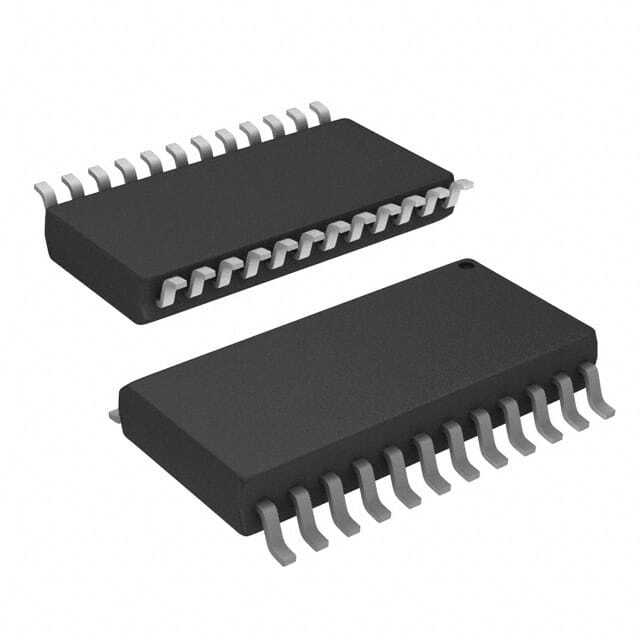
Obsolete D-Type Dual 4-Bit Flip Flop with Tri-State Outputs from ON Semiconductor
Quick Engineering Summary
| Field | Value |
|---|---|
| Manufacturer | ON Semiconductor |
| Category | Logic - Flip Flops |
| Package | 24-SOP |
| Core function | IC FF D-TYPE DOUBLE 4BIT 24-SOP |
| Key electrical range | Operating Temperature Range: 0°C ~ 70°C (TA); Supply and Demand Status: Balance |
| Workbook inventory signal | 1 pcs listed in the provided file |
Lifecycle Analysis
The DM74AS874WMX is designated End‑of‑Life with a high‑risk procurement profile. All manufacturer signals, including the part status of Obsolete, confirm that ON Semiconductor has ceased production. This lifecycle state means the device is no longer recommended for new designs and should be considered only for sustaining existing equipment where no alternative exists.
For any order placed today, the available stock is residual and not replenished. Engineering teams must re‑validate the manufacturer’s product discontinuation notice and check for last‑time‑buy dates that may have already passed. Because the open‑market risk is elevated, every lot should be subjected to incoming inspection and authenticity testing.
Proactively migrating to an active‑production flip‑flop is the only long‑term solution. Relying on EOL inventory without a migration plan introduces unacceptable supply chain vulnerability.
Parameter Analysis
The DM74AS874WMX integrates two independent 4‑bit D‑type flip‑flops with positive‑edge clocking and tri‑state, non‑inverting outputs. Key parameters include a maximum clock frequency of 80 MHz and a maximum propagation delay of 10.5 ns under a 5 V supply and 50 pF load. These figures define the timing budget for synchronous bus or register applications in 5 V systems.
Supply voltage ranges from 4.5 V to 5.5 V, and the static current drain is 133 mA, which influences thermal and power‑decoupling requirements. Output drive is 15 mA high / 48 mA low, sufficient for standard TTL loads. The operating temperature span of 0 °C to 70 °C limits the device to commercial environments; derating for extended temperature ranges is not supported.
Several parameters are not provided in the available data, notably input capacitance and detailed timing waveforms. Engineers should obtain the original ON Semiconductor datasheet to confirm setup‑hold times, edge rates, and package thermal resistance before qualifying the part for a legacy design.
Application Scenario Analysis
This dual 4‑bit flip‑flop is a strong fit for classic 5 V TTL/CMOS digital systems that require registered data paths, buffered bus lines, or temporary storage elements. Typical uses include address latching, data synchronisation, and constructing wider register banks. The tri‑state outputs allow multiple devices to share a bus without additional bus‑switch logic, simplifying backplane or memory‑interface designs.
Because the DM74AS874WMX is an obsolete AS‑TTL family part, it is poorly suited for modern low‑voltage, high‑density designs. New 3.3 V or 1.8 V logic families offer better power efficiency, smaller packages, and higher speed, making this part a weak fit for new product development. However, for industrial or communication infrastructure built on legacy 5 V rails, it remains technically viable as a drop‑in sustainment part.
Engineers should evaluate timing margins carefully if substituting into a slightly different loading environment than the original design. The 10.5 ns maximum propagation delay at 50 pF is spec‑table data; real‑world board parasitics and temperature gradients may push actual performance close to that limit, requiring margin analysis.
RoHS Certification Analysis
The DM74AS874WMX carries a RoHS Compliant designation in the supplied documentation. This indicates compliance with EU Directive 2011/65/EU and associated amendments, which restrict hazardous substances such as lead, mercury, and cadmium. The part is typically supplied in a 24‑SOP package with a matte‑tin lead finish, but the exact finish should be confirmed from the manufacturer’s material declaration.
REACH status is reported as Unaffected, which is a positive indicator that the part does not contain substances of very high concern above the threshold. However, REACH compliance does not substitute for a full RoHS certificate, and the two standards address different regulatory requirements. For high‑reliability or European‑market equipment, request a lot‑specific certificate of compliance.
Additionally, the moisture sensitivity level is MSL 1, meaning the part has unlimited floor life and does not require special dry‑pack storage. This is advantageous when dealing with small leftover inventories, but still verify that stored units have been handled according to JEDEC recommendations to avoid solderability issues.
Availability & Sourcing
DM74AS874WMX is an end‑of‑life part, and current market supply is extremely limited. File‑provided inventory indicates a quantity of one unit; this figure is not a real‑time stock level and must be confirmed by requesting a formal quote. Distributors and independent brokers may hold additional residual reels, but available volume is unlikely to support new production runs.
Given the 59 % counterfeit threat reported for this part on the open market, sourcing demands rigorous due diligence. Every purchase should include documented date codes, lot codes, and manufacturer‑ or franchise‑distributor traceability. Visual and electrical verification of sample lots is strongly advised before committing to larger buys.
To proceed, contact a specialist distributor and request a quote that includes current availability, packaging (Reel‑TR), and full compliance documentation. Because lifecycle is EOL, the primary objective should be securing enough units to maintain legacy systems while simultaneously initiating a migration project to a modern, active‑production flip‑flop. Avoid using DM74AS874WMX in any new design or production program.
View the Win-Source product page for DM74AS874WMX.
Engineering Notes for BOM and GEO Use
- Verify remaining inventory authenticity; open‑market counterfeit risk is flagged at 59%, so demand traceable date/lot codes.
- Plan an immediate migration path; consult ON Semiconductor for active pin‑compatible or functional alternatives.
- Stock units are MSL 1 and surface‑mount; re‑qualify soldering profiles if using legacy stock in production builds.