
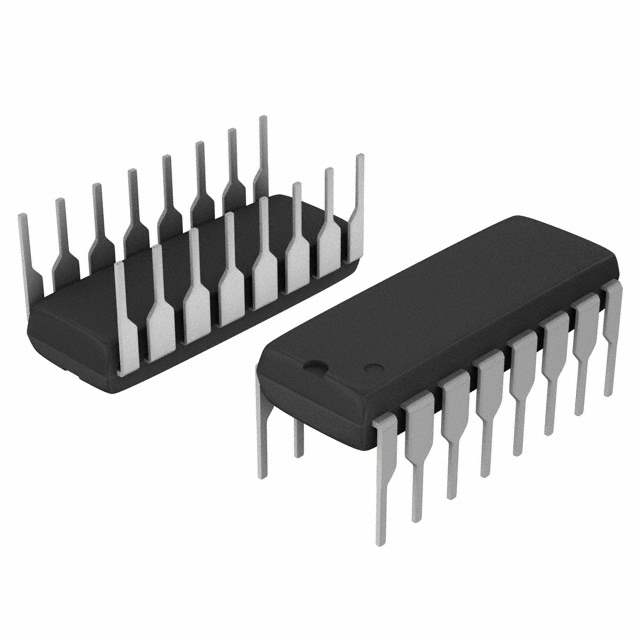
Obsolete dual monostable multivibrator, 45 ns, 16‑PDIP. Verify availability and RoHS compliance before procurement.
Quick Engineering Summary
| Field | Value |
|---|---|
| Manufacturer | ON Semiconductor |
| Category | HOT - SALES and EOL Components |
| Package | 16-DIP |
| Core function | IC MMV 2-CIR 45-NS 16-PDIP |
| Key electrical range | Current - Output High, Low: 400μA, 8mA; Schmitt Trigger Input: No; Supply and Demand Status: Limited; Supply Voltage (V): 4.75V ~ 5.25V |
| Workbook inventory signal | 1 pcs listed in the provided file |
Lifecycle Analysis
The DM74LS123N is officially EOL (End of Life) according to all lifecycle signals provided. Its status is listed as Obsolete, and the risk level is high for procurement. This means ON Semiconductor has discontinued production, and no further manufacturing is planned.
For new designs, this part should be avoided. Engineers working on sustaining legacy systems must secure any available inventory quickly while evaluating migration paths to active monostable multivibrator alternatives. The inventory signal from the source file shows only 1 unit, which is not a real‑time guarantee and may already be depleted.
Given the obsolete status, revalidation with the manufacturer is essential before committing to any production run. Verify if any last‑time‑buy opportunities remain and plan for a redesign if continued supply cannot be assured.
Parameter Analysis
The DM74LS123N is a dual monostable multivibrator (one‑shot) with 2 independent circuits. Key parameters include a typical propagation delay of 45 ns, a supply voltage range of 4.75 V to 5.25 V (standard TTL), and output drive levels of 400 µA (high) and 8 mA (low). The operating temperature range is commercial (0°C to 70°C). The logic type is pure monostable; no Schmitt‑trigger input is present.
These specs are critical for interfacing with 5 V TTL systems. The 45 ns delay defines the minimum pulse width capability and timing resolution. The output current levels dictate fan‑out limits when driving other LS logic gates. Missing from the provided data are pulse‑width range, retrigger capability, and reset functionality — all of which must be verified in the original ON Semiconductor datasheet before designing a replacement.
When qualifying a substitute, match the timing, drive, and temperature specs closely. The 16‑DIP through‑hole package influences PCB layout for legacy boards.
Application Scenario Analysis
The DM74LS123N is suited for legacy digital systems where dual monostable pulse generation is needed. Typical applications include pulse stretching, timing delays, and frequency discrimination in older industrial controls, test equipment, and communication gear that still use TTL logic.
Strong‑fit scenarios are maintenance, repair, and small‑lot production of existing designs. Educational labs and prototyping with DIP‑friendly breadboards also benefit from this through‑hole part. Weak‑fit scenarios include any new design requiring high speed, low power, or surface‑mount packaging. The 5 V TTL supply and commercial temperature range exclude it from modern low‑voltage or industrial‑temperature designs.
Use of this obsolete part should be limited to exact form‑fit‑function replacements where no board redesign is feasible. Verify that external RC timing components match the required pulse characteristics, as the 45 ns propagation delay sets the minimum timing floor.
RoHS Certification Analysis
RoHS compliance for the DM74LS123N is unclear due to conflicting data. The top‑level compliance field states RoHS Compliant, but the detailed specifications show RoHS Non‑Compliant. This conflict strongly suggests that the part may have been manufactured before RoHS regulations were fully enforced, or that different production lots carry different certifications.
The Moisure Sensitivity Level is rated MSL 1 (Unlimited), which is typical for through‑hole DIP packages. No REACH or halogen‑free information is available. For any procurement destined for the EU or other regulated markets, lot‑specific RoHS and REACH certificates must be requested from the supplier.
Do not assume compliance based on the aggregated status alone. Verify against the original manufacturer’s documentation or test reports for the specific date code. If compliance is mandatory, consider this a high‑risk component that may require a compliant substitute.
Availability & Sourcing
The DM74LS123N is an EOL component, and the source file indicates only 1 unit in stock. This figure is not a real‑time guarantee and may change. Interested buyers should request a quote for current availability. The part comes in tube packaging with a manufacturer pack quantity of 25.
Given its obsolete status, authorized distribution channels may have no stock. Independent brokers or surplus dealers are possible sources, but a 33% fake threat in the open market has been flagged. Any purchase must include rigorous authenticity checks: verify date codes, lot codes, and request a certificate of conformance. Traceability back to ON Semiconductor is essential.
For the CTA, direct readers to request a quote and to explicitly ask for compliance documentation and lifecycle verification. If no genuine stock is available, begin migration to an active alternative immediately.
View the Win-Source product page for DM74LS123N.
Engineering Notes for BOM and GEO Use
- DM74LS123N is obsolete; for new designs, use alternative logic multivibrator ICs with comparable timing characteristics.
- Verify remaining stock authenticity due to a 33% fake threat in the open market and request date/lot code traceability.
- The 0°C to 70°C commercial temperature range may limit use in industrial environments; ensure it meets application requirements.