
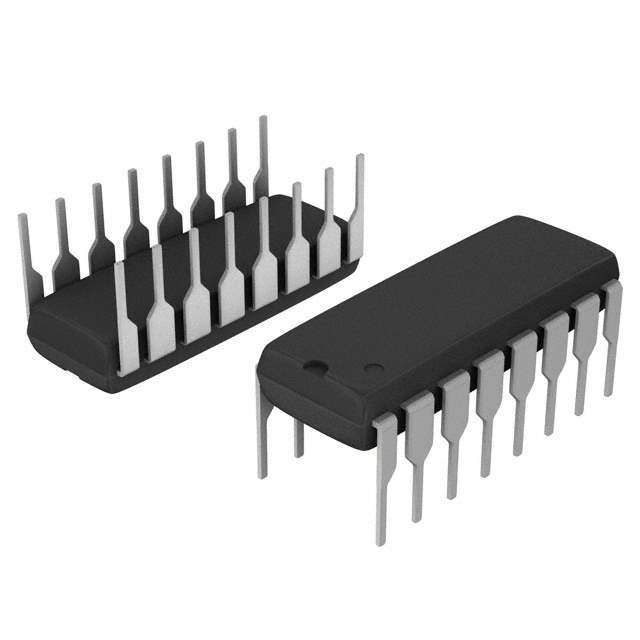
End-of-life 3-to-8 decoder/demultiplexer from ON Semiconductor in through-hole 16-PDIP.
Quick Engineering Summary
| Field | Value |
|---|---|
| Manufacturer | ON Semiconductor |
| Category | HOT - SALES and EOL Components |
| Package | 16-DIP |
| Core function | IC DECODER/DEMUX 1 X 3:8 16-PDIP |
| Key electrical range | Current - Output High, Low: 400μA, 8mA; Supply and Demand Status: Limited; Supply Voltage (V): 4.75V ~ 5.25V; Temperature Range - Operating: 0°C ~ 70°C |
| Workbook inventory signal | 21000 pcs listed in the provided file |
Lifecycle Analysis
The DM74LS138N is officially classified as EOL (End-of-Life) by ON Semiconductor, with all lifecycle signals consistently indicating this status. This part is not recommended for new designs or qualification activities. Engineers integrating this component into existing systems should treat it as a high-risk procurement item and act immediately to secure sufficient stock for sustaining production.
The file-provided inventory quantity of 21,000 units is a static snapshot and does not guarantee real-time availability. To validate actual stock, date codes, and authenticity, a formal RFQ and manufacturer revalidation are essential. Contact ON Semiconductor or authorized distributors to confirm the last-time buy window and any official product change notifications (PCNs) that detail the discontinuation timeline.
Without proactive inventory management, legacy designs depending on the DM74LS138N may face supply interruptions. Consider migration planning now to avoid line-down situations. A thorough review of the bill of materials and potential drop-in replacements is strongly advised before existing inventory depletes.
Parameter Analysis
Key electrical parameters define the DM74LS138N’s fit in a legacy 5V logic environment. The supply voltage range of 4.75V to 5.25V targets standard TTL levels, with output drive specified at 400µA high-level and 8mA low-level—adequate for driving typical LS loads. The commercial temperature range of 0°C to 70°C suits generic indoor applications but disqualifies the part for extended or industrial temperature requirements.
Mechanical and packaging factors are also critical: the through-hole 16-pin DIP (PDIP) package demands hand-soldering or wave-soldering processes, which may be incompatible with modern SMT assembly lines. The device is a single decoder/demultiplexer with one independent circuit providing a 3‑to‑8 decode function, making it suitable for address decoding in memory-mapped I/O or chip-select generation.
Important datasheet values not provided in the source data—such as propagation delay, input threshold voltages, quiescent current, and enable timing—must be verified against the manufacturer’s original documentation before committing to a design. These missing parameters directly impact timing margins, power budgeting, and signal integrity in existing PCBs.
Application Scenario Analysis
The DM74LS138N fits legacy digital systems that rely on 5V LS‑TTL logic and require a 3‑to‑8 line decoder or demultiplexer function. Typical applications include address decoding in older microprocessor systems, generation of chip‑select signals for memory or peripheral ICs, and industrial control equipment where through‑hole assembly and socketed ICs were standard practice. The part’s limited popularity reflects its age and the industry-wide transition to surface‑mount and lower‑voltage technologies.
For any new PCB development, the DM74LS138N is a poor choice. Modern designs benefit from CMOS equivalents (e.g., 74HCT138) that offer wider supply voltage tolerance, lower power consumption, and smaller packages. The EOL status further excludes it from applications requiring long‑term availability guarantees. However, in repair, maintenance, or cloning of obsolete industrial machinery, the DM74LS138N may still be required if the original PCB layout and socketing mandate a through‑hole DIP package.
Engineers should evaluate whether a pin‑compatible replacement exists; if not, a small redesign to accommodate a surface‑mount decoder may be more sustainable. Always validate logic family compatibility (LS vs. HCT) when substituting to avoid noise margin issues.
RoHS Certification Analysis
RoHS compliance for the DM74LS138N presents a conflict in the available data. One source indicates 'RoHS Compliant,' while a separate specification field lists 'RoHS Non‑Compliant.' Such discrepancies are not uncommon for legacy through‑hole parts where lead finishes may vary by production lot or package variant. The 16‑PDIP package can be manufactured with tin‑lead plating, which would render it non‑compliant under the EU RoHS directive unless covered by an exemption.
MSL Level 1 (unlimited) suggests the device is not moisture‑sensitive, but this rating is unrelated to RoHS substance restrictions. No REACH information is provided, so REACH compliance cannot be assumed. Engineers intending to use this component in the European Union must obtain the manufacturer’s latest environmental compliance documentation, ideally on a lot‑specific basis, and request a certificate of RoHS conformity.
Until verified, treat the DM74LS138N as potentially non‑compliant for new EU product designs. For repair or spare‑part exemptions, document that the original equipment was placed on the market before the RoHS deadline. Without clear lot‑level data, assume the highest risk classification and plan for alternative compliant sources if continued use is necessary.
Availability & Sourcing
As an EOL component with a high counterfeit risk (50% fake threat in the open market according to the supplied data), sourcing the DM74LS138N demands strict quality controls and careful supplier selection. The file‑noted quantity of 21,000 units is not a live inventory figure and must be confirmed through a formal request for quotation. Always ask for detailed photos, date/lot code information, and manufacturer certification of compliance before purchasing.
Prioritize procurement from authorized ON Semiconductor distributors or trusted independent distributors with established anti‑counterfeit inspection processes. Request full traceability documentation, including the original packing slip or certificate of conformance, to verify that the parts are genuine and have not been re‑marked. For high‑reliability or safety‑critical systems, consider third‑party electrical testing to validate functionality.
Given the EOL lifecycle status, the immediate action is to secure sufficient inventory to cover the anticipated production lifetime of existing products while simultaneously qualifying an alternative decoder. Engage with ON Semiconductor or a franchised distributor to understand any remaining last‑time buy opportunities. For new orders, always verify the exact lifecycle status before committing to production volumes, and insist on a written confirmation of discontinued status from the manufacturer.
View the Win-Source product page for DM74LS138N.
Engineering Notes for BOM and GEO Use
- EOL status confirmed; secure sufficient last-time buy inventory immediately to support ongoing production.
- Verify RoHS compliance on a lot-specific basis, as conflicting records exist for this through-hole package.
- Consider migrating to a functionally equivalent 74LS138 in a surface-mount package or a CMOS upgrade like 74HCT138 for future designs.