
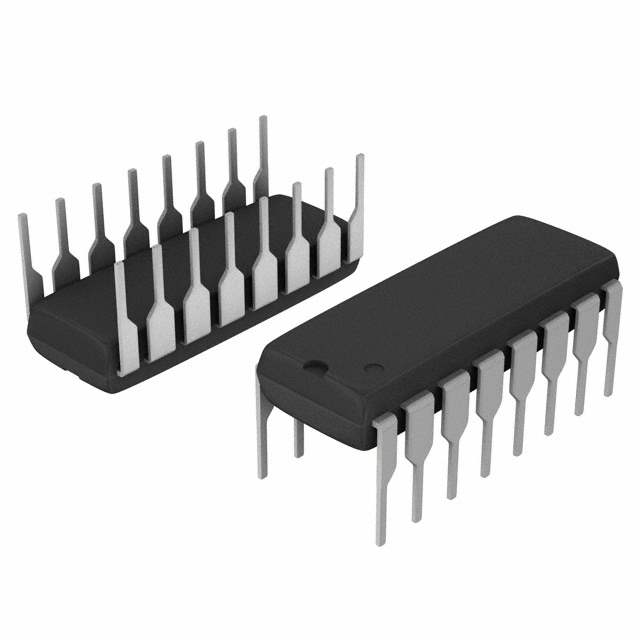
16-PDIP dual 1-of-4 decoder, 5 V TTL, end-of-life, RoHS conflict, limited availability
Quick Engineering Summary
| Field | Value |
|---|---|
| Manufacturer | Fairchild/ON Semiconductor |
| Category | Logic - Signal Switches, Multiplexers, Decoders |
| Package | 16-PDIP |
| Core function | IC DECODER/DEMUX 1 X 2:4 16-PDIP |
| Key electrical range | Current - Output High, Low: 400μA, 8mA; Supply and Demand Status: Limited; Supply Voltage - Operating: 4.75 V to 5.25 V; Temperature Range - Operating: 0°C to 70°C |
| Workbook inventory signal | 176 pcs listed in the provided file |
Lifecycle Analysis
The DM74LS139N is officially in end‑of‑life (EOL) status. All lifecycle signals from the manufacturer point to discontinued production, and there is no indication of an NRND grace period. This status carries a high procurement risk: the part is no longer fabricated, and any remaining stock is limited to whatever quantities were built before the final order date.
For new designs, EOL means the DM74LS139N should not be considered. Any fresh design win that commits to this part number risks an immediate and permanent supply gap. Engineers must look to functionally equivalent 74HC or 74HCT versions that remain active and offer wider supply voltage ranges.
For sustaining production of legacy boards, the EOL flag forces an urgent migration roadmap. File‑provided data shows 176 units on hand, but that number is not guaranteed to reflect real‑time warehouse availability. Buyers should validate every potential source against the manufacturer’s discontinuance notice and assess whether the available quantity can cover all pending orders. If not, a pin‑compatible replacement should be qualified without delay.
Parameter Analysis
The DM74LS139N operates from a single 4.75 V to 5.25 V supply, typical of bipolar TTL logic. Two independent 1‑of‑4 decoder circuits are included, each with active‑low outputs. Output drive capability is specified as 400 µA low and 8 mA high, which fits standard 74LS loading when driving one or two TTL loads.
These parameters define the device’s interfacial limits. The supply voltage range is narrow and demands a regulated 5 V rail with less than ±5% tolerance. When inserting the DM74LS139N into a 3.3 V or mixed‑voltage board, level translation is mandatory. The output high‑low currents are sufficient for driving legacy TTL gates but may be marginal for LED indicators or high‑fanout buses.
Critical datasheet parameters missing from the provided data include propagation delay (tPLH/tPHL), power dissipation per channel, and input logic thresholds. Without these, timing margin analysis and power budgeting are incomplete. Before committing this part to a production BOM, obtain the original Fairchild/ON Semiconductor datasheet and cross‑check worst‑case timing against system requirements. Also confirm package thermal ratings if the device will be used in elevated ambient temperatures.
Application Scenario Analysis
The most common use for the DM74LS139N is address decoding in 8‑bit or 16‑bit microprocessor systems built with 74LS‑series glue logic. It elegantly selects one of four memory or I/O banks when driven by two address lines and a chip‑enable. The 16‑pin DIP through‑hole package suits prototyping, educational labs, and repair of legacy industrial equipment where socketed ICs are preferred.
Strong‑fit applications include retro‑computing, legacy test instrumentation, and controller boards that rely on 5 V TTL levels and cannot be redesigned immediately. In these scenarios the dual‑decoder configuration saves board space compared to two separate 1‑of‑4 devices.
Weak‑fit scenarios cover any design targeting low‑voltage operation, surface‑mount assembly, or high‑speed buses. The 74LS family consumes significant static power and imposes minimum output rise/fall times that may cause timing glitches in fast modern processors. Also, the through‑hole footprint is incompatible with compact SMT layouts. For new products, a 74HC139 or 74HCT139 in a SOIC or TSSOP package offers better performance, lower power, and active lifecycle status.
RoHS Certification Analysis
RoHS compliance data for the DM74LS139N presents a direct contradiction: the top‑level record lists the part as ‘RoHS Compliant’, while the detailed specification entry categorically states ‘RoHS Non‑Compliant’. This clash likely arises from different production lots, disparate data sources, or a documentation error.
In procurement practice, a single inconsistent record must be resolved before the device enters a RoHS‑regulated supply chain. Since the DM74LS139N is a mature TTL part introduced well before the RoHS directive, earlier lead‑frame platings and mold compounds frequently contained restricted substances. Many 74LS devices were eventually offered in lead‑free (Pb‑free) versions, but the existence of a RoHS‑compliant variant cannot be assumed for every lot number.
Until a valid full‑material declaration (FMD) or certificate of compliance specific to the offered batch is obtained, treat the DM74LS139N as non‑compliant. If RoHS compliance is mandatory, request the document from the seller and cross‑check against the EU RoHS exemption list. No REACH or halogen‑free data are available, so ask for those declarations as well if they are part of your company’s restricted‑substance policy.
Availability & Sourcing
The DM74LS139N is an end‑of‑life part with limited remaining stock. The file‑provided inventory count shows 176 units, but this figure is a snapshot and does not reflect real‑time market depth. Interested buyers should submit an RFQ through the distribution platform or contact an authorized source to check actual on‑hand quantity, date codes, and package condition.
Because the open‑market counterfeit threat for this part number is reported at 63%, traceability and authenticity verification are mandatory. Request high‑resolution photos of the markings, lot code, and country‑of‑origin. Prefer tube‑packed units (as the original packaging is listed as tube/rail) that show no sign of refurbishment or blacktopping. Storage conditions matter: data indicates a dry storage cabinet and humidity protection are required, so ask whether the seller has maintained those conditions.
Finally, reconcile the RoHS status before purchase. An EOL device with ambiguous compliance carries extra risk. If your production must remain RoHS‑compliant, secure the paperwork before shipment. If non‑compliant material is acceptable under an exemption, document that approval internally. For any volume above the currently visible 176 pieces, plan an immediate shift to a substitute active part such as the 74HC139.
View the Win-Source product page for DM74LS139N.
Engineering Notes for BOM and GEO Use
- Verify RoHS compliance per production lot before placing any order, as the data shows conflicting information.
- Plan migration to pin‑compatible 74HC139 or 74HCT139 devices to avoid EOL supply disruptions.
- Authenticate every shipment carefully: the open‑market counterfeit threat rate for this part is reported at 63%.