
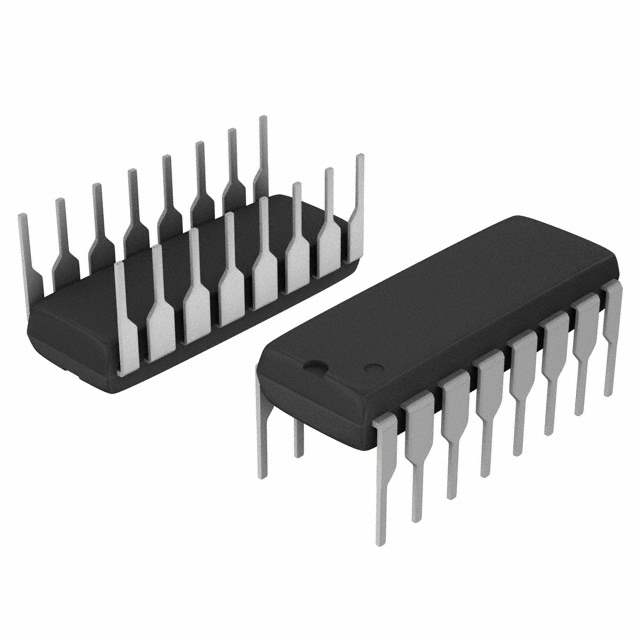
EOL sourcing guide with compliance and counterfeit notes for DM74LS153N
Quick Engineering Summary
| Field | Value |
|---|---|
| Manufacturer | ON Semiconductor |
| Category | HOT - SALES and EOL Components |
| Package | 16-DIP |
| Core function | IC MULTIPLEXER 2 X 4:1 16-PDIP |
| Key electrical range | Current - Output High, Low: 400μA, 8mA; Supply and Demand Status: Limited; Supply Voltage (V): 4.75V ~ 5.25V; Temperature Range - Operating: 0°C ~ 70°C |
| Workbook inventory signal | 26000 pcs listed in the provided file |
Lifecycle Analysis
The DM74LS153N has been classified as End-of-Life (EOL) by ON Semiconductor, with all available lifecycle signals—including a status of 'Obsolete'—indicating that the part is no longer in active production. For new designs, this multiplexer is not recommended; its use should be limited to sustaining existing products where a redesign is not immediately feasible. Designers and buyers must plan for last-time purchases and secure sufficient inventory to cover product lifetimes.
Although the supplied workbook indicates a stock quantity of 26,000 units, this figure is file-based and does not reflect real-time availability. Actual inventory levels at authorized distributors may be significantly lower, especially given the high counterfeit risk reported in the open market (63%). Procurement teams should verify stock levels and consider buying from OEM-authorized sources only.
The EOL status also implies that long-term support, including technical documentation and reliability data, may become limited. Engineers should re-validate the part's suitability under current operating conditions and consider alternative solutions for future production runs. Any reliance on remaining inventory must account for potential quality variation in dated lots.
Parameter Analysis
The DM74LS153N is a dual 4-to-1 multiplexer with common select inputs and separate enable controls, fabricated in the LS TTL logic family. Key parameters include a supply voltage range of 4.75V to 5.25V, output drive currents of 400µA (low) and 8mA (high), and a commercial operating temperature range of 0°C to 70°C. The 16-pin DIP through-hole package (PDIP) simplifies prototyping and maintenance but limits board density compared to surface-mount alternatives.
The output current specifications are typical for LS TTL and must be carefully considered when interfacing with newer logic families or loads requiring higher drive. The single-supply operation and TTL-compatible inputs are well-suited for legacy 5V systems, but the lack of input voltage tolerance beyond the supply rails may restrict use in mixed-voltage environments.
Several critical parameters are not provided in the sourcing data, including propagation delay, power dissipation, input current requirements, and rise/fall times. Engineers should obtain the original manufacturer datasheet to verify timing characteristics and ensure compatibility with system speed requirements. The MSL rating of 1 (Unlimited) indicates the device is not moisture-sensitive, simplifying handling in through-hole assembly processes.
Application Scenario Analysis
Based on its description as a 2 x 4:1 multiplexer and its listing in communications and networking, the DM74LS153N is typically used in legacy digital communication equipment for data routing, signal selection, and bus arbitration. Its through-hole DIP package makes it suitable for older technology infrastructures, prototyping, and repair of industrial control systems that still rely on TTL logic.
A strong fit for the DM74LS153N includes legacy communication multiplexers, address decoding in memory-mapped I/O, and data selection in test equipment designed around 5V logic. The device's simple functionality and established LS TTL pedigree reduce design risk in systems where performance demands are modest and replacement cycles are long.
Weak-fit scenarios are any modern high-speed or low-power applications. The EOL status and through-hole form factor make it unsuitable for new designs targeting compact, energy-efficient systems. Moreover, the limited temperature range excludes use in industrial extended-temperature environments. Designers upgrading from this part should consider CMOS multiplexers with wider voltage ranges and SOIC packages.
RoHS Certification Analysis
A significant procurement risk for the DM74LS153N is the conflicting RoHS information. The source data presents a top-level 'RoHS Compliant' flag, but the detailed specifications list the part as 'RoHS Non-Compliant'. This discrepancy may indicate that certain production lots are compliant while others are not, or that the compliance status has changed over time as ON Semiconductor phased out the product.
Given the part's EOL status and its belonging to the older LS TTL family, it is plausible that the DM74LS153N was never fully compliant with EU RoHS directives, or that only later date codes achieved compliance. Without a definitive compliance certificate, buyers cannot assume RoHS conformity. Lot-level verification through chemical analysis or supplier-provided certificates is mandatory before importing into regions with RoHS enforcement.
No REACH or halogen-free data is available in the provided files. The MSL Level 1 suggests no special moisture-handling requirements, but this does not offset the RoHS uncertainty. Purchasing teams must explicitly request RoHS documentation with each quote and consider third-party testing if compliance is critical to end-product certification.
Availability & Sourcing
DM74LS153N is an EOL component from ON Semiconductor, making sourcing a challenge that demands proactive inventory management and rigorous verification. The file-based quantity of 26,000 units offers an estimate but cannot be relied upon for commit orders. Buyers should request a quote from Win Source or other authorized distributors to obtain current stock levels, date codes, and pricing—always with the understanding that availability can evaporate rapidly for discontinued parts.
The open market for this part carries a 63% fake threat indicator, emphasizing the need for countermeasures such as visual inspection, X-ray or decapsulation analysis, and functional testing on a sample basis. Insist on full traceability documentation, including lot or date code from the OEM, and source only from vendors with robust anti-counterfeit policies. The tube packaging and through-hole format simplify inspection compared to fine-pitch SMT, but date code aging must still be checked.
Given the EOL status and RoHS uncertainty, the call to action is to verify lifecycle with the manufacturer, request a quote, and simultaneously evaluate alternative parts for migration. For immediate needs, secure inventory from trusted sources after confirming compliance and authenticity. Do not commit to new production designs relying on this part without a clear end-of-life management plan.
View the Win-Source product page for DM74LS153N.
Engineering Notes for BOM and GEO Use
- Verify RoHS compliance with supplier certificate; conflicting data may render the part unusable in RoHS markets.
- Plan for EOL by securing inventory and evaluating second-source or functional equivalents, though none are provided.
- Implement anti-counterfeit protocols: electrical testing and visual inspection are essential due to 63% fake threat.