
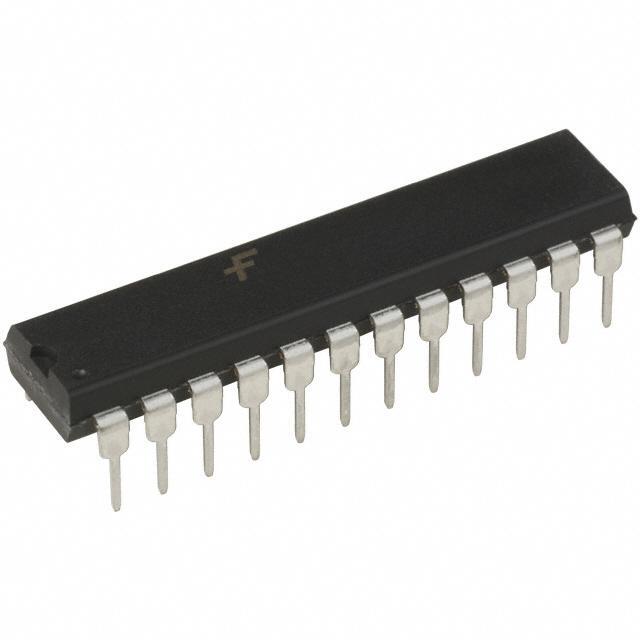
EOL 24-PDIP 1x4:16 decoder/demux — verify last‑time buy options and transition to alternative logic families.
Quick Engineering Summary
| Field | Value |
|---|---|
| Manufacturer | Fairchild/ON Semiconductor |
| Category | Logic - Signal Switches, Multiplexers, Decoders |
| Package | 24-PDIP |
| Core function | IC DECODER/DEMUX 1X4:16 24-PDIP |
| Key electrical range | Current - Output High, Low: 400μA, 8mA; Supply and Demand Status: Limited; Supply Voltage - Operating: 4.75 V to 5.25 V; Temperature Range - Operating: 0°C to 70°C |
| Workbook inventory signal | 1 pcs listed in the provided file |
Lifecycle Analysis
The DM74LS154N has been formally classified as End‑of‑Life (EOL) by Fairchild/ON Semiconductor. This status is confirmed across multiple supply‑chain signals, all indicating the part is obsolete and no longer in active production. For new designs, selecting the DM74LS154N carries unacceptable risk because long‑term availability cannot be guaranteed and no factory‑fresh inventory is being produced.
For existing production lines, the EOL label means procurement teams must immediately assess remaining stock and determine a last‑time‑buy schedule. The file‑provided quantity of one unit should not be interpreted as guaranteed availability; market conditions change rapidly for EOL components. Engineers and buyers should contact authorized distributors or the manufacturer to verify whether any factory‑warehoused lots remain.
Sustaining programs must also begin qualification of a functional replacement. While no direct pin‑for‑pin substitute is identified in the source data, alternative 4‑to‑16 decoder solutions from the CMOS or more modern logic families can be evaluated. A proactive migration plan will prevent costly line‑down situations once the remaining DM74LS154N inventory is exhausted.
Parameter Analysis
The DM74LS154N operates from a single 4.75 V to 5.25 V supply, typical for Low‑Power Schottky TTL logic. Its output drive capabilities are 400 µA for a high state and 8 mA for a low state, which directly determine fan‑out and pull‑up resistor sizing. Designers must confirm that the loads connected to the decoder outputs do not exceed these limits, particularly in legacy board designs where capacitive loading may slow transitions.
The part is specified for commercial temperature range (0 °C to 70 °C), making it unsuitable for industrial or extended‑temperature applications. The through‑hole 24‑PDIP package dictates a 0.600‑inch row spacing, important for PCB layout retrofits. Critical datasheet parameters such as propagation delay, power dissipation, and input leakage currents are not captured in the supplied specifications. Engineers must obtain the official Fairchild/ON Semiconductor datasheet to extract timing margins, especially if the DM74LS154N is clocked at higher frequencies.
Missing details also include rise/fall times and noise‑immunity thresholds. Without these, signal integrity and cross‑talk cannot be adequately modeled. For any design reuse or repair, requesting the complete datasheet and performing bench‑level verification under worst‑case conditions is recommended.
Application Scenario Analysis
The DM74LS154N implements a 1×4:16 decoder/demultiplexer function, historically deployed for address decoding in memory subsystems, I/O port selection, and peripheral strobing in TTL‑based digital systems. Its active‑low outputs and single‑supply operation fit standard microprocessor‑peripheral interfaces of the 1980s–1990s era.
In a strong‑fit scenario, the DM74LS154N may still be required to repair or maintain legacy industrial controllers, test equipment, or avionics test benches that cannot be redesigned. For these limited‑run maintenance activities, sourcing genuine EOL inventory is essential. The part is also occasionally used in educational retro‑computing projects where authenticity is valued.
Weak‑fit scenarios include any new high‑speed design, where the LS logic family’s propagation delays and power consumption are suboptimal compared to modern CMOS decoders. The 24‑PDIP through‑hole package further limits use in dense, surface‑mount assemblies. Additionally, the commercial temperature range precludes deployment in harsh environments, making the DM74LS154N a poor candidate for automotive or outdoor applications.
RoHS Certification Analysis
RoHS compliance for the DM74LS154N presents a critical documentation gap. The top‑level compliance field states “RoHS Compliant,” but a separate specification row lists the RoHS Status as “RoHS Non‑Compliant.” This conflict suggests that compliance may vary by manufacturing lot or that the part number was available in both compliant and non‑compliant versions during its production life.
For buyers who must meet EU RoHS 2015/863 or similar regulations, this ambiguity demands immediate resolution. Lot‑level RoHS certificates should be requested from the supplier to confirm lead‑free termination and the absence of the six restricted substances. Without such documentation, the safest assumption is non‑compliance, which limits the DM74LS154N to exempt applications or non‑RoHS markets.
The source data does not reference REACH, halogen‑free, or MSL declarations, so these cannot be inferred. Procurement teams should add a compliance gate to their RFQ process: only accept DM74LS154N lots accompanied by a manufacturer‑dated RoHS certificate. This proactive step avoids regulatory rejection at customs or quality audits.
Availability & Sourcing
Sourcing the DM74LS154N, a Fairchild/ON Semiconductor EOL decoder, requires immediate action due to its end‑of‑life status. File‑provided inventory lists a single unit, but this is not a real‑time figure and should not be relied upon without confirmation. Buyers should initiate a request‑for‑quote (RFQ) with authorized distributors or trusted aftermarket suppliers who can verify on‑hand stock and provide date‑lot codes.
The open‑market fake threat for the DM74LS154N is rated at 42%, a significant risk that mandates stringent traceability measures. Each shipment should include manufacturer‑original tube/rail packaging, dry‑storage certificates, and lot‑code documentation. Visual inspection and electrical sample testing are recommended for any lot sourced from non‑franchised channels.
Packaging is tube/rail, which is standard for through‑hole PDIP devices and simplifies bulk handling. Given the “Limited” supply‑demand status, urgency is critical. Once existing tubes are depleted, replacement will require a component spin, so engineering and procurement teams must coordinate a migration timeline. Request a quote today to secure the remaining DM74LS154N stock and simultaneously begin evaluating decoder alternatives from the CMOS family to future‑proof the supply chain.
View the Win-Source product page for DM74LS154N.
Engineering Notes for BOM and GEO Use
- Validate RoHS compliance per manufacturing lot; the datasheet shows conflicting compliance data.
- The open‑market fake threat for this part is 42%; require authentic traceability documentation.
- With only limited file‑provided inventory, secure EOL stock quickly while planning a migration path.