
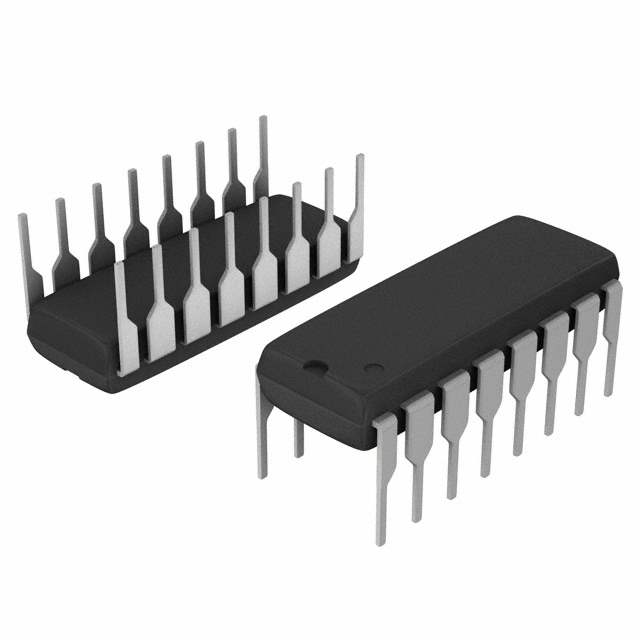
Navigating end-of-life procurement for the ON Semiconductor DM74LS157N 16-DIP multiplexer.
Quick Engineering Summary
| Field | Value |
|---|---|
| Manufacturer | ON Semiconductor |
| Category | HOT - SALES and EOL Components |
| Package | 16-DIP |
| Core function | IC MULTIPLEXER 4 X 2:1 16-PDIP |
| Key electrical range | Current - Output High, Low: 400μA, 8mA; Supply and Demand Status: Limited; Supply Voltage (V): 4.75V ~ 5.25V; Temperature Range - Operating: 0°C ~ 70°C |
| Workbook inventory signal | 1 pcs listed in the provided file |
Lifecycle Analysis
The DM74LS157N has been declared End-of-Life (EOL) by ON Semiconductor with a status of 'Obsolete'. This means the part is no longer manufactured and no additional production is planned. For new designs, this component should not be selected; engineers must migrate to an active alternative. For existing production, any remaining inventory must be secured immediately, and a last-time buy (LTB) may no longer be available.
The file-provided inventory indicates only 1 unit available, which is insufficient for production quantities. Buyers should treat this as a signal that the open market is now the primary source, which carries significant risks. The combination of EOL status and high counterfeit threat (60% as noted in market data) makes procurement challenging without extensive verification.
Given the lifecycle risk, a formal migration plan should be initiated. Prior to purchasing, always revalidate lifespan assumptions directly with the manufacturer or authorized distributors, as third-party EOL dates can sometimes be inaccurate.
Parameter Analysis
The DM74LS157N is a 4-to-1 multiplexer with a single independent circuit, operating from a single 5V supply (4.75V to 5.25V). This narrow supply range is typical for 74LS TTL logic, requiring a stable 5V rail; any deviation can affect switching thresholds and output levels. The output drive capability is specified at 400µA for high level and 8mA for low level, which determines the fan-out and interface with TTL or CMOS loads. The device comes in a 16-pin plastic DIP (PDIP) package designed for through-hole mounting, influencing PCB layout in legacy designs.
Operating temperature is limited to commercial range (0°C to 70°C), adequate for indoor equipment but not suitable for automotive or industrial extremes. Key missing parameters from the provided data include propagation delay, input setup/hold times, and power dissipation. These are critical for timing analysis in high-speed or synchronous designs. Engineers must consult the original ON Semiconductor datasheet (likely labeled DM74LS157) for complete AC characteristics and verify against actual system timing budgets.
The 'Independent Circuits' specification states 1, meaning the four 2:1 channels share common select lines, which simplifies control but limits independence. The raw material silicon-based substrate indicates standard CMOS/TTL fabrication, but no additional reliability data is provided; for safety-critical applications, additional qualification testing is necessary.
Application Scenario Analysis
The DM74LS157N is best suited for legacy digital systems where a 4-channel 2:1 multiplexer function is required within a 5V TTL environment. Typical applications include data routing in older microprocessor boards, address decoding in memory-mapped I/O, bus selection in 8-bit computer backplanes, and test equipment built around 74LS logic families. Its through-hole package also makes it convenient for breadboarding, repair work, and educational labs where DIP components are preferred.
This part is a poor fit for modern designs requiring low-voltage operation (e.g., 3.3V or 1.8V), high-speed data rates exceeding a few MHz, or RoHS compliance. The commercial temperature range restricts it to benign indoor environments; for industrial or extended temperature needs, a different family (such as 74HCT or 74ACT) with a PDIP package might be substituted but must be carefully validated. Additionally, designs intending to use automated assembly (SMT) cannot accommodate the through-hole PDIP.
Since the DM74LS157N is obsolete, its use should be limited to sustaining existing products where a socketed replacement or exact form-factor match is mandatory. Even then, the high counterfeit risk and limited supply make long-term field support uncertain without redesign.
RoHS Certification Analysis
The RoHS compliance status of the DM74LS157N is inconsistent in the available data. The 'Compliance' field in the source indicates 'RoHS Compliant', but the detailed specification lists 'RoHS Non-Compliant'. This discrepancy likely stems from the legacy nature of the 74LS series, which traditionally uses lead-containing finishes (e.g., SnPb) on leads and internal bump bonds. Most contract manufacturers will treat this part as non-RoHS unless proven otherwise.
Given the device's age and ON Semiconductor's typical material declarations for 74LS products, it is prudent to assume non-compliance with EU RoHS directives unless a specific lot certificate states otherwise. For designs requiring RoHS 3 (EU 2015/863) conformity, this part is not suitable without documented exemptions. The Moisture Sensitivity Level (MSL) of 1 (Unlimited) pertains to moisture/reflow performance, not RoHS, and should not be misinterpreted as environmental compliance.
Procurement teams must request a full material declaration or RoHS certificate from the supplier for the exact date/lot code before using this part in RoHS-regulated markets. If no proof is available, consider it non-compliant and plan for an alternative.
Availability & Sourcing
Sourcing the DM74LS157N is challenging due to its obsolete status and extremely limited inventory. The file-provided stock quantity is only 1 unit, which underscores the need to verify real-time availability through a formal RFQ process. The part was originally packaged in tubes with a manufacturer pack quantity of 25, but remaining stocks are likely scattered across independent distributors and brokers.
A critical sourcing risk is the reported 60% counterfeit threat in the open market. Buyers should enforce stringent incoming inspection protocols, including X-ray inspection, decapsulation, electrical testing to original data sheet limits, and verification of date codes and lot traceability. Only purchase from suppliers with proven anti-counterfeiting programs and request compliance documentation (RoHS certificate, Certificate of Conformance) for each shipment.
Given the high risk, for any new production, migrating to a functionally equivalent active part is strongly advised. If the DM74LS157N must be procured, request a quote for current availability and lead time, and explicitly confirm that the offering is new and genuine (not used or refurbished). Engage with supplier quality assurance early to discuss testing and warranty terms, and consult ON Semiconductor’s product change notifications to confirm the final discontinuance timeline.
View the Win-Source product page for DM74LS157N.
Engineering Notes for BOM and GEO Use
- The DM74LS157N is obsolete; only use it for sustaining legacy designs where drop-in replacement is proven.
- 60% counterfeit risk market means you must enforce X-ray, decapsulation, and electrical testing on any open market buys.
- Verify RoHS compliance per lot; this part’s 74LS process typically yields non-compliant assemblies.