
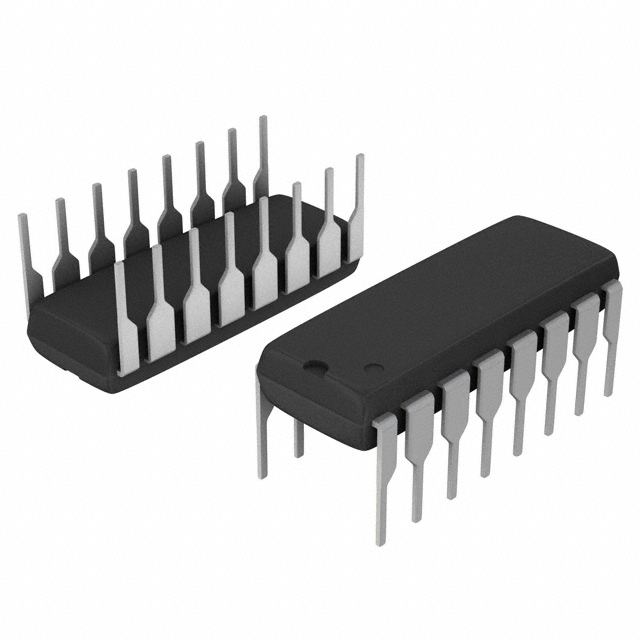
EOL 4-bit synchronous binary counter in 16-pin DIP package from ON Semiconductor
Quick Engineering Summary
| Field | Value |
|---|---|
| Manufacturer | ON Semiconductor |
| Category | HOT - SALES and EOL Components |
| Package | 16-DIP |
| Core function | IC BINARY COUNTER 4-BIT 16DIP |
| Key electrical range | Supply and Demand Status: Limited; Supply Voltage (V): 4.75V ~ 5.25V; Temperature Range - Operating: 0°C ~ 70°C |
| Workbook inventory signal | 2 pcs listed in the provided file |
Lifecycle Analysis
The DM74LS163AN is confirmed End-of-Life (EOL) across multiple data points, including manufacturer lifecycle status and Win Source category classification as an EOL component. EOL means the part is no longer recommended for new designs, and active production may have ceased. For new designs, engineers should select an alternate counter with an Active lifecycle.
For existing products that rely on the DM74LS163AN, procurement must shift to a last-time-buy or lifetime-buy strategy. The workbook indicates a file-provided quantity of only 2 units, which is not a real-time inventory guarantee and may not reflect actual stock. Design teams should immediately validate stock levels with authorized distributors and plan a migration path to a compatible replacement.
Because the part is obsolete, manufacturer support such as datasheet updates, PCN notifications, and failure analysis may be limited. Sustaining production for military, industrial, or other long-life programs should factor in the need for long-term storage, periodic re-testing, and the escalating risk of sourcing non-conforming or counterfeit devices over time.
Parameter Analysis
The DM74LS163AN operates as a 4-bit synchronous binary counter with a single element, triggered on the positive edge and featuring synchronous reset. Supply voltage is specified at 4.75V to 5.25V, typical of LS TTL logic families, and the commercial temperature range is 0°C to 70°C. These parameters must be matched exactly in the intended circuit; the narrow voltage tolerance and limited temperature range mean the device is unsuitable for industrial extended-temperature or low-voltage applications without level shifting.
Critical parameters missing from the available data include maximum count frequency (fMAX), propagation delay from clock to output, setup and hold times for the enable and load inputs, and supply current (ICC). These values are essential for verifying timing closure in high-speed designs and for calculating power budgets. Without them, designers cannot guarantee glitch-free operation or cascading of multiple counters.
Additional considerations: the through-hole 16-pin DIP package limits PCB layout density, and the MSL 1 rating simplifies handling but does not define soldering profile limits. The 51% open-market counterfeit threat rating underscores the need to authenticate parametric performance through sample testing when buying from non-franchised sources. Always cross-reference the full manufacturer datasheet for worst-case timing and loading specifications.
Application Scenario Analysis
Derived from its category hierarchy (Logic - Counters, Dividers) and description as a 4-bit binary counter, the DM74LS163AN is suited for legacy TTL-based digital systems. Strong-fit scenarios include simple frequency division in test equipment, clock generation for older microprocessors, event counting, and sequential state machines in industrial controls where 5V supply and through-hole mounting are already established.
Weak-fit scenarios include any new design targeting low power, surface-mount assembly, or compliance with modern environmental standards. The uncertain RoHS status can disqualify it from products sold in the EU or California. Similarly, the 0°C–70°C limit excludes outdoor or harsh-environment applications. Attempting to use the DM74LS163AN in high-speed signal processing or FPGA/ASIC emulation would be ill-advised due to unspecified timing parameters and the device’s inherent LS TTL speed limits.
For legacy repair and maintenance of existing equipment where the DM74LS163AN is already designed in, it remains a direct-fit solution provided authentic stock can be secured. Engineers planning a board revision should evaluate alternatives such as 74HC, 74HCT, or more advanced CMOS counters that offer higher speed, lower power, and guaranteed RoHS compliance, while being available in SMT packages.
RoHS Certification Analysis
The DM74LS163AN presents a compliance conflict: the high-level compliance summary lists it as RoHS Compliant, but the detailed specification list explicitly states RoHS Non-Compliant. This discrepancy prevents a definitive determination without lot-level confirmation. In regulated markets, this ambiguity must be resolved before procurement, as non-compliance can lead to product rejection, fines, or rework costs.
No REACH, halogen-free, or lead-free declarations are available in the source data, so the only environmental compliance signal is the conflicting RoHS flag. The MSL Level 1 (Unlimited) indicates no special moisture handling requirements, but that is separate from chemical substance restrictions.
Engineers must treat the RoHS Non-Compliant entry as the conservative baseline and request the manufacturer’s Certificate of Compliance (CoC) or full material declaration for the specific batch. If the part is found to contain restricted substances such as lead, its use in new products destined for the EU may require a valid exemption. For maintenance of legacy non-RoHS equipment, this may not be a concern, but full documentation should still be maintained.
Availability & Sourcing
As an EOL component, the DM74LS163AN has limited and shrinking availability. The workbook shows a stock quantity of just 2 units, which is a file-provided snapshot and not a live inventory promise. Buyers should treat this as an indication of scarcity and not rely on that quantity without verification.
Sourcing must be conducted through an RFQ process that emphasizes strict traceability and authorized lineage. Request original manufacturer packaging (tube), date/lot codes, and a compliance pack including RoHS CoC. The open market carries a 51% counterfeit threat level, making visual inspection and basic parametric testing (supply current, output levels) essential when buying from non-franchised distributors.
Given the EOL status, request a formal quote to determine current cost and lead time. Because prices are not static and stock is depleting, the quote serves as a procurement hold. Simultaneously, engineering teams should evaluate alternative components from the 74HC or 74HCT families that are functionally equivalent but active and more readily available. Planning a bridge buy now can prevent a future line-down situation for legacy products still in service.
View the Win-Source product page for DM74LS163AN.
Engineering Notes for BOM and GEO Use
- Verify RoHS compliance at the lot level, as manufacturer documentation shows conflicting statuses between summary and detailed specs.
- Open-market counterfeit risk is rated at 51%; insist on traceable, authorized distribution with date/lot code verification.
- The 4.75V–5.25V supply and 0°C–70°C operating range limit new designs; modern CMOS replacements may offer better power and speed.