
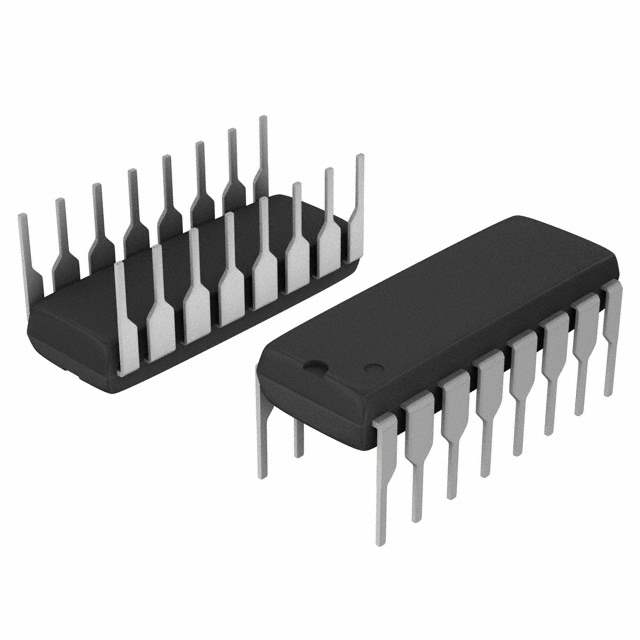
EOL Monostable Multivibrator IC - 2 Circuits, 65ns, 16-PDIP
Quick Engineering Summary
| Field | Value |
|---|---|
| Manufacturer | Fairchild/ON Semiconductor |
| Category | Logic - Multivibrators |
| Package | 16-PDIP |
| Core function | IC MMV 2-CIR 65-NS 16-PDIP |
| Key electrical range | Current - Output High, Low: 400μA, 8mA; Schmitt Trigger Input: No; Supply and Demand Status: Limited; Supply Voltage - Operating: 4.75 V to 5.25 V |
| Workbook inventory signal | 16000 pcs listed in the provided file |
Lifecycle Analysis
The DM74LS221N has an official End-of-Life (EOL) lifecycle status from Fairchild/ON Semiconductor. This means the part is no longer in active production and is not recommended for new designs. Procurement should be limited to maintaining existing production or repair of legacy systems.
EOL devices carry elevated supply chain risks: dwindling channel inventory, increasing counterfeit probability, and potential obsolescence without a pin‑compatible replacement. The provided workbook quantity of 16,000 units is a file‑based snapshot and does not guarantee current, real‑time availability. Engineers should immediately evaluate alternative solutions or undertake lifetime buys if system continuity depends on this part.
For sustaining production, obtain official EOL notification and last‑time‑buy dates from the manufacturer. Verify any remaining distributor stock for date codes, storage conditions, and authenticity. A proactive migration plan is strongly advised to avoid line‑down situations.
Parameter Analysis
Key parameters for the DM74LS221N include its monostable multivibrator logic type, two independent circuits, 65 ns propagation delay, and supply voltage range of 4.75 V to 5.25 V. The output drive is rated at 400 µA (high) and 8 mA (low), which is typical for LS‑TTL. The absence of Schmitt‑trigger inputs means transitions rely on clean edges; designers should ensure adequate slew rates on input pins.
The 16‑PDIP through‑hole package suits breadboarding, repair, and legacy PCB layouts but is incompatible with modern surface‑mount assembly. Operating temperature (0°C to 70°C) limits use to commercial environments. Missing from the provided data are the timing component range (external resistor/capacitor values), retrigger capability, and maximum pulse width, all of which are critical for reliable timing design. Verify these directly from the official datasheet before integration.
Because the part is EOL, no further parametric improvements or silicon revisions are likely. Performance must be validated against actual, aged samples to ensure conformance to original specifications.
Application Scenario Analysis
The DM74LS221N is primarily suited for legacy digital systems that require precision pulse generation, pulse stretching, or time‑delay functions using TTL logic levels. Typical applications include debouncing mechanical switches, generating power‑on reset pulses, and creating controlled‑width signals in industrial controllers and test equipment originally designed around the 74LS family.
It is a poor fit for new low‑voltage or high‑speed designs that use 3.3V CMOS or require sub‑nanosecond timing. The through‑hole package and narrow temperature range also preclude use in portable, space‑constrained, or industrial‑extended environments. Designers seeking surface‑mount alternatives with similar logic function should consider newer CMOS monostable devices in SOIC or TSSOP packages.
For educational or prototyping purposes where availability is not time‑critical, the DM74LS221N can still be a useful building block, provided it can be sourced from verified stock.
RoHS Certification Analysis
The compliance data for the DM74LS221N contains contradictory information. The top‑level compliance object indicates RoHS Compliant, but a specification field within the same dataset lists RoHS Non‑Compliant. This inconsistency may stem from different production runs or revisions of manufacturer documentation.
Without a definitive statement from Fairchild/ON Semiconductor, treat the RoHS status as uncertain. Many 74LS devices were originally manufactured with tin‑lead finishes, and later RoHS‑compliant versions may have been introduced before the EOL. Do not rely on either claim; always request a lot‑specific Certificate of Conformance or laboratory test report when purchasing.
If RoHS compliance is mandatory for your application, consider alternative parts with unambiguous RoHS‑3 (EU 2015/863) certification. For repair of non‑compliant legacy equipment, the DM74LS221N may be acceptable, but verify export restrictions and end‑market regulations.
Availability & Sourcing
As an EOL device, the DM74LS221N is in limited supply. The file‑provided quantity of 16,000 units is a static inventory indicator and must not be interpreted as guaranteed, real‑time stock. Actual availability changes quickly in the spot market. Submit a request for quotation (RFQ) to obtain current stock levels, date codes, and packaging details.
When sourcing, insist on full traceability back to Fairchild/ON Semiconductor. Verify that components come in original tube/rail packaging (as indicated) and have been stored in dry, humidity‑controlled conditions to avoid moisture‑related damage. For high‑reliability applications, consider third‑party testing for authenticity and electrical performance.
Because the part is obsolete, no further production is scheduled. Secure enough inventory to cover the remaining life of your product, or concurrently qualify a replacement. Note that the “Fake Threat in the Open Market” is listed at 67%, underscoring the need for rigorous counterfeit avoidance measures.
View the Win-Source product page for DM74LS221N.
Engineering Notes for BOM and GEO Use
- Verify RoHS compliance at the lot level due to conflicting datasheet revisions and legacy TTL process variations.
- Confirm propagation delay matching for timing-critical designs; datasheet may specify maximum and typical values under different capacitive loads.
- Allocate extra procurement lead time and plan for spot‑market sourcing, as EOL parts often have limited, non‑replenishing stock.