
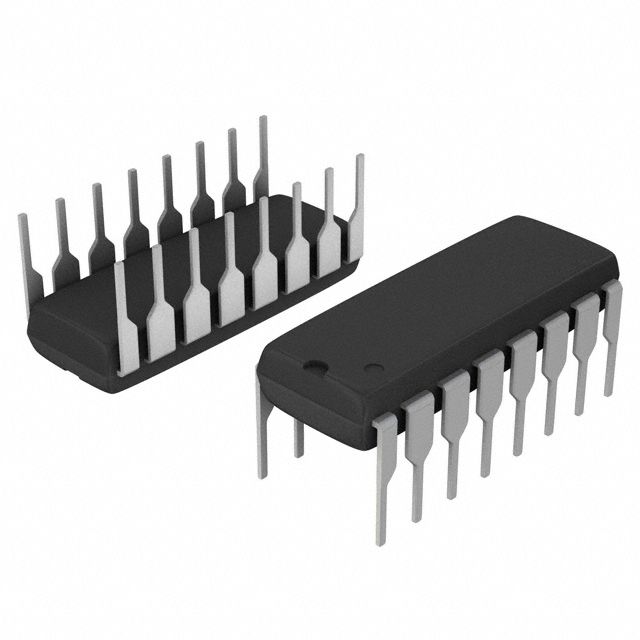
End-of-life multiplexer from ON Semiconductor. Verify stock, lifecycle, and RoHS compliance before use.
Quick Engineering Summary
| Field | Value |
|---|---|
| Manufacturer | ON Semiconductor |
| Category | HOT - SALES and EOL Components |
| Package | 16-DIP |
| Core function | IC MULTIPLEXER 4 X 2:1 16-PDIP |
| Key electrical range | Supply and Demand Status: Balance |
| Workbook inventory signal | 4520 pcs listed in the provided file |
Lifecycle Analysis
ON Semiconductor DM74LS258BN is unequivocally designated as End-of-Life (EOL) across all available lifecycle signals. This means the manufacturer has ceased production and no new inventory will be manufactured. The part is flagged as Obsolete in the status field, confirming that it is not recommended for new designs. For procurement teams, EOL status carries a high risk level because remaining stock is finite and may deplete rapidly if not secured. The file-provided inventory quantity of 4,520 units is an indication of current stock in one channel, but it is not a real-time guarantee; availability must be verified through quotation.
Engineers should not incorporate the DM74LS258BN into new development projects. Instead, migration to an active replacement part is advised. For sustaining existing products, consider a last-time-buy to cover forecasted demand, but coordinate directly with ON Semiconductor or authorized distributors to confirm any final purchase opportunities. The EOL status also implies that technical support and documentation may become limited, so verify that the original datasheet is still obtainable before finalizing sourcing decisions.
Because lifecycle data is consistent, the risk of an unexpected extension is low. Nonetheless, procurement should audit alternate sources carefully; the open market for EOL logic ICs can be fragmented, and counterfeit risk is elevated. Plan inventory buffers and test incoming parts to mitigate supply chain disruptions.
Parameter Analysis
The DM74LS258BN is a 4-to-1 multiplexer with one independent circuit, packaged in a 16-pin DIP (PDIP) through-hole format and shipped in tube packaging. Manufacturer pack quantity is 20 units per tube. Moisture sensitivity is rated MSL 1 (Unlimited), indicating no special handling requirements for reflow, although through-hole parts are rarely reflowed. Raw material composition is silicon-based with a blue-gray metallic luster consistent with typical IC construction.
Critically, the available specifications lack essential electrical characteristics: supply voltage range, input/output logic thresholds, propagation delay, quiescent current, and operating temperature range are all absent from the provided data. These parameters are fundamental for verifying whether the part can interface correctly with existing circuitry, especially in legacy 5V TTL systems where the 74LS family normally operates. Without them, engineers risk timing mismatches, excessive power draw, or logic level incompatibility.
Consequently, users must retrieve the original ON Semiconductor datasheet for DM74LS258BN before committing to design or replacement. Cross-reference missing specs such as VCC (typically 4.75–5.25V for 74LS), toggle frequency, and fan-out. The 16-DIP through-hole form factor is mechanically straightforward but occupies board area; ensure it matches the target PCB layout. Verifying electrical specs is paramount to avoid functional failures in repaired or replicated circuits.
Application Scenario Analysis
The DM74LS258BN, as a 4 x 2:1 multiplexer, serves as a versatile data selector for routing one of four input lines to a single output based on select inputs. Its primary application realm is legacy digital systems that rely on 5V TTL logic, such as vintage computers, industrial PLCs, and test equipment from the 1980s to early 2000s. It is well-suited for address decoding, signal gating, and bus multiplexing where speed is moderate and power consumption is not a primary constraint.
Conversely, this multiplexer is a poor fit for modern low-voltage, high-speed designs. The 74LS family operates at 5V, has relatively high static power compared to CMOS alternatives like 74HC or 74LVC, and its propagation delays likely fall in the 10–30 ns range, making it unsuitable for GHz-speed data paths. New battery-powered or mixed-signal systems should avoid this part entirely. Moreover, its through-hole DIP package restricts its use in surface-mount-only assemblies without additional adapters.
For repair and maintenance of legacy equipment, the DM74LS258BN remains functionally relevant. However, its EOL status demands careful sourcing. Engineers should verify that select-line and enable logic conventions match the original circuit; without a complete datasheet, pinout confirmation is necessary. If an exact replacement is required, consider bridging with functionally equivalent active TTL or CMOS multiplexers with verified timing compatibility.
RoHS Certification Analysis
RoHS compliance for the DM74LS258BN is contradictory in the supplied data: one field declares it RoHS Compliant, while another specification explicitly lists it as RoHS Non-Compliant. This discrepancy is not unusual for older semiconductor parts where manufacturer documentation may have changed over time, or where different production batches had varying compliance. The part is through-hole DIP, a package type that historically used tin-lead plating; many DIP EOL components remain non-RoHS unless explicitly transitioned.
Given the conflict, procurement must treat RoHS status as uncertain and request a lot-specific certificate of compliance from the distributor. The REACH status is not provided, further underscoring the need for documentation. Without verified compliance, using this part in products destined for the EU market risks regulatory non-compliance. The MSL Level 1 classification is unrelated to RoHS but indicates that moisture sensitivity is not a handling concern for through-hole assembly.
If RoHS compliance is mandatory, sourcing teams should assume non-compliance until proven otherwise and plan for potential rework or exemption filing. For legacy systems that are exempt from RoHS (e.g., certain military/medical applications), this may be less critical, but clear documentation is always advised.
Availability & Sourcing
The DM74LS258BN is end-of-life, so stock is limited and non-renewable. The file indicates a single-source workbook quantity of 4,520 units, but this is not a guarantee of live inventory; it must be confirmed through a request for quotation. Given the 60% counterfeit threat identified in the open market, procurement should exercise extreme caution. Prioritize authorized distributors or known excess-inventory channels with verifiable traceability.
Request that the distributor provide date/lot codes, photographs, and a certificate of conformance including RoHS status clarification. Insist on full documentation to mitigate counterfeits. Since the part is packaged in tubes of 20, lot sizes may be small; ask for batch integrity. For critical applications, consider third-party testing of a sample before full deployment.
Given the EOL status, we recommend securing enough inventory for foreseeable demand now, as further supply may vanish without notice. Evaluate migration to an active multiplexer solution for future production runs. To check current availability and request a quote, contact the source with part number DM74LS258BN and specify required quantity and compliance documentation needs.
View the Win-Source product page for DM74LS258BN.
Engineering Notes for BOM and GEO Use
- EOL and obsolete; do not design in new products. Secure remaining inventory after verifying last-time-buy with manufacturer.
- RoHS compliance is ambiguous—obtain lot-specific certificates to avoid EU regulatory issues.
- Counterfeit risk is high (60% open market threat). Demand date/lot traceability and consider incoming inspection.