
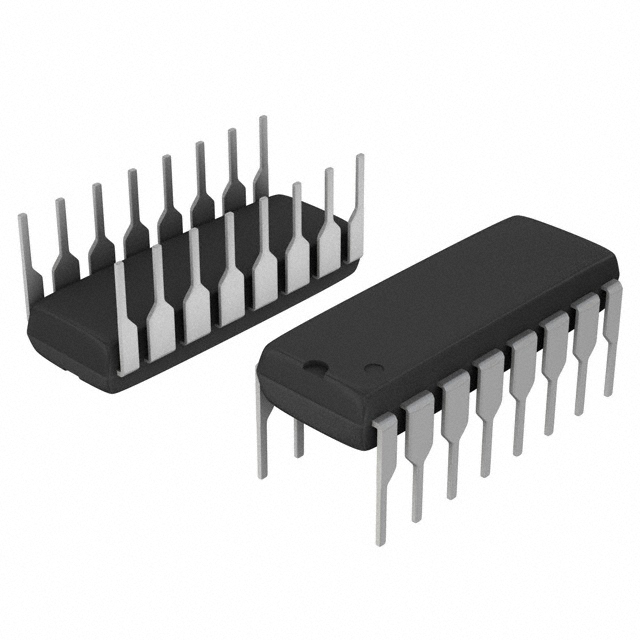
DM74LS259N: EOL 8‑bit Addressable Latch – Parameter Verification & Sourcing Guidance
Quick Engineering Summary
| Field | Value |
|---|---|
| Manufacturer | ON Semiconductor |
| Category | HOT - SALES and EOL Components |
| Package | 16-DIP |
| Core function | IC D-TYPE ADDR 1:8 16-PDIP |
| Key electrical range | Current - Output High, Low: 400μA, 8mA; Output Type: Standard; Supply and Demand Status: Limited; Supply Voltage (V): 4.75V ~ 5.25V |
| Workbook inventory signal | 1 pcs listed in the provided file |
Lifecycle Analysis
The DM74LS259N is unequivocally an End‑of‑Life (EOL) part. All lifecycle signals provided—Excel parameter, lifecycle status, and status field—uniformly point to EOL. For new designs, selecting this latch introduces serious supply continuity risk; engineers should instead evaluate active alternatives in the 74HCT or modern CMOS families that offer functional compatibility.
For existing production lines that still rely on the DM74LS259N, EOL status means that available inventory is finite and will not be replenished by the manufacturer. The file‑supplied quantity of just 1 unit (workbook_qty) underscores the scarcity. Procurement teams must treat any discovered stock as subject to rapid depletion. Before committing to a production run, request a formal last‑time buy (LTB) notice from ON Semiconductor or authorized distributors to determine whether a final purchase window remains open. Without such confirmation, uncontrolled sourcing from the open market carries a high risk of counterfeit or date‑code issues.
Parameter Analysis
Key parameters for the DM74LS259N shape its behavior in a circuit. The supply voltage range of 4.75 V to 5.25 V is typical of 5 V LS TTL logic, requiring a regulated 5 V rail with standard decoupling. Output drive is modest: low‑level output current (IOL) is 8 mA, high‑level (IOH) is 400 µA. This limits the number of TTL loads that can be driven directly; fan‑out calculations must account for these values. The propagation delay, specified at 35 ns, is moderate—acceptable for most control and glue logic applications up to a few megahertz, but it becomes a timing constraint in high‑speed data paths.
The device contains a single independent 1‑of‑8 addressable latch with a standard output type and through‑hole mounting in a 16‑pin PDIP package. Operating temperature is commercial (0 °C to 70 °C), which confines usage to indoor, non‑industrial extreme environments. Several performance details are missing from the supplied data: input logic thresholds (VIL, VIH), setup and hold times for the address and enable inputs, and absolute maximum ratings. Engineers must refer to the original ON Semiconductor datasheet for these values to guarantee reliable timing closure and to protect against latch‑up or overstress.
Application Scenario Analysis
Given its 1‑of‑8 addressable latch architecture, the DM74LS259N finds a strong fit in legacy systems that require a simple means to expand output ports. Classic use cases include memory‑mapped I/O in 8‑bit microprocessor designs, LED or indicator control where one of eight outputs is selected, and control register emulation in instrumentation built during the 1970s and 1980s. The through‑hole PDIP package also makes it suitable for breadboard prototyping and for repairing socketed DIP‑based PCBs.
Weak‑fit scenarios include any modern design that demands low‑voltage operation, surface‑mount assembly, or high‑speed interfaces. The 5 V‑only supply and relatively slow propagation delay make it incompatible with 3.3 V FPGA or microcontroller GPIOs without level shifting. Additionally, the 0 °C to 70 °C temperature range excludes outdoor or extended‑temperature applications. If the project can tolerate these constraints and relies on existing DM74LS259N firmware or PCB layouts, the part can still serve as a drop‑in replacement for failed units in legacy equipment.
RoHS Certification Analysis
RoHS compliance for the DM74LS259N is ambiguous. The supplied data includes contradictory signals: one source states the part is RoHS Compliant, while another explicitly lists it as RoHS Non‑Compliant. This inconsistency is common for older logic parts manufactured both before and after the EU RoHS directive came into effect. The 16‑PDIP through‑hole package often relied on tin‑lead plating, and original ON Semiconductor documentation may have permitted both leaded and lead‑free finishes over the product lifecycle.
MSL Level 1 (Unlimited) indicates the device is not moisture‑sensitive, but that parameter is unrelated to RoHS substance restrictions. No REACH or halogen‑free declarations are provided in the source data, so their status remains unknown. When sourcing the DM74LS259N for a product that must meet RoHS 3 (EU 2015/863), request a batch‑specific certificate of compliance from the distributor. Do not rely on family‑level or generic statements; verify that the exact date/lot code being purchased has been tested or certified. Without documentation, the part should be treated as non‑compliant to avoid regulatory risk.
Availability & Sourcing
Availability of the DM74LS259N is severely constrained. The file‑provided stock quantity is 1 unit, and the supply/demand status is marked as limited. Combined with EOL status, this points to a part that can only be sourced through niche distributors or surplus channels. The fake threat score of 54 pct in the open market is notably high; buyers must exercise extra diligence to avoid counterfeit, remarked, or re‑badged components.
When seeking the DM74LS259N, follow a strict RFQ workflow: request date/lot codes, verify packaging (original tube, manufacturer pack quantity 25), and cross‑check with ON Semiconductor’s official product change notifications to confirm the device’s discontinuation timeline. For critical legacy systems, consider placing an order for any available stock immediately, as quantities are unlikely to be restocked. Do not rely on the single unit shown in the file; always request a real‑time quote to confirm current availability. Finally, insist on documentation covering RoHS status, MSL, and traceability to minimize the risk of receiving non‑compliant or degraded parts.
View the Win-Source product page for DM74LS259N.
Engineering Notes for BOM and GEO Use
- Verify RoHS compliance at the lot level — source data shows both compliant and non‑compliant signals.
- With EOL status, prioritize last‑time buy quantities and confirm manufacturer notifications before committing to new production.
- The 35 ns propagation delay and 5 V supply align with standard LS TTL, but original ON Semiconductor datasheet should be consulted for exact timing and loading deratings.