
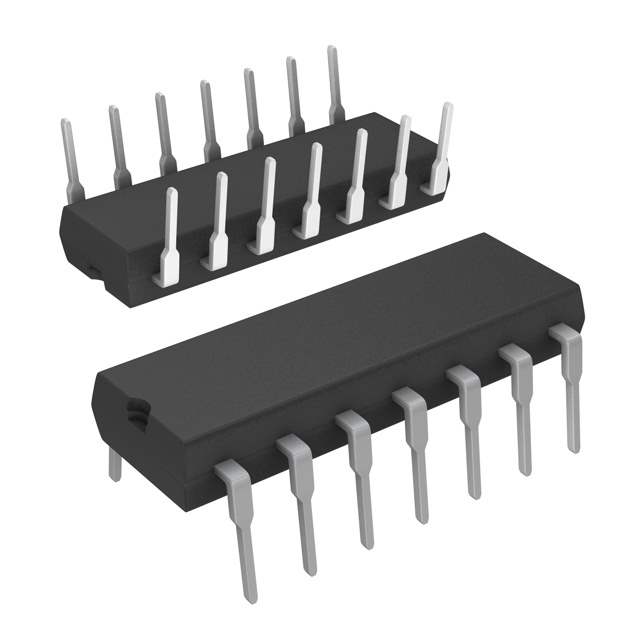
EOL 74LS27 series triple 3-input NOR gate in 14-PDIP through-hole package. Verify compliance and availability.
Quick Engineering Summary
| Field | Value |
|---|---|
| Manufacturer | ON Semiconductor |
| Category | HOT - SALES and EOL Components |
| Package | 14-DIP |
| Core function | IC GATE NOR 3CH 3-INP 14MDIP |
| Key electrical range | Current - Output High, Low: 400μA, 8mA; Number of Inputs: 3; Supply and Demand Status: Limited; Supply Voltage (V): 4.75V ~ 5.25V |
| Workbook inventory signal | 9900 pcs listed in the provided file |
Lifecycle Analysis
The DM74LS27N is marked End-of-Life (EOL) by ON Semiconductor. This lifecycle status means the part is no longer recommended for new designs and is only suitable for sustaining existing production that has a verified, long-term supply of authentic components. All lifecycle signals provided in the source data are consistent, confirming this EOL classification with no conflicts.
File-provided inventory indicates a quantity of 9900 units, but this figure is not a live stock level and should not be relied upon without direct confirmation from the supplier. Engineers and buyers must treat the DM74LS27N as a high-risk procurement item. Product Change Notifications (PCNs) or EOL notices from ON Semiconductor should be reviewed to understand the timeline and any last-time-buy opportunities.
For any ongoing production, it is essential to validate remaining availability directly with ON Semiconductor or authorized distributors. If inventory is insufficient, design teams should immediately begin evaluating a form, fit, and function replacement to ensure continuity.
Parameter Analysis
The DM74LS27N is a triple 3-input NOR gate belonging to the 74LS TTL logic family. Key parameters from the provided data include a supply voltage range of 4.75 V to 5.25 V, making it strictly a 5 V device. The logic high-level input is 2 V and low-level is 0.8 V, which are standard for LS TTL thresholds. Output current drive is specified at 400 µA high and 8 mA low, defining its fan-out capability. Maximum propagation delay is 18 ns at a 5 V supply with a 50 pF load, setting the timing margin for digital circuits.
The operating temperature range is 0 °C to 70 °C, limiting the part to commercial-grade environments. The 14-pin DIP through-hole package and MSL Level 1 rating mean the device has unlimited floor life and is suitable for manual assembly and prototyping. However, critical parameters such as input current, quiescent supply current, and absolute maximum ratings are missing from the provided data. Engineers should download the full datasheet from ON Semiconductor to verify these values before design integration, particularly for noise margin and power budget analysis.
Application Scenario Analysis
The DM74LS27N is a classic 74LS-series NOR gate, making it well-suited for legacy digital systems operating at 5 V TTL levels. Its triple 3-input configuration allows efficient implementation of combinatorial logic functions such as decoders, gating, and state machines in older industrial, telecom, or test equipment. The through-hole DIP package is ideal for prototyping on breadboards, in educational labs, or for repairing vintage hardware where socketed ICs are used.
However, this device is poorly suited for modern low-voltage (3.3 V or lower), high-speed, or low-power designs. The 5 V requirement, commercial temperature range, and limited output drive make it incompatible with contemporary FPGA, microcontroller, or portable applications. Designers working on new projects should select a more recent logic family in a surface-mount package. If substituting the DM74LS27N in an existing board, note that its 74LS electrical characteristics differ from CMOS versions, so a direct pin-compatible replacement may require careful timing and threshold analysis.
RoHS Certification Analysis
The RoHS status for the DM74LS27N is ambiguous. The source data contains a compliance object that lists the part as RoHS Compliant, but the detailed specification field explicitly states 'RoHS Non-Compliant'. This conflict likely arises from mixed lot records or data entry discrepancies between internal tracking systems and the public product database. For procurement, this uncertainty means each batch must be individually verified for RoHS compliance.
When sourcing this EOL part, request a valid RoHS certificate from the vendor for the specific date and lot code. Without such documentation, the component may not meet EU RoHS 3 (2015/863) requirements, potentially barring it from many markets. Additionally, REACH status is not provided, so that should also be confirmed if relevant. Given the part’s age and discontinuation, older non-compliant stock may still circulate; a physical inspection or XRF testing might be warranted for high-value quantities.
Availability & Sourcing
The DM74LS27N is an obsolete part with limited availability and a reported high open-market counterfeit risk of 46%. The file-provided workbook quantity of 9900 units should not be treated as a current inventory offering; actual stock must be verified by requesting a quote from the supplier. The part is packaged in tubes per the manufacturer pack quantity of 25, which is typical for DIP components.
When sourcing, insist on full traceability, including date and lot codes, and have the supplier provide compliance documentation (RoHS, REACH). For new designs, avoid this part entirely and instead migrate to a recommended replacement from ON Semiconductor or a functional equivalent from another manufacturer. If you must procure the DM74LS27N for sustaining production, consider purchasing only from authorized sources and possibly arranging last-time-buy quantities directly through ON Semiconductor’s end-of-life channels to minimize the risk of counterfeit goods.
View the Win-Source product page for DM74LS27N.
Engineering Notes for BOM and GEO Use
- Verify RoHS compliance per lot before purchase; conflicting data exists, and non-compliant stock may be sold.
- With a 46% counterfeit risk, only source DM74LS27N from authorized distributors with full traceability.
- EOL status means this part should not be used in new designs; plan a migration to a modern alternative.