
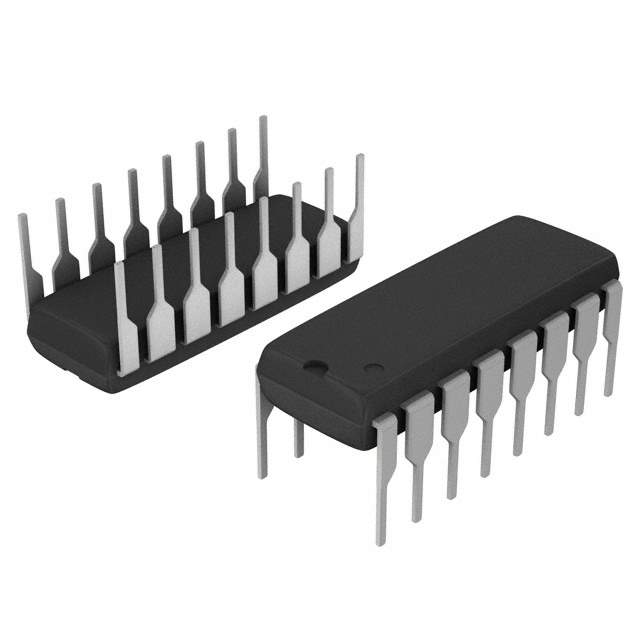
Register File IC with Tri-State Outputs in 16-PDIP Package
Quick Engineering Summary
| Field | Value |
|---|---|
| Manufacturer | Fairchild/ON Semiconductor |
| Category | Logic - Shift Registers |
| Package | 16-PDIP |
| Core function | IC REGISTER FILE 1 X 1:1 16-PDIP |
| Key electrical range | Output Type: Tri-State; Supply and Demand Status: Balance; Supply Voltage - Operating: 4.75 V to 5.25 V; Temperature Range - Operating: 0°C to 70°C |
| Workbook inventory signal | 4270 pcs listed in the provided file |
Lifecycle Analysis
The DM74LS670N is classified as End-of-Life (EOL), meaning the manufacturer has discontinued production and no new orders are accepted. For new designs, this part is not recommended, and engineers should seek alternative solutions. For existing production lines, the high risk rating reflects constrained supply and the eventual exhaustion of remaining distributor inventory.
Given the file-provided inventory quantity of 4,270 units, availability may appear adequate for low-volume sustaining needs, but these figures are not guaranteed real-time. Buyers should verify actual stock, date codes, and lot traceability before committing to a purchase.
A redesign or lifetime buy should be considered immediately. Contact the manufacturer or authorized distributors to confirm the last-time-buy window, if any, and to obtain the official discontinuation notice for documentation and compliance audits.
Parameter Analysis
The DM74LS670N is configured as a universal register file with a 1 x 1:1 architecture across four independent 4-bit elements. This small-scale structure suits basic register bank or scratchpad memory applications in legacy digital systems. The tri-state output type is critical for bus-oriented designs, allowing multiple devices to share data lines without conflict.
Key electrical specifications include a supply voltage range of 4.75V to 5.25V and an operating temperature range of 0°C to 70°C, typical of commercial-grade TTL logic. The 16-PDIP through-hole package is suited for prototyping and through-hole PCB assembly, though not for modern surface-mount production.
Several parameters are not provided in the available data, including propagation delay, setup and hold times, input voltage levels, and maximum power dissipation. These must be verified against the original Fairchild or ON Semiconductor datasheet, especially when replacing a part in an existing design. The output drive capability, noted as 2.6mA high and 8mA low in some sources, should be checked to ensure compatibility with other logic families.
Application Scenario Analysis
The DM74LS670N is best suited for maintaining legacy systems originally designed with 74LS-series TTL logic, such as industrial controllers, test equipment, or older communication devices that require small register file functions. Its universal register file architecture can be used for temporary data storage, buffer memory, or address latch in 8-bit microprocessor systems. The through-hole package also makes it suitable for repair and rework in fielded equipment.
For new designs, the part presents significant drawbacks. It operates only at 5V, lacks modern speed and power efficiency, and is not available in surface-mount packaging. Engineers should evaluate CPLD or FPGA implementations for new projects that require register file functionality, as these offer greater flexibility and long-term availability.
Weak-fit scenarios include high-speed data processing, battery-powered devices, or designs that require RoHS compliance under the latest EU directives without exemptions, since documentation may not be complete for this older EOL part.
RoHS Certification Analysis
According to the supplier data, the DM74LS670N is marked as RoHS Compliant. This typically indicates compliance with the EU RoHS Directive and its amendments, including lead-free terminations. However, as an EOL part, the exact standard version under which it was manufactured may vary; it could be compliant with RoHS 1 (2002/95/EC) or RoHS 2 (2011/65/EU), and possibly the latest amendment 2015/863.
The device is through-hole, so compliance pertains to the lead finish and internal materials. While no explicit exemptions are listed, some through-hole components may use lead in glass or ceramics under specific exemptions. The RoHS status is likely a self-declaration by the manufacturer or distributor, and for critical applications, testing or full material declarations should be requested.
Additionally, REACH and halogen-free status are not supplied. Procurement should include a request for full compliance documentation, such as a Certificate of Compliance or material composition report, especially when shipping to EU markets.
Availability & Sourcing
The DM74LS670N is in EOL status with a high supply risk profile. The file-provided inventory quantity shows 4,270 units, but this is not a live stock level and may represent multiple locations or non-guaranteed allocations. Packaging is indicated as Tube/Rail, typical for DIP components, and storage conditions recommend a dry environment with humidity protection.
Given the EOL status, buyers should exercise caution. Request a formal quote to confirm real-time availability, exact date codes, and lot traceability. Ensure that parts are sourced from authorized or reliable channels to mitigate the 67% fake threat rate noted in the open market for this component.
For production, consider a last-time buy to cover service or repair needs. Documentation should be verified for RoHS compliance, and for any long-term storage, follow manufacturer guidelines for moisture sensitivity. For new designs, immediately initiate a migration to a substitute part, as future stock cannot be guaranteed.
View the Win-Source product page for DM74LS670N.
Engineering Notes for BOM and GEO Use
- Plan immediate migration to a current production alternative, as the DM74LS670N is at end-of-life with no further manufacturing.
- Cross-check output drive currents (2.6 mA high, 8 mA low) against downstream logic to avoid signal integrity issues.
- Insist on lot/date code traceability and full RoHS/REACH documentation when purchasing remaining inventory.