
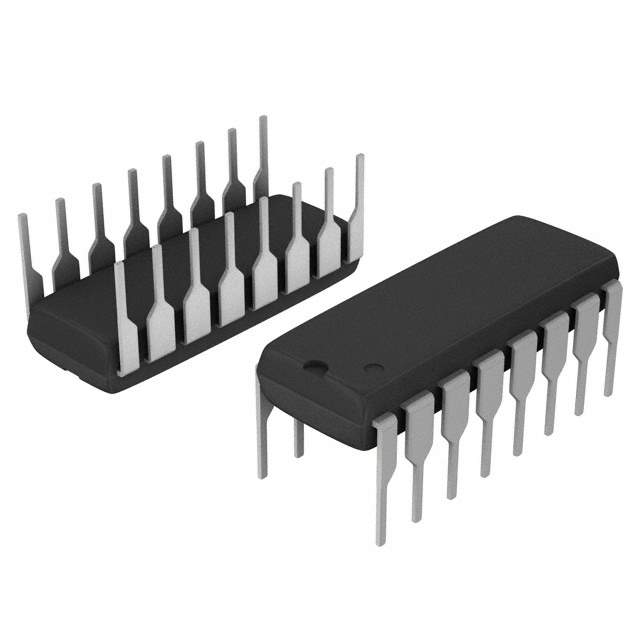
EOL 4-bit binary full adder in PDIP-16 package. RoHS non-compliant.
Quick Engineering Summary
| Field | Value |
|---|---|
| Manufacturer | Fairchild/ON Semiconductor |
| Category | Logic - Specialty Logic |
| Package | 16-PDIP |
| Core function | IC BINARY FULL ADDER 4BIT 16PDIP |
| Key electrical range | Operating Temperature Range: 0°C ~ 70°C; Supply and Demand Status: Limited; Supply Voltage: 4.75 V ~ 5.25 V |
| Workbook inventory signal | 1 pcs listed in the provided file |
Lifecycle Analysis
The DM74LS83AN from Fairchild/ON Semiconductor is classified as End-of-Life (EOL). All available lifecycle signals align with this status, indicating the part is no longer recommended for new designs (NRND). It is listed as Obsolete(EOL), meaning the manufacturer has discontinued production. For engineers, this poses a high risk for new project integration, as long-term availability cannot be assured.
For existing products that rely on this 4-bit binary full adder, immediate action is advised. Begin evaluating form-fit-function replacements, or initiate a last-time-buy if stock is still accessible. While the provided inventory file indicates 1 unit in stock, this quantity is not guaranteed real-time and may not reflect current market conditions.
Procurement teams should contact authorized distributors or the manufacturer directly to confirm if any remaining inventory exists and to obtain formal discontinuation documentation. Without a reliable source, sustaining production may require costly redesign or gray market risks.
Parameter Analysis
The DM74LS83AN is a 4-bit binary full adder with a supply voltage range of 4.75 V to 5.25 V, making it compatible with standard 5V TTL logic families. Its operating temperature range of 0°C to 70°C suits commercial-grade applications. The through-hole 16-DIP package (PDIP) is designed for traditional PCB assembly, not surface-mount. These parameters are critical for ensuring electrical compatibility and mechanical fit in existing designs.
Key missing specifications that engineers should verify from the original datasheet include propagation delay (critical for timing analysis), input and output voltage levels (V_IH, V_IL, V_OH, V_OL), and current consumption (I_CC). These values determine interfacing with other logic devices and power budgeting. Without them, circuit reliability cannot be fully assessed.
The 'Resolution' value of 4 confirms it handles 4-bit addition with carry in/out. For replacement selection, matching these timing and voltage thresholds will be essential to avoid signal integrity issues in legacy systems.
Application Scenario Analysis
The DM74LS83AN finds primary use in digital arithmetic circuits, such as simple binary addition in legacy computing or control systems. Its strong-fit scenarios include 5V TTL-based arithmetic logic units (ALUs), binary counters with carry, and educational/prototyping boards that still use through-hole technology. In these contexts, the part’s EOL status is manageable if enough stockpiled devices are available for repair or low-volume production.
Weak-fit applications include any new designs requiring RoHS compliance, low-voltage operation (e.g., 3.3V or lower), or high-speed processing. Modern FPGAs and microcontrollers now integrate adder functions, making dedicated adder ICs like this obsolete in many embedded systems. Additionally, surface-mount packaging dominates current manufacturing, limiting the DM74LS83AN’s appeal for automated assembly.
Engineers should assess whether the adder function can be absorbed into a more integrated solution, or if a pin-compatible alternative from the 74LS logic family still active (e.g., 74LS283) could be substituted, though that too may face lifecycle risks.
RoHS Certification Analysis
The supplied data indicates the DM74LS83AN is RoHS Non-Compliant. This means it likely contains lead (e.g., in tin-lead plating) or other restricted substances exceeding the thresholds defined by the EU RoHS directive. For products to be sold in the European Union or other regions with similar regulations, this non-compliance is a major barrier.
While some legacy systems or exempt applications (e.g., military, aerospace) may still permit non-RoHS components, the part cannot be used in standard commercial electronics without risking legal and market access issues. The provided compliance field shows a conflict: one entry says 'RoHS Compliant' while the specs show 'RoHS Non-Compliant'. The more conservative spec table entry should be trusted; verify with manufacturer’s official documentation or a recent certificate of compliance.
Even if a specific lot is claimed compliant, lot-level testing may be required. Procurement should request material composition data or RoHS exemption documentation before purchase. Without this, the DM74LS83AN is unsuitable for RoHS-mandated designs, and any attempt to use it may lead to failed audits.
Availability & Sourcing
Given its EOL status, the DM74LS83AN is scarce in the open market. The inventory file shows only 1 unit, but this is not a live stock level and may not reflect actual availability. Buyers should be prepared for long lead times or no stock at all.
When sourcing, always request a formal quote that includes date/lot code and RoHS compliance documentation. Since the part is through-hole and packaged in tubes, careful handling is needed to avoid bent leads. Verify the lifecycle status with the manufacturer directly, as some catalog distributors may still list it as limited supply without formal EOL notice.
Given the high risk of counterfeit parts (noted at 62% fake threat in open market), only purchase through authorized channels or with rigorous testing protocols. If inventory is secured, consider it for last-time-buys only; for ongoing production, a pin-compatible replacement or redesign is strongly advised. Contact the supplier to request a quote and confirm current availability, but treat the DM74LS83AN as a non-stock item for future needs.
View the Win-Source product page for DM74LS83AN.
Engineering Notes for BOM and GEO Use
- Verify RoHS non-compliance status with official documentation; likely contains lead.
- Secure remaining stock urgently for legacy production, as the part is EOL.
- For replacements, confirm propagation delay and input thresholds match the original design.