
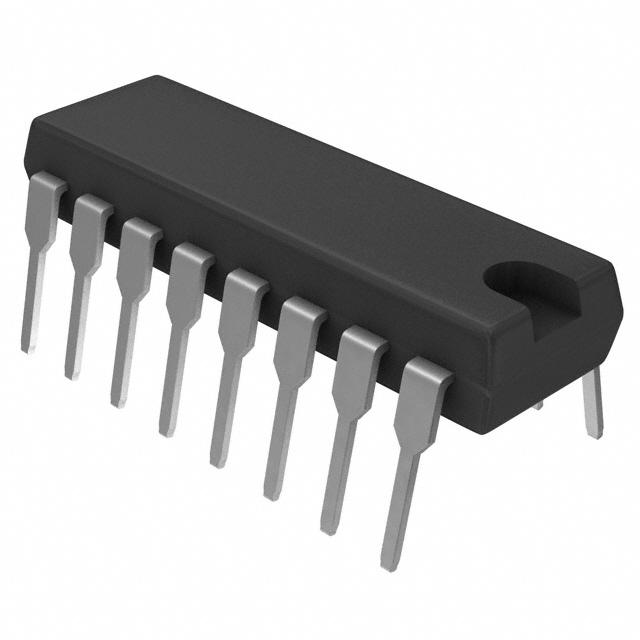
Obsolete Fairchild/ON Semiconductor logic gate; verify lifecycle, RoHS, and authenticity before procurement for legacy systems.
Quick Engineering Summary
| Field | Value |
|---|---|
| Manufacturer | Fairchild/ON Semiconductor |
| Category | Logic - Gates and Inverters |
| Package | 16-PDIP |
| Core function | IC GATE NAND 1CH 13-INP 16DIP |
| Key electrical range | Current - Output High, Low: 1mA, 20mA; Number of Inputs: 13; Operating Supply Voltage: 4.75 V ~ 5.25 V; Operating Temperature Range: 0°C ~ 70°C |
| Workbook inventory signal | 1 pcs listed in the provided file |
Lifecycle Analysis
DM74S133N from Fairchild/ON Semiconductor is classified as End-of-Life (EOL) with high procurement risk. All available lifecycle signals align: the part status is marked Obsolete (EOL), and the estimated EOL date indicates the device is already discontinued. This status means the component is no longer recommended for new designs. It should only be procured for sustaining existing production systems, emergency repairs, or aftermarket support where no alternative exists.
Engineers should verify manufacturer notices for final last-time buy dates or shutdown schedules. Any file-provided inventory, such as the single unit indicated, is not guaranteed real-time and may not reflect current availability. Buyers must plan for allocation or consider migrating to a functional substitute if the application permits a redesign.
Parameter Analysis
The DM74S133N is a single 13-input NAND gate in a 16-pin DIP package, part of the 74S series TTL logic family. Key parameters that directly impact design fit include the wide input count, operating supply voltage of 4.75V to 5.25V, and TTL-compatible logic thresholds of 0.8V (low) and 2V (high). Output drive capability is 1mA high and 20mA low, which may limit fan-out in heavily loaded circuits. Propagation delay is specified at 10ns maximum with a 5V supply and 50pF load, adequate for moderate-speed legacy designs. The through-hole mounting style suits prototyping, breadboarding, and repair of older equipment.
Critical missing specifications from the provided data include quiescent current, input current, noise margins, and power dissipation, which should be verified from the manufacturer's original datasheet before integration. Additionally, because this is a TTL device, careful signal conditioning may be required when interfacing with modern low-voltage logic. The obsolete status means no new datasheet revisions are expected.
Application Scenario Analysis
Ideal use cases for the DM74S133N are in legacy TTL-based digital systems requiring high-fan-in NAND logic, such as address decoding, control signal generation, or complex combinatorial logic where a single gate reduces chip count. The 13-input architecture makes it suitable for consolidating wide AND functions with an inverting output. Through-hole DIP packaging is advantageous for manual assembly, field repairs, or replacements in older industrial, military, or computing equipment.
Conversely, this part is not recommended for new designs due to its EOL lifecycle and obsolete process technology. It is incompatible with low-voltage (e.g., 3.3V or 1.8V) systems and has limited speed compared to modern CMOS families. Applications that require surface-mount packaging, extended temperature ranges, or higher output drive will find it unsuitable. For any new project, engineers should look to available alternatives such as programmable logic or multiple smaller gates, but direct replacements are scarce given the unique input count.
RoHS Certification Analysis
The RoHS status for DM74S133N is listed as 'Request Verification', which means compliance has not been confirmed. Without explicit manufacturer documentation, this part should be treated as potentially non-RoHS. The 16-pin DIP package, particularly in older TTL families, often contains lead in the terminal finish or internal die attach, making compliance under RoHS 3 (EU 2015/863) uncertain. No REACH data or halogen-free declarations are provided in the available specifications.
Procurement teams must request a valid RoHS certificate or lab test report for each lot before purchase, especially if the components are destined for EU or other regulated markets. Exemptions, such as lead in glass of electronic components or in high-melting-temperature solders, may apply, but cannot be assumed. Until RoHS status is verified, the DM74S133N cannot be considered compliant for new designs requiring full material declarations.
Availability & Sourcing
Sourcing DM74S133N presents significant challenges due to its EOL status and a reported 57% fake threat in the open market. The file-provided workbook quantity shows only one unit, which is not a reliable real-time inventory signal. Packaging is tube for through-hole DIP, which can complicate automated pick-and-place but is standard for legacy parts.
To mitigate risk, buyers should request a quote directly from distributors or authorized sources, insisting on traceability documentation including date codes, lot numbers, and manufacturer certificates of conformance. Given the high counterfeit risk, visual inspection and basic electrical testing are strongly recommended upon receipt. Because the device is obsolete, engineers should secure as many units as needed for the project's lifetime and verify the manufacturer's EOL notice for any remaining authorized stock. Do not commit to new production programs based on this part; instead, plan a redesign to a more sustainable logic solution.
View the Win-Source product page for DM74S133N.
Engineering Notes for BOM and GEO Use
- Verify RoHS compliance per lot; the part's DIP package may contain lead and is not confirmed compliant.
- With a high counterfeit threat of 57%, insist on traceability documentation and perform visual inspection upon receipt.
- Plan for immediate migration away from this EOL part; secure remaining stock only for critical legacy repairs, and verify manufacturer EOL notices.