
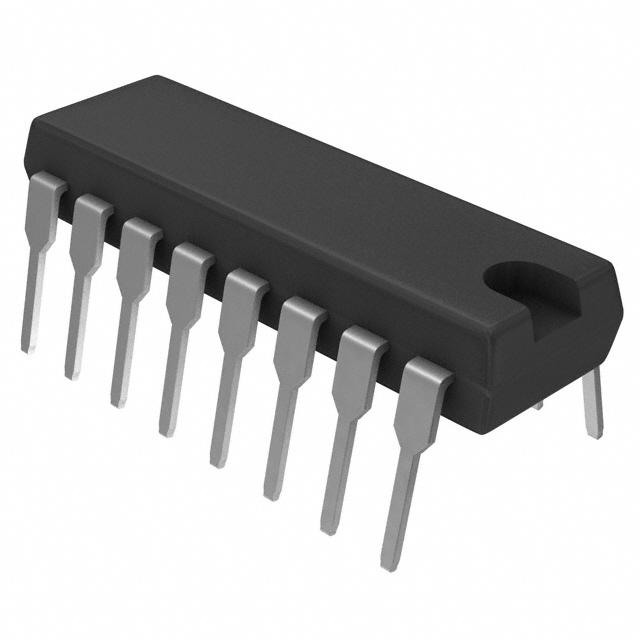
Obsolete (EOL) dual 4-to-1 multiplexer from Fairchild/ON Semiconductor in through-hole 16-PDIP, RoHS compliant.
Quick Engineering Summary
| Field | Value |
|---|---|
| Manufacturer | Fairchild/ON Semiconductor |
| Category | Logic - Signal Switches, Multiplexers, Decoders |
| Package | 16-PDIP |
| Core function | IC MULTIPLEXER 2 X 4:1 16-PDIP |
| Key electrical range | Current - Output High, Low: 1mA, 20mA; Supply and Demand Status: Limited; Supply Voltage - Operating: 4.75 V to 5.25 V; Temperature Range - Operating: 0°C to 70°C |
| Workbook inventory signal | 1257 pcs listed in the provided file |
Lifecycle Analysis
The DM74S153N from Fairchild/ON Semiconductor is officially classified as End-of-Life (EOL). All available lifecycle signals in the supplied data align, confirming that this device is no longer recommended for new designs. An EOL status indicates that the manufacturer has ceased or will soon cease production, and remaining stock is typically limited to existing distributor inventory or last-time buy allocations. For sustaining production of existing systems, procurement teams should evaluate lifetime-buy requirements immediately.
Given the high risk level associated with EOL parts, engineers must avoid designing the DM74S153N into new projects. Any existing design will be subject to supply constraints, potential discontinuation of second-source options, and increased exposure to counterfeit components. The file-provided stock quantity of 1,257 units is not a real-time guarantee; actual availability should be confirmed through a Request for Quote (RFQ). For migration planning, identify functional equivalents in modern logic families, but note that no pin-compatible replacement is suggested in the source data.
Parameter Analysis
The DM74S153N is a dual 4-to-1 multiplexer fabricated in the 74S TTL logic family. Key supplied parameters include a supply voltage range of 4.75 V to 5.25 V, an operating temperature range of 0 °C to 70 °C, and output current ratings of 1 mA (high) and 20 mA (low). The single independent circuit is housed in a through-hole 16-PDIP package, which is suitable for prototyping and legacy board repairs but may be inconvenient for modern surface-mount designs.
The 5 V nominal supply and commercial temperature range make this part appropriate for standard TTL systems, but the datasheet lacks critical dynamic parameters such as propagation delay, enable/disable times, and input logic thresholds. Engineers must verify these values from the original manufacturer datasheet before using the DM74S153N in any application. Additionally, the limited output current capability may require buffering when driving heavy loads. For any qualification effort, confirm that the storage conditions (dry cabinet, humidity protection) have been maintained during inventory.
Application Scenario Analysis
Given its TTL-compatible 5 V operation and 2‑channel, 4:1 multiplexing function, the DM74S153N fits legacy digital systems that require signal routing, data selection, or bus multiplexing. Typical strong-fit scenarios include maintenance and repair of industrial control boards, test equipment, and telecommunications hardware originally designed in the 1980s or 1990s where a through‑hole DIP package was standard.
However, the DM74S153N is a poor choice for new designs because of its EOL status, limited supply, and through‑hole packaging. Modern applications often demand lower operating voltages (3.3 V or 1.8 V), faster switching, and surface‑mount form factors. While the part could be used in educational labs or hobbyist prototyping, procurement risks discourage even these low‑volume uses. In all cases, the 49% open‑market counterfeit threat makes verification essential.
RoHS Certification Analysis
The DM74S153N is listed as RoHS Compliant in the supplied data. This compliance is typically based on the manufacturer’s original declaration and may reference EU Directive 2011/65/EU or the amended 2015/863 standard. However, no specific standard or certificate is provided in the source material; compliance is stated at the part‑number level rather than on a per‑lot basis.
For procurement compliance, request a current Certificate of Conformity from the supplier that covers the exact date or lot codes you intend to purchase. The documentation should also address substances like lead, mercury, and cadmium. The data does not mention REACH or halogen‑free status; if these are required, verify separately. Note that while the part is through‑hole, RoHS compliance does not inherently guarantee lead‑free soldering process compatibility; consult the assembly process.
Availability & Sourcing
As an EOL component, the DM74S153N demands a cautious sourcing approach. The file‑reported inventory of 1,257 pieces is a snapshot and may not reflect real‑time distributor stock. A formal RFQ is necessary to obtain current pricing and availability. Given the high counterfeit risk (49% in the open market), procurement should prioritize authorized or franchise distributors with traceable supply chains.
Request date and lot code information with any quotation, and insist on full compliance documentation, including the RoHS certificate. The part is typically supplied in tube/rail packaging, and a dry‑storage environment is recommended to maintain solderability. For users still supporting systems that depend on the DM74S153N, consider a last‑time buy to secure inventory; for all other purposes, migrate to an active alternative and verify manufacturer life‑time notices before committing to a purchase.
View the Win-Source product page for DM74S153N.
Engineering Notes for BOM and GEO Use
- The DM74S153N is EOL; do not use in new designs. Assess lifetime-buy needs for existing production immediately.
- A 49% counterfeit probability in open-market sources mandates sourcing only from authorized distributors with full traceability.
- Verify missing dynamic parameters (propagation delay, input thresholds) from the original datasheet before any board-level use.