
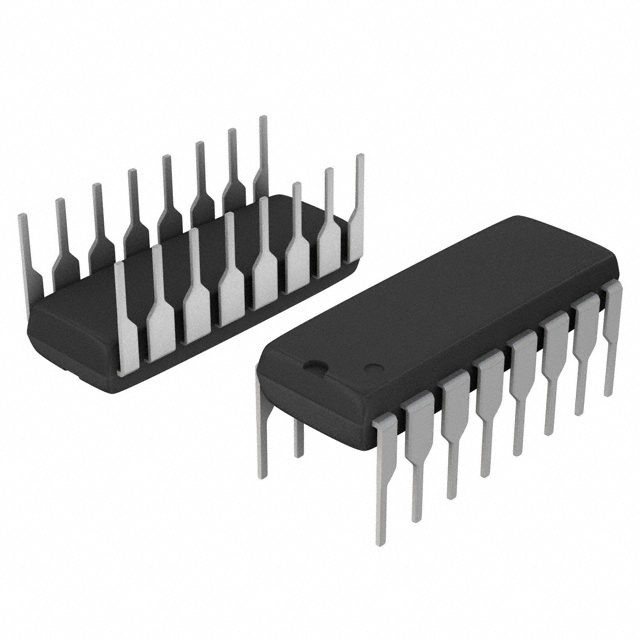
End-of-Life 4 x 2:1 Multiplexer in 16-PDIP, RoHS Compliant
Quick Engineering Summary
| Field | Value |
|---|---|
| Manufacturer | ON Semiconductor |
| Category | HOT - SALES and EOL Components |
| Package | 16-DIP |
| Core function | IC MULTIPLEXER 4 X 2:1 16-PDIP |
| Key electrical range | Current - Output High, Low: 6.5mA, 20mA; Supply and Demand Status: Limited; Supply Voltage (V): 4.75V ~ 5.25V; Temperature Range - Operating: 0°C ~ 70°C |
| Workbook inventory signal | 1 pcs listed in the provided file |
Lifecycle Analysis
The ON Semiconductor DM74S257N is currently in EOL (End-of-Life) status. All manufacturer signals, including lifecycle status and independent records, confirm it is obsolete with no conflicting data. This status means the part is no longer recommended for new designs and may have limited availability for future production. For existing designs, immediate action is required to secure remaining inventory.
Procurement teams should treat the DM74S257N as a high-risk component. The manufacturer has not provided a last-time-buy date, but file-provided data indicates extremely limited stock (1 unit). Any replenishment would depend on distributor leftovers or the secondary market. Given the 53% fake threat rate reported for this part, sourcing must be approached with extreme caution. Demand full traceability, date code verification, and functional testing from any supplier.
Engineers should begin evaluating migration paths to a functionally equivalent device, preferably in a surface-mount package for modern designs. The 74S logic family is a legacy bipolar technology, and many CMOS alternatives exist such as the 74HC257 or 74HCT257. Confirm compatibility for voltage levels, timing, and power consumption. Without a verified replacement, lifetime buys are the primary mitigation.
Parameter Analysis
The DM74S257N is a quad 2-input multiplexer with 3-state outputs, organized as a single 4 x 2:1 channel. Key supplied specs include a 4.75V to 5.25V single-supply operation and output drive of 6.5mA high, 20mA low. These values align with the 74S Schottky TTL family, providing moderate drive strength suitable for standard TTL loads. The through-hole 16-pin DIP package (0.300 inch width) dictates a traditional PCB layout with plated through-holes, which may complicate integration into dense surface-mount assemblies.
The operating temperature range is commercial grade (0°C to 70°C). For industrial or extended-temperature applications, this part would be unsuitable, requiring verification against system-level thermal derating. Critical missing parameters include propagation delay, typical power dissipation, input voltage thresholds, and maximum fan-out, all of which are essential for high-speed or timing-critical designs. Engineers must obtain the original datasheet to validate setup and hold times, output enable/disable times, and no-load supply current before committing to a lifetime buy.
Additionally, the manufacturer pack quantity of 25 pieces in tubes suggests that small-scale prototyping stocks may exist, but large production orders are unlikely. Signal integrity in legacy 5V systems is generally forgiving, but designers should review the device's low-level output voltage at the rated current to ensure logic compatibility with newer 3.3V devices if mixed-signal interfacing is planned. Verification of these parameters from official documentation is mandatory given the EOL status.
Application Scenario Analysis
The DM74S257N finds strong fit in legacy 5V TTL digital systems where through-hole DIP packages are still used. Examples include industrial control boards, automated test equipment, and older communication infrastructure that cannot be redesigned quickly. Its schottky technology offers faster switching than standard TTL, making it suitable for moderate-speed data selection and bus multiplexing in existing products. When the exact form factor and pinout are required, this part may be the only drop-in option.
Weak-fit scenarios encompass any new design that prioritizes miniaturization, low power, or surface-mount assembly. Modern FPGA or microcontroller-based designs do not require discrete multiplexers of this vintage. The 6.5mA high-level output current is insufficient for driving long transmission lines or heavily loaded buses, limiting its use in newer high-speed backplanes. The 0°C to 70°C temperature range also excludes automotive, military, or outdoor applications without additional environmental control.
Furthermore, the part's popularity is rated 'Low,' indicating infrequent demand and reduced community support. Any application requiring long-term maintainability or regulatory recertification should avoid this part. If you are maintaining legacy equipment, it is wise to stock enough spares during the last-time-buy window and, if the system life exceeds expected component availability, consider a board-level redesign using a surface-mount equivalent that can be sourced for many years.
RoHS Certification Analysis
The DM74S257N is marked as RoHS Compliant in the provided data, suggesting conformance to EU Directive 2015/863 (RoHS 3). This status implies that the finished product, including the 16-PDIP package and internal die attach, does not exceed the maximum concentration values for lead, mercury, cadmium, and other restricted substances. However, for an EOL component, this certification may not reflect the most recent production lots; it could be based on qualification samples from years ago.
To ensure compliance for purchased stock, request current RoHS certificates of conformance for the specific batch. The part also carries MSL Level 1 (Unlimited), indicating no moisture sensitivity concerns and no special handling requirements; this is typical for through-hole DIP packages. REACH compliance status is not reported, so if your product needs SVHC declarations, you must verify this directly with the distributor or manufacturer.
Note that RoHS compliance alone does not guarantee full environmental compatibility. The fake threat of 53% in the open market raises the risk that counterfeit devices may not meet RoHS standards. Therefore, any non-franchised source must provide XRF or laboratory test reports for heavy metals on the actual parts. Integrated Device Manufacturer (IDM) documentation from ON Semiconductor should be the baseline, and any deviation should be treated as a red flag for procurement.
Availability & Sourcing
DM74S257N availability is critically constrained. File-provided inventory indicates a quantity of only 1 unit, and the manufacturer has set an official EOL status with no known replenishment. The part ships in tubes from a manufacturer pack quantity of 25, but distributor stock is likely depleted or near depletion. The supply and demand status is listed as 'Limited,' and with a high fake threat (53%), buyers must be extremely vigilant.
To source this part, initiate an RFQ with suppliers that provide full traceability, including date codes, lot codes, and original packaging. Insist on third-party testing for authenticity, especially if procuring from independent distributors. The MSL Level 1 ensures that parts can be stored without dry-packing, but verify that the leads are free from oxidation and bent pins if purchasing old stock. Consider using authorized aftermarket sources that specialize in EOL and obsolete components with verified chain of custody.
Given the EOL lifecycle, the primary recommendation is to locate and purchase remaining inventory immediately, while simultaneously evaluating a lifetime buy quantity. For new production, migration to a recommended replacement is essential. Contact ON Semiconductor or a franchised distributor for the official last-time-buy notice and any suggested replacements. Do not rely on this part for future production without a confirmed, secure source of supply. Request a quote now for current availability and compliance documentation.
View the Win-Source product page for DM74S257N.
Engineering Notes for BOM and GEO Use
- Immediately secure last-time-buy inventory and begin migration to an alternative like 74HC257, verifying timing and voltage compatibility.
- Fake threat is 53%; source only from authorized distributors or require XRF/electrical testing for any open-market purchases.
- MSL Level 1 eases storage, but through-hole DIP package limits suitability for modern SMT designs; consider board redesign for long-term support.