
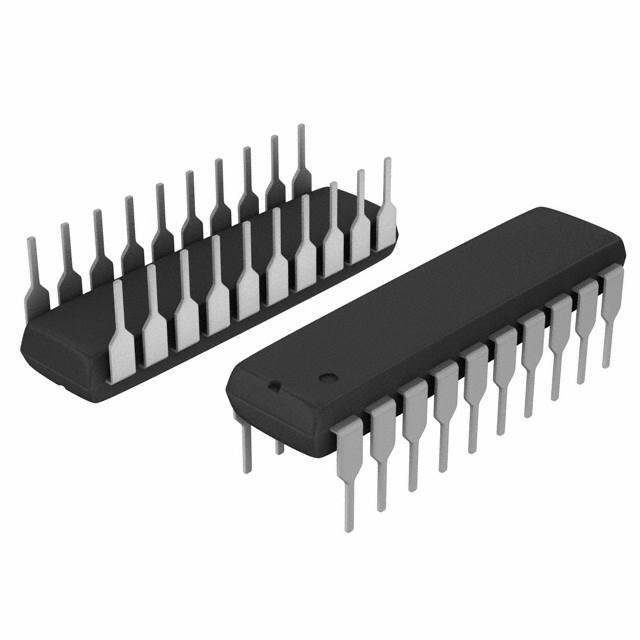
Obsolete 8-bit D-type flip-flop in 20-pin PDIP package
Quick Engineering Summary
| Field | Value |
|---|---|
| Manufacturer | ON Semiconductor |
| Category | HOT - SALES and EOL Components |
| Package | 20-DIP |
| Core function | IC FF D-TYPE SINGLE 8BIT 20PDIP |
| Key electrical range | Clock Frequency: 75MHz; Current - Output High, Low: 6.5mA, 20mA; Current - Quiescent (Iq): 110mA; Output Type: Non-Inverted |
| Workbook inventory signal | 4455 pcs listed in the provided file |
Lifecycle Analysis
The DM74S374N has been declared end-of-life by ON Semiconductor. All available lifecycle signals confirm this status, with the part marked as obsolete. For procurement teams, this means no further production is planned, and the device should only be considered for sustaining existing systems, not for new product designs.
Engineers must treat this component as high risk due to its obsolete status and the reported 49 pct. fake threat in the open market. Even when stock appears available, authentication and traceability are critical. The supplied file lists a workbook quantity of 4455 units, but this is not a real-time availability and should be verified through a formal quote.
Given the EOL classification, any last-time buy windows may have already closed. It is essential to cross-check directly with ON Semiconductor or authorized distributors for official discontinuation notices and to evaluate alternative solutions or redesign paths as soon as possible.
Parameter Analysis
The DM74S374N is a single 8-bit D-type flip-flop with a positive-edge trigger and non-inverted outputs. Its maximum clock frequency is 75MHz, a typical speed for the 74S schottky TTL family. The supply voltage is specified at 4.75V to 5.25V, making it suitable only for 5V logic systems. Output drive capability is 6.5mA high and 20mA low, which should be assessed against fan-out requirements.
A key parameter to note is the high quiescent current of 110mA, characteristic of the 74S series and a factor in thermal management and power budgeting. The operating temperature range of 0°C to 70°C restricts use to commercial environments; industrial applications require additional temperature margin. Through-hole mounting in a 20-pin DIP package dictates PCB layout constraints.
Missing from the provided data are propagation delay, setup/hold times, and input capacitance, which are critical for timing analysis. Engineers must consult the original manufacturer datasheet for these values to ensure proper integration. The MSL rating of Level 1 (unlimited) indicates no special moisture handling is needed for assembly.
Application Scenario Analysis
The DM74S374N fits legacy 5V digital systems where an 8-bit register or buffer is needed on a bus. Typical applications include address/data latching in older microprocessor designs, control register storage in industrial boards, or repair of equipment from the late 1980s to 1990s. Its through-hole package also suits prototyping, maintenance, and educational labs where DIP sockets are used.
However, this device is a poor choice for low-power or portable designs due to its 110mA quiescent consumption. Modern equivalents in CMOS or lower-power TTL variants offer far better power efficiency. Its 0°C to 70°C range excludes outdoor, automotive, or industrial equipment without sufficient cooling or margin. The 75MHz speed is adequate for many legacy buses but falls short for high-speed memory interfaces or FPGA bridging.
As an obsolete part, it is not suitable for any new production design. It may serve as a temporary fix in repair scenarios, but long-term supply cannot be guaranteed. Designers should migrate to active pin-compatible or functionally equivalent devices if continued production is planned.
RoHS Certification Analysis
The DM74S374N is labeled as RoHS Compliant in the supplied data. This generally indicates conformance to the EU Directive on the restriction of hazardous substances. However, the exact directive version—such as RoHS 2 (2011/65/EU) or RoHS 3 (2015/863)—is not specified.
For procurement, this means that many lots may be compliant, but older stock from early production runs could predate current RoHS exemptions. Given the part's EOL timeline, it is possible that some inventory was manufactured before stringent RoHS enforcement. Lot-level compliance certificates should be requested from the supplier to ensure that the specific units being shipped meet applicable regulations.
In addition to RoHS, no REACH or halogen-free declarations are provided. If these are required for end-product certification, the buyer must obtain them directly from ON Semiconductor or the distributor. As counterfeit risk is elevated, compliance documentation must be authenticated along with the components.
Availability & Sourcing
The DM74S374N is end-of-life, so supply is inherently limited. The file-provided quantity of 4455 units is a non-committed stock indication and must be validated via a request for quote. Buyers should be prepared for rapid depletion or allocation. The standard packaging is tube, with a manufacturer pack quantity of 18 units, so partial reels are normal.
Given the high 49 pct. fake threat, traceability is paramount. Request date codes, lot codes, and manufacturer certificates of conformance. Optical inspection and electrical testing may be necessary if purchasing from non-authorized sources. The commercial temperature range and DIP package make this part less likely to be counterfeited than high-value SMD parts, but caution is still warranted.
For production use, explore authorized distributors or direct OEM surplus for the lowest risk. If no compliant stock remains, consider redesign. For repair or low-volume builds, verify that the supplier can provide a full traceability report and RoHS compliance before committing. Use an RFQ process to lock in current pricing and availability.
View the Win-Source product page for DM74S374N.
Engineering Notes for BOM and GEO Use
- EOL status: Secure inventory immediately for sustaining production, as no new builds are recommended.
- Verify RoHS compliance at the lot level due to the high counterfeit risk (49 pct. reported) on the open market.
- The 5V supply and 75MHz clock are typical for legacy TTL logic; ensure modern replacements match threshold levels.