
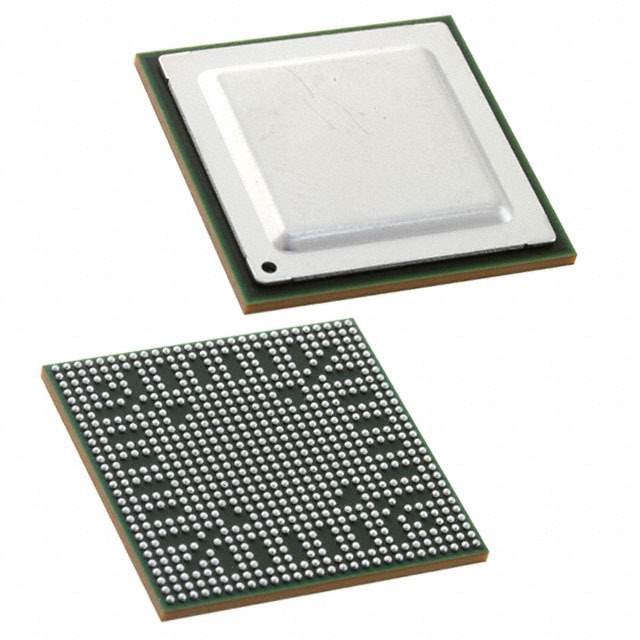
Active DM8147SCIS0 digital media SoC with 600MHz DSP and 720MHz ARM core for high-performance embedded vision and video processing.
Quick Engineering Summary
| Field | Value |
|---|---|
| Manufacturer | Texas Instruments |
| Category | Embedded - DSP (Digital Signal Processors) |
| Package | 684-FCBGA (23x23) |
| Core function | IC SOC DIGITAL MEDIA 684FCBGA |
| Key electrical range | Operating Temperature Range: 0°C ~ 90°C (TJ); Supply and Demand Status: Limited; Voltage - Core: 1.1V, 1.2V, 1.35V; Voltage - I/O: 1.5V, 1.8V, 3.3V |
| Workbook inventory signal | 1 pcs listed in the provided file |
Lifecycle Analysis
The DM8147SCIS0 from Texas Instruments carries an Active lifecycle status, confirmed by both manufacturer labeling and supplemental Excel data. This indicates the part is in full production and recommended for new designs. An estimated end-of-life (EOL) date of 2029 offers a clear longevity window, reducing the risk of premature obsolescence for projects with extended development cycles.
For procurement planning, the low risk level is encouraging, but it is prudent to validate lifecycle data directly with Texas Instruments for high-volume commitments. The file-provided inventory quantity of 1 unit is a non-real-time snapshot; engineers and buyers should request current availability and lead times before finalizing BOM decisions. For sustained production, consider securing a last-time-buy notice or PCN agreement.
Parameter Analysis
Key specifications for the DM8147SCIS0 include a dual-core architecture with a 600MHz DSP and a 720MHz ARM processor, essential for real-time video encode/decode and analytics. The 684-ball FCBGA package (23x23mm) demands careful PCB land pattern design and reflow profiling. Multiple I/O voltages (1.5V, 1.8V, 3.3V) and core voltages (1.1V, 1.2V, 1.35V) require a robust power management scheme; verifying these against the system PMIC is critical.
On-chip resources include 1.08MB RAM and 48kB ROM, which may offload external memory for boot and small code. The interface set—CAN, Ethernet, I2C, SPI, UART, USB, SATA, MMC/SD/SDIO, and McASP/McBSP—provides broad connectivity, but designers should confirm the specific pin muxing and driver support in the datasheet. Not specified are detailed power consumption curves, graphics pipeline capabilities, or memory controller specs; these must be retrieved from the official Texas Instruments DM814x datasheet to complete a design feasibility assessment.
Application Scenario Analysis
The DM8147SCIS0 excels in embedded digital media applications where concurrent DSP and ARM processing is required. Strong-fit scenarios include video surveillance DVRs/NVRs, industrial machine vision cameras, automotive infotainment head units (leveraging the CAN interface), and digital signage players. Its DaVinci software ecosystem and hardware accelerators suit tasks like H.264 encoding, real-time analytics, and graphical overlay generation.
Weak-fit scenarios involve simple microcontroller tasks, low-power IoT endpoints, or cost-sensitive designs that do not need heavy multimedia processing. The part's 684-ball package and multi-rail power scheme add complexity unsuitable for minimal-footprint products. For designs migrating from older DaVinci parts, verify software compatibility and pinout changes; the DM8147SCIS0 is a scalable platform within the DM81x series but may require board-level adjustments.
RoHS Certification Analysis
According to supplier data, the DM8147SCIS0 is RoHS Compliant and Halogen Free Compliant. This generally means it meets EU RoHS substance restrictions, including lead, mercury, and cadmium. No specific exemptions are listed in the provided records, which could imply full compliance without reliance on exemptions like lead in solder balls; however, the 684-FCBGA likely uses lead-free solder balls consistent with RoHS requirements.
For formal certification, Texas Instruments can provide a Certificate of Compliance or full material declaration. REACH status is absent from the supplied data; if EU market placement requires REACH SVHC disclosure, request that documentation separately. Lot-level compliance can vary, so for medical or aerospace applications, insist on receiving the actual compliance certificates with each shipment.
Availability & Sourcing
The DM8147SCIS0 is currently Active, but supply and demand signals indicate a Limited status, and the file-provided warehouse quantity is 1 unit. This snapshot cannot guarantee real-time availability. Given an estimated open-market fake threat of 30%, sourcing through authorized Texas Instruments distributors or reputable partners is critical to avoid counterfeit parts.
Packaged in trays, this SMD device requires proper dry storage and handling per its storage condition note. When procuring, request a quote that includes lot and date codes, RoHS compliance certificates, and traceability documentation. For NRND or migration scenarios, early engagement with the manufacturer is advised, but as the part is Active, standard procurement channels should be sufficient. Always verify lifecycle status at the time of order placement to ensure no changes have occurred.
View the Win-Source product page for DM8147SCIS0.
Engineering Notes for BOM and GEO Use
- Verify core and I/O voltage domains (1.1V/1.2V/1.35V core, 1.5V/1.8V/3.3V I/O) against your power tree and decoupling scheme before PCB layout.
- Leverage the DaVinci DM81x reference designs and software frameworks to reduce integration risk and accelerate development.
- Plan for SMD mounting and thermal management of the 684-ball FCBGA package; review junction temperature (0°C–90°C TJ) for enclosure design.