
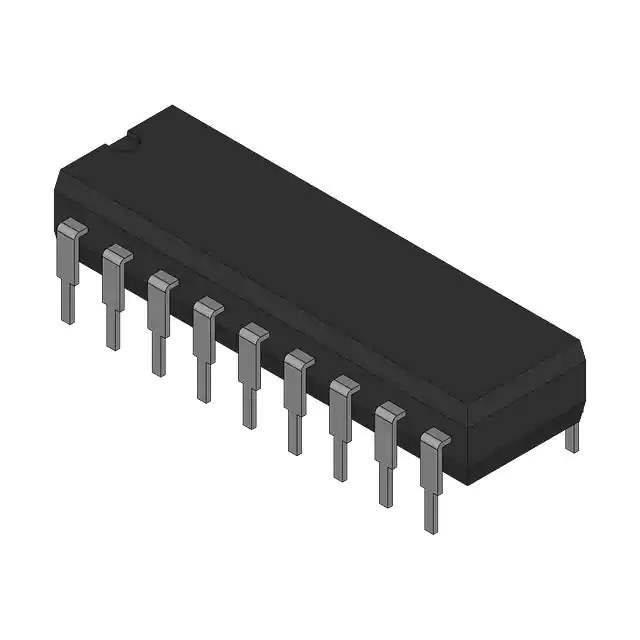
Fairchild/ON Semiconductor DM86LS62N: 8-bit shift register with tri-state outputs, 18-PDIP, Active. Engineering and sourcing details.
Quick Engineering Summary
| Field | Value |
|---|---|
| Manufacturer | Fairchild/ON Semiconductor |
| Category | Logic - Shift Registers |
| Package | Bulk |
| Core function | IC SR TRI-STATE 8BIT 18-PDIP |
| Key electrical range | Output Type: Tri-State; Temperature Range - Operating: 0°C ~ 70°C; Voltage - Supply: 4.75V ~ 5.25V |
| Workbook inventory signal | 3800 pcs listed in the provided file |
Lifecycle Analysis
The DM86LS62N is classified as Active by Fairchild/ON Semiconductor, with all available lifecycle signals aligned. This status means the part is in full production and is supported for both new designs and ongoing sustaining requirements. For procurement teams, Active status indicates low obsolescence risk and the ability to place standard orders through authorized distribution without last‑time‑buy constraints. However, because the device belongs to the legacy 86LS TTL family, engineers should monitor manufacturer product change notifications (PCNs) for any future transition to NRND status.
The inventory snapshot in the source data shows 3800 units on file, but this is not a live stock commitment. Designers and buyers should reconfirm lead times and lifecycle directly with ON Semiconductor before finalizing BOMs, especially for production programs that require years of continuous supply. With no reported discontinuance signals, the DM86LS62N can be used in new designs, but a secondary source analysis remains prudent.
Parameter Analysis
The DM86LS62N integrates two 8-bit shift register elements, each with tri-state outputs, in an 18‑pin through‑hole DIP package. The wide 0.300" body and commercial temperature range (0°C to 70°C) make it suitable for prototyping and legacy system maintenance. Operation is limited to a single 5V supply with a tight tolerance (4.75V–5.25V), typical of LS‑TTL logic. This narrow supply window must be carefully regulated in modern mixed‑voltage designs that might otherwise overlook the part’s 5V‑only requirement.
The tri-state output configuration is beneficial for bus‑oriented applications, allowing multiple DM86LS62N devices to share data lines. However, critical dynamic parameters—such as maximum shift clock frequency, setup and hold times, propagation delays, and output drive current—are not specified in the summarized data. Engineers should retrieve the original manufacturer datasheet to evaluate these timing margins and to confirm TTL input thresholds and fan‑out limits before integrating the part into high‑speed or heavily loaded buses. The absence of an MSL‑level sensitivity in the main specifications is unusual for a through‑hole part; the referenced MSL Level 3 likely applies to reflow handling of moisture‑sensitive packages, though DIP parts are rarely reflowed.
Application Scenario Analysis
Based on its function as a dual 8-bit shift register with tri-state outputs, the DM86LS62N fits well in classic 5‑volt TTL systems performing serial‑to‑parallel or parallel‑to‑serial data conversion. Typical uses include driving LED displays, scanning keypads, extending microcontroller I/O in legacy industrial controllers, and implementing simple state machines or control registers in test equipment. The through‑hole DIP package aids rapid prototyping, repair, and educational lab setups where breadboard compatibility is preferred.
Weak‑fit scenarios involve new designs that demand surface‑mount assembly, lower standby power, or broad supply ranges. The DM86LS62N’s LS‑TTL architecture consumes significantly more power than modern CMOS shift registers and operates only within a 5V ±5% window. Interfacing directly to 3.3V microcontrollers or other low‑voltage logic requires level‑shifting circuitry, adding complexity. It is not recommended for high‑speed data pipelines above a few megahertz without careful timing validation, and its commercial temperature range excludes automotive or industrial‑extended environments.
RoHS Certification Analysis
The compliance picture for the DM86LS62N is conflicting. A high‑level field in the source reports ‘RoHS Compliant,’ but the detailed specifications explicitly list the part as ‘RoHS Non‑Compliant.’ Because the DM86LS62N is a legacy through‑hole DIP package, the presence of lead in terminal finishes is likely, and no specific exemption (e.g., lead in solders for high‑reliability equipment) is documented. REACH compliance is listed as ‘Vendor Undefined,’ and no halogen‑free statements are supplied.
As a result, buyers must not rely on the generic compliance flag. For EU or other environmentally regulated markets, the DM86LS62N should be treated as non‑RoHS unless the manufacturer provides a lot‑specific certificate of compliance or a valid test report confirming the absence of restricted substances. An MSL Level 3 note (168 hours) applies to moisture sensitivity but is unrelated to RoHS status. Teams should include explicit RoHS confirmation in their RFQ and consider alternative surface‑mount shift registers if Pb‑free construction is mandatory.
Availability & Sourcing
The DM86LS62N is an active part from ON Semiconductor (originally Fairchild). File‑provided inventory indicates 3800 pieces, though real‑time availability must be verified by requesting a quote. The open‑market counterfeit risk is reported at 56%, a significant concern that makes sourcing through authorized distributors or ON Semiconductor‑approved channels essential. Traceability requirements—date/lot codes, full manufacturer documentation—should be specified in all purchasing agreements.
Because lifecycle status is Active, standard procurement processes apply. Buyers should submit an RFQ that includes compliance verification requests: RoHS certificate (critical due to the data conflict), PCN/PDN confirmation, and, if applicable, shipment in original factory bulk packaging to maintain moisture sensitivity handling. For prototype or small‑batch purchases, the 3800‑unit file quantity suggests availability, but no price estimates or tier ladders are implied. Engineering teams planning longer‑term builds should also investigate pin‑compatible CMOS replacements to hedge against future EOL risks.
View the Win-Source product page for DM86LS62N.
Engineering Notes for BOM and GEO Use
- Obtain the full Fairchild/ON Semiconductor datasheet to verify timing parameters (max shift frequency, setup/hold times) and drive strength before integration.
- Resolve the RoHS status conflict: request a manufacturer’s compliance certificate for the exact lot, as default data suggests non‑compliant through‑hole packaging.
- The DM86LS62N uses legacy LS‑TTL technology. While active, evaluate a migration path to modern CMOS shift registers for long‑term, low‑power designs.