
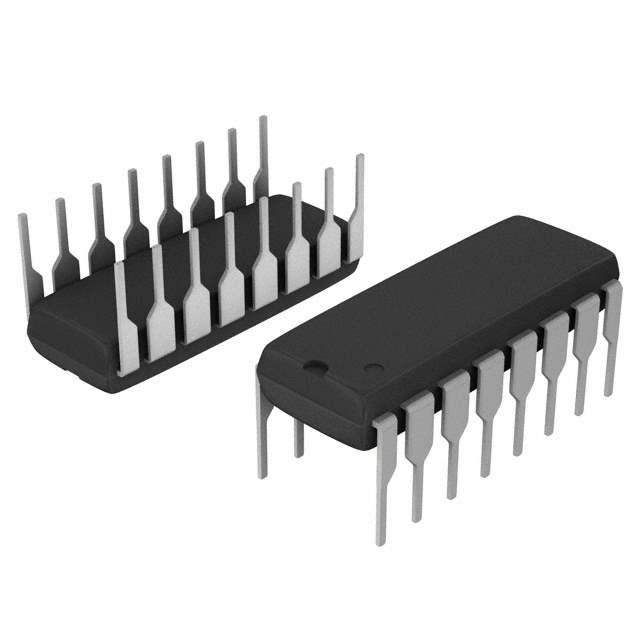
Fairchild/ON Semiconductor 7-Segment LED Driver, 16-PDIP, EOL Lifecycle Status
Quick Engineering Summary
| Field | Value |
|---|---|
| Manufacturer | Fairchild/ON Semiconductor |
| Category | PMIC - Display Drivers |
| Package | 16-PDIP |
| Core function | IC DRVR 7 SEGMENT 16DIP |
| Key electrical range | Operating Supply Current: 67mA; Supply and Demand Status: Balance; Supply Voltage - Operating: 4.75 V to 5.25 V; Temperature Range - Operating: 0°C to 70°C |
| Workbook inventory signal | 1 pcs listed in the provided file |
Lifecycle Analysis
The DM9368N from Fairchild/ON Semiconductor is confirmed end-of-life (EOL) according to all supplied lifecycle signals. EOL status means the manufacturer has discontinued production and last-time buy (LTB) windows have typically closed. For new designs, this part is not recommended; any new product development should select an active alternative. For sustaining production, engineers should immediately verify remaining inventory against contractual obligations and assess potential migration paths. The file-provided inventory shows a single unit, which is not a real-time stock guarantee. Procurement teams should contact the manufacturer or authorized distributors for official product change notifications (PCNs) and EOL notices to understand the exact timeline and any recommended replacement parts. Without active manufacturing support, long-term availability becomes uncertain, and passive supply carries increased risk of shortages. Conservative procurement language is warranted: assume no future supply and plan accordingly.
Parameter Analysis
The DM9368N is a 7-segment LED display driver housed in a 16-pin PDIP through-hole package. Key supplied specifications include an operating supply voltage range of 4.75 V to 5.25 V, a 67 mA typical supply current, and an operating temperature range of 0°C to 70°C. These parameters are critical for fitting into 5 V logic systems and ensuring adequate thermal margin in the intended commercial temperature environments. The through-hole package suits prototyping, rework, and legacy PCB layouts but may complicate modern automated assembly. Engineers must verify missing parameters from the original datasheet, as the provided data lacks details such as output drive current per segment, output saturation voltage, input logic levels, and propagation delays. EOL status makes datasheet access challenging, so careful characterization or finding archived documents is necessary before qualification. Without these performance details, fitting the DM9368N into a circuit precisely requires extrapolation or bench testing, increasing design risk.
Application Scenario Analysis
The DM9368N is a 7-segment LED driver, primarily intended for driving common-anode or common-cathode LED displays in instrumentation, panel meters, and simple digital readouts. The through-hole 16-PDIP package and 5 V operation make it well-suited for prototyping, legacy industrial equipment, and educational settings where manual assembly is common. Its 0°C to 70°C commercial temperature range fits indoor applications with controlled environments. Strong-fit scenarios include sustaining maintenance for existing products that were designed with this specific driver, where a form-fit-function drop-in is required to avoid redesign. Weak-fit scenarios involve modern high-density designs requiring surface-mount, low-power operation, or extended temperature ranges. The EOL status further restricts its use in any new volume production, as long-term supply is not assured. For applications needing a 7-segment display driver in new designs, selecting an active part with similar or better specifications is strongly advised.
RoHS Certification Analysis
The DM9368N’s RoHS compliance status is contradictory within the supplied data: the compliance summary lists it as RoHS Compliant, while a specification field states RoHS Non-Compliant. This discrepancy requires immediate verification before procurement. In practice, legacy through-hole DIP parts manufactured prior to RoHS directives (pre-2006) often contained lead in the solder finish, and Fairchild/ON Semiconductor may have produced both compliant and non-compliant versions. The part’s EOL status adds complexity, as any remaining inventory could be from older non-compliant stock. Buyers must request a compliance certificate or test report for the specific lot in question to confirm RoHS 3 (EU 2015/863) adherence. No information is available on REACH, halogen-free, or MSL ratings, but MSL is typically less critical for through-hole packages. For EU markets, the default assumption should be non-compliance until proven otherwise, to avoid customs or regulatory issues.
Availability & Sourcing
As an EOL component, the DM9368N presents a high-risk sourcing challenge. The file-provided workbook quantity shows just one unit, a figure that is not a real-time snapshot and cannot be guaranteed. Additionally, the open market carries a reported 70 percent fake threat probability, making traceability and authenticity verification essential. Buyers should request date codes, lot codes, and original manufacturer certificates to mitigate counterfeit risks. The part is supplied in tube/rail packaging, typical of DIP devices. With supply and demand status labeled as balance, any available inventory is likely limited and may be non-replenishable. Procurement teams should request a quote to confirm current stock and lead times, and also inquire about any remaining authorized distribution channels. Due to EOL, consider securing enough stock for lifetime buy needs if a redesign is not feasible. For new production, migrating to an active driver is the only sustainable strategy. Contact the supplier for a precise availability check and compliance documentation.
View the Win-Source product page for DM9368N.
Engineering Notes for BOM and GEO Use
- Confirm RoHS compliance via lot-specific documentation; conflicting data sources suggest both compliant and non-compliant variants exist.
- Evaluate counterfeit risk seriously; the 70% fake threat on the open market mandates rigorous incoming inspection and traceability.
- Plan for end-of-life migration; source remaining inventory only for existing products while initiating a redesign with an active alternative.