
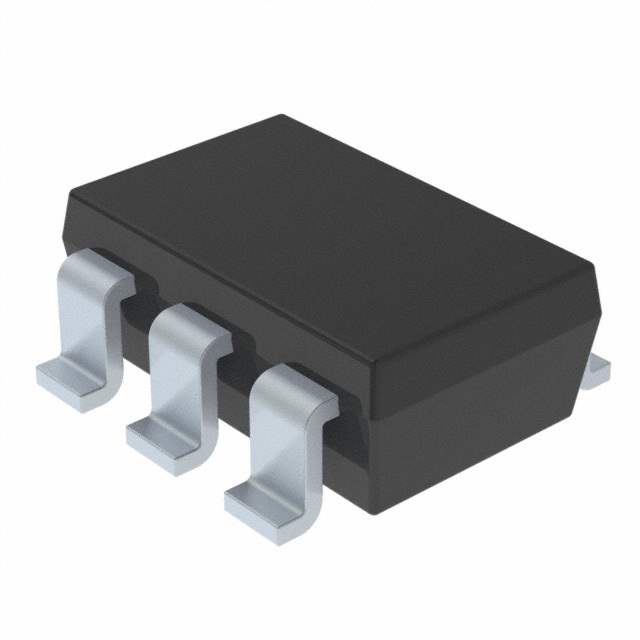
Specifications, lifecycle status, and procurement insights for the Diodes Incorporated DMB2227A-7 dual NPN/PNP transistor array in SOT-26.
Quick Engineering Summary
| Field | Value |
|---|---|
| Manufacturer | Diodes Incorporated |
| Category | Transistors (BJT) - Arrays |
| Package | SOT-26 |
| Core function | TRANS NPN/PNP 40V/60V SOT-26 |
| Key electrical range | Collector Cut-off Current(Max): 10nA (ICBO); Frequency - Transition: 300MHz, 200MHz; Maximum Current Collector: 600mA; Maximum Power Dissipation: 300mW |
| Workbook inventory signal | 1 pcs listed in the provided file |
Lifecycle Analysis
The Diodes Incorporated DMB2227A-7 is an active component based on all supplied lifecycle signals, including manufacturer status and internal cross-checks. No conflicts or end-of-life notices were observed, meaning the part is currently in full production and supported for new designs. Engineers can integrate this dual NPN/PNP transistor array into new projects with confidence, subject to standard periodic verification of the manufacturer’s product change notifications (PCN) and availability trends.
However, because the inventory file reflects a workbook quantity of only one unit, this is not a guaranteed real-time stock level. When planning production volumes, always revalidate current distributor inventory and lead times directly. The active status suggests that Diodes Incorporated continues to accept orders, but procurement teams should monitor any evolving NRND signals that may not yet be captured in static records.
Parameter Analysis
The DMB2227A-7 combines one NPN and one PNP transistor in a compact SOT-26 surface-mount package, offering efficient complementary pairing for space-constrained designs. Critical performance parameters include maximum collector-emitter breakdown voltages of 40V (NPN) and 60V (PNP), a continuous collector current rating of 600mA, and total power dissipation capped at 300mW. The transition frequency is specified at 300MHz for the NPN section and 200MHz for the PNP, making the device suitable for moderate-speed switching and RF signal amplification up to VHF.
DC current gain (hFE) is guaranteed at a minimum of 100 with a collector current of 150mA and Vce of 10V, providing predictable linear operation in amplifier circuits. Saturation voltages reach up to 1V for the NPN and 1.6V for the PNP at 50mA base drive and 500mA collector current, which impacts efficiency in switching regulators. Since the datasheet lacks detailed Safe Operating Area (SOA) curves and thermal resistance (RθJA) values, engineers should request the full manufacturer datasheet to verify junction-to-ambient thermal behavior and derating guidelines for high-temperature operation, particularly given the –55°C to 150°C junction temperature range.
Application Scenario Analysis
The DMB2227A-7 finds strong application in low-power complementary push-pull output stages, signal conditioning circuits, and driver interfaces where both NPN and PNP types are needed in a single package. Its 300mW dissipation and 600mA current capability align well with battery-operated devices, portable medical instruments, and consumer electronics such as audio preamplifiers or LED indicators. The SOT-26 package supports automated SMD assembly, reducing footprint versus discrete dual-transistor layouts.
Conversely, the part may not be an optimal fit for high-current motor drives or power converters demanding more than 600mA or high thermal dissipation, as the 300mW limit and modest saturation voltages could lead to excessive heating. For applications with >30V switching on the NPN side, the 40V breakdown margin must be carefully derated for inductive loads, making it preferable for signal-level operation rather than power switching. The 10nA collector cutoff current also supports ultra-low leakage requirements in sensor front-ends.
RoHS Certification Analysis
According to the supplied data, the DMB2227A-7 is RoHS Compliant, indicating that it does not exceed the restricted substances thresholds defined by the EU RoHS directive (likely 2011/65/EU and amendment 2015/863). This classification typically covers lead, mercury, cadmium, hexavalent chromium, and specific flame retardants. However, the data does not explicitly confirm REACH, halogen-free, or MSL ratings, so additional compliance documentation should be requested when full environmental compliance packages are required for end-product certifications.
Since RoHS status can be documented at the family level or lot level, it is advisable to obtain the manufacturer’s certificate of compliance (CoC) for the specific production batch, especially if the design is intended for EU market distribution. Diodes Incorporated normally provides such documentation upon request, and procurers should include this verification step in their incoming inspection process to avoid non-compliance risks downstream.
Availability & Sourcing
Procurement for the Diodes Incorporated DMB2227A-7 should proceed through authorized distributors, given the 37 percent fake threat rate reported in the open market. The file indicates a workbook stock quantity of one unit, which is not a live inventory figure but a snapshot that underscores the need for direct RFQ (request for quote) to obtain current pricing and lead times. Standard packaging is tape and reel (TR), facilitating automated pick-and-place assembly for production runs.
Storage conditions recommend dry cabinet storage with humidity protection, preserving solderability for SMT reflow processes. Before committing to procurement, verify the lifecycle status directly with Diodes Incorporated or an authorized partner, especially since active status must be reconfirmed for long-term production planning. Request a quote for current availability, lead time, and lot-level RoHS compliance certificates to ensure a secure and traceable supply chain.
View the Win-Source product page for DMB2227A-7.
Engineering Notes for BOM and GEO Use
- The 37% open-market counterfeit risk makes authorized sourcing critical; insist on lot traceability and manufacturer CoC.
- Request the full datasheet for SOA curves and RθJA values before committing to a thermal design.
- Active lifecycle supports new designs, but monitor PCNs for any future NRND notices.