
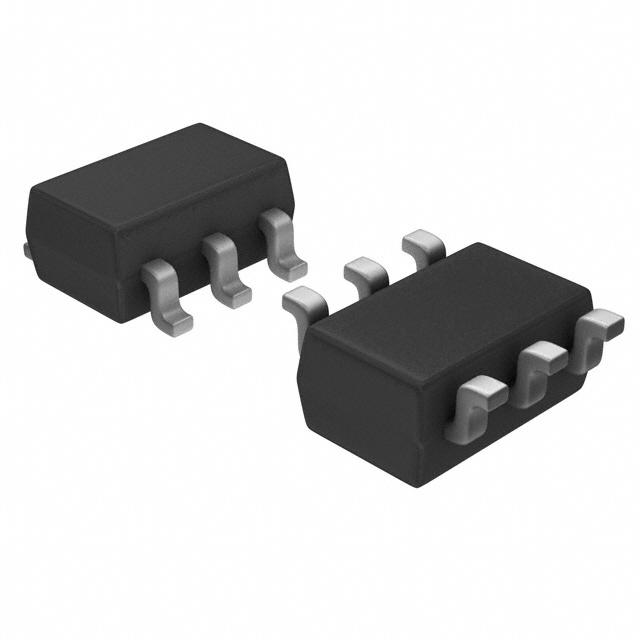
Panasonic Mini6-G4-B Dual NPN 50V 500mA 160MHz
Quick Engineering Summary
| Field | Value |
|---|---|
| Manufacturer | Panasonic |
| Category | Transistors (BJT) - Arrays |
| Package | Mini6-G4-B |
| Core function | TRANS 2NPN 50V 500MA MINI6-G4-B |
| Key electrical range | Collector Cut-off Current(Max): 100nA (ICBO); Frequency - Transition: 160MHz; Maximum Current Collector: 500mA; Maximum Power Dissipation: 300mW |
| Workbook inventory signal | 3000 pcs listed in the provided file |
Lifecycle Analysis
The DMC204020R carries an official Lifecycle Status of Active, but conflicting signals exist from legacy data sheets that list the part as discontinued (停止提供). For engineering teams, this means the part’s long-term availability is uncertain. New designs should not proceed without direct confirmation from Panasonic or an authorized distributor that production will continue. For sustaining production, existing BOMs may still be procurable, but the risk of a last-time buy notice is elevated. The medium risk level reflects this tension: the part is not formally EOL, yet contradictory documentation warrants caution. Any sourcing strategy should include lifecycle reconfirmation at least quarterly, and engineering should prepare a pin-compatible alternative in case the Active status is reversed. Given the 44% counterfeit threat in the open market, verifying lifecycle through manufacturer channels is essential to avoid obsolete or remarked parts.
Parameter Analysis
The DMC204020R integrates two NPN transistors in a single Mini6-G4-B package, saving board space and ensuring thermal tracking between devices. Key parameters include a VCEO of 50 V, allowing use in common 12–24 V systems with comfortable headroom. Continuous collector current is rated at 500 mA per transistor, but total power dissipation for the package is only 300 mW. Designers must derate current when both channels are active, as the combined heat may exceed the package limit. The transition frequency of 160 MHz supports moderate-speed switching, while the minimum DC current gain of 120 at 150 mA ensures adequate drive in linear applications. Saturation voltage of 600 mV at 30 mA base drive is typical for small-signal BJTs, though it should be checked against load requirements in low-voltage circuits. Missing from the provided data are thermal resistance values (θJA, θJC) and safe operating area curves; engineers should obtain these from the full Panasonic datasheet to validate thermal margin and SOA compliance in the intended layout. Additionally, storage conditions indicate a moisture-sensitive handling requirement, so standard MSL precautions should be followed during assembly.
Application Scenario Analysis
The DMC204020R suits general-purpose switching and small-signal amplification in space-constrained designs. Strong-fit scenarios include low-side switching of relays, LEDs, or small motors under 500 mA, where the dual device can drive two loads or be paralleled for higher current (with balancing). Its dual NPN nature makes it a candidate for level shifting between logic domains, audio preamplifier stages, and signal gating. The matching characteristics of integrated transistors also support differential amplification, though the exact hFE matching is not specified and would need bench verification. Weak-fit scenarios involve high-frequency RF circuits beyond 160 MHz, or applications requiring isolated channels with high power dissipation, where more robust packages are needed. The SOT-23-6 footprint is common and simplifies PCB layout, but its small size may challenge designs needing high creepage or clearance for safety isolation. Overall, this part is appropriate for cost-sensitive consumer and industrial control boards where dual small-signal NPN functionality is required in a miniature outline.
RoHS Certification Analysis
The DMC204020R is marked as RoHS Compliant, indicating conformity with the European Union’s Restriction of Hazardous Substances directive. While the specific RoHS version is not stated, current RoHS compliance typically aligns with EU directive 2015/863 (RoHS 3), which restricts ten substances. No explicit REACH declaration or halogen-free claim appears in the provided data, so compliance pertains solely to RoHS unless otherwise verified. For high-reliability procurement, lot-level compliance certificates should be requested, as family-level RoHS declarations may not capture material batch variations. The part’s storage condition requirement (dry, humidity-protected) suggests that typical tin-lead-free finishes are used, but no MSL rating is given; process engineers should confirm the moisture sensitivity level for reflow profiling. In the absence of exemption details, assume full lead-free termination suitable for standard SAC soldering processes.
Availability & Sourcing
The DMC204020R presents a mixed sourcing profile. File-based inventory indicates a quantity of 3000 units, but this is not a live guarantee; actual availability may differ. The part is listed as RoHS compliant and is supplied on tape and reel (TR) for automated assembly. However, the lifecycle conflict—Active official status versus discontinued legacy parameter—creates uncertainty. A high counterfeit risk (44%) underscores the need to purchase only from Panasonic authorized distributors or to employ rigorous incoming inspection including X-ray and decapsulation sampling. Buyers should request a quote to confirm current stock and lead time, and insist on traceable date/lot codes and compliance documentation. For NRND-risk projects, it is prudent to secure inventory now while simultaneously evaluating migration paths. If the part is being used in new designs, direct engagement with Panasonic’s product line management is essential to clarify the long-term outlook.
View the Win-Source product page for DMC204020R.
Engineering Notes for BOM and GEO Use
- Contact Panasonic directly to resolve conflicting Active vs. discontinued lifecycle signals before committing to new designs.
- High counterfeit threat (44%) and contested lifecycle demand sourcing only through authorized channels with full traceability.
- Total package power is only 300 mW; when driving both transistors, derate current to stay within thermal limits.