
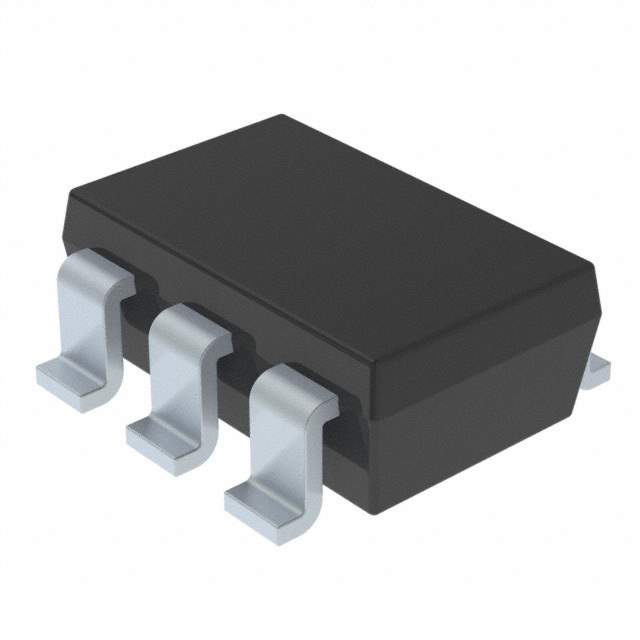
N/P-Channel 20V 1.34A SOT-26 complementary MOSFET array from Diodes Incorporated — key parameters, RoHS, and availability analysis.
Quick Engineering Summary
| Field | Value |
|---|---|
| Manufacturer | Diodes Incorporated |
| Category | Transistors - FETs, MOSFETs - RF |
| Package | SOT-26 |
| Core function | MOSFET N/P-CH 20V 1. |
| Key electrical range | Operating Temperature Range: -55°C ~ 150°C (TJ); Supply and Demand Status: Limited |
| Workbook inventory signal | 15374 pcs listed in the provided file |
Lifecycle Analysis
The lifecycle status of DMC2700UDMQ-7 is unknown from the supplied data. Without a clear active, NRND, or EOL declaration, engineering and procurement teams must treat the part with caution. For new designs, this uncertainty poses a medium risk: if the device is discontinued after design freeze, requalification costs and schedule delays may follow. For sustaining production, it may still be a usable drop‑in if buffer stock is available. The automotive‑grade AEC‑Q101 qualification of the DMC2700 series often implies a manufacturer commitment to long‑term supply, but that cannot be assumed without confirmation.
The file‑verified inventory of 15,374 units provides a snapshot of current stocking but is not a live guarantee. The high counterfeit threat percentage (71%) and limited supply‑demand status further emphasize the need to validate lifecycle directly with Diodes Incorporated or franchised distribution. A proactive approach—requesting a formal product life expectancy letter—can help decide whether to design in the DMC2700UDMQ-7 or seek an alternative with clearer longevity.
Parameter Analysis
Key specifications for DMC2700UDMQ-7 include a 20V drain‑source voltage rating and continuous drain currents of 1.34A (N‑channel) and 1.14A (P‑channel) at 25°C ambient. The total power dissipation is 1.12W, and the operating junction temperature spans ‑55°C to 150°C. These parameters define the basic electrical boundaries for low‑voltage, moderate‑current switching. The complementary N‑ and P‑channel configuration simplifies gate drive in half‑bridge or push‑pull topologies without bootstrap circuitry.
Critical missing values from the source data are Rds(on) at relevant Vgs levels, gate charge (Qg), input capacitance, and threshold voltage (Vgs(th)). Rds(on) dictates conduction losses and thermal margins; gate charge influences switching speed and drive circuit requirements. Without these, accurate efficiency modeling and thermal simulation are impossible. Engineers must obtain the full datasheet from Diodes Incorporated to extract these curves and plot safe operating area against expected load transients.
Package‑related parameters such as the SOT‑26 footprint and MSL 1 (unlimited floor life) are clearly stated, easing PCB layout and assembly. The automotive series designation (AEC‑Q101) implies passivation and reliability screening suited for harsh environments, but actual qualification reports should be reviewed for specific test conditions.
Application Scenario Analysis
The DMC2700UDMQ-7 complementary MOSFET array fits well in space‑constrained automotive and industrial systems requiring bidirectional or complementary switching. The shared SOT‑26 package and integrated N‑ and P‑channel pair reduce component count and simplify layout in battery‑powered devices, portable instruments, motor pre‑drivers, and load‑switch applications. Its AEC‑Q101 qualification makes it suitable for under‑hood and in‑cabin electronics such as LED lighting, sensor power management, and fan control, where temperature extremes and reliability are critical.
Weak‑fit scenarios include high‑current or high‑voltage circuits exceeding 20V or 1.34A. At elevated ambient temperatures, the derated current capability shrinks further, limiting use in power supplies above a few watts. Similarly, applications requiring very low on‑resistance (single‑digit milliohms) or fast high‑side switching without level shifting may find this part sub‑optimal due to the P‑channel’s inherently higher Rds(on). While the part’s category is “RF MOSFET,” the absence of specified RF parameters like forward transconductance in the sourced data suggests it is better characterized as a general‑purpose switch. Designers targeting RF amplification or switching should verify noise figure and bandwidth from the manufacturer.
RoHS Certification Analysis
The DMC2700UDMQ-7 is reported as RoHS Compliant in the supplied data, with an additional note of REACH Unaffected. This indicates that, to the manufacturer’s declared status, the part meets the substance restrictions of EU RoHS Directive 2011/65/EU and subsequent amendments, commonly referred to as RoHS 3 (EU 2015/863) for the latest 10‑substance list. No exemptions are noted, which is typical for a standard leadframe‑based SOT‑26 package using lead‑free plating.
It is important to recognize that REACH (Registration, Evaluation, Authorisation of Chemicals) is a separate regulation and does not replace RoHS compliance. The “REACH Unaffected” statement suggests that Diodes Incorporated does not anticipate any substance of very high concern (SVHC) reporting obligations for this device as of the last declaration, but it is not a direct RoHS equivalency. For production‑grade documentation, especially in automotive applications requiring full material disclosure, the manufacturer’s certificate of compliance should be requested per lot or date code. The MSL 1 (unlimited floor life) also supports standard SMT processes without RoHS‑exemption concerns related to moisture sensitivity.
Availability & Sourcing
The DMC2700UDMQ-7 from Diodes Incorporated is currently indicated with limited supply and a file‑provided quantity of 15,374 units. This inventory figure, while sizable, is not real‑time and may reflect mixed lot dates or warehouse restock cycles. A critical red flag is the 71% fake threat in the open market, signaling that unauthorized sources frequently offer counterfeit or relabeled parts. Coupled with an estimated production lead time of 51 weeks, sourcing strategy must prioritize authenticity and chain‑of‑custody.
Given the unknown lifecycle status, buyers should first verify with Diodes Incorporated or franchised distributors whether the part remains in active production. If active, a request for quotation (RFQ) through authorized channels can clarify current lead times, minimum order quantities, and packaging (3000‑piece reels per the data). For NRND or EOL status, secure sufficient stock for production bridge and evaluate migration options immediately. In all cases, insist on lot‑traceable documentation including RoHS compliance certificates and AEC‑Q101 test summaries.
Because of the high counterfeit risk and extended lead time, avoid open‑market purchases unless accompanied by rigorous incoming inspection and decapsulation analysis. Win Source may be able to assist with RFQ and sourcing consultation, but final supply decisions should be grounded in manufacturer‑direct lifecycle confirmation.
View the Win-Source product page for DMC2700UDMQ-7.
Engineering Notes for BOM and GEO Use
- Verify gate charge, Rds(on), and Vgs(th) from the official Diodes Incorporated datasheet for accurate switching and conduction loss estimates.
- Design thermal management for the stated 1.12W total power dissipation, and derate above 25°C ambient per datasheet safe‑operating‑area curves.
- Source only through authorized distributors to mitigate the 71% open‑market counterfeit threat and secure lot‑traceable AEC‑Q101 compliance.