
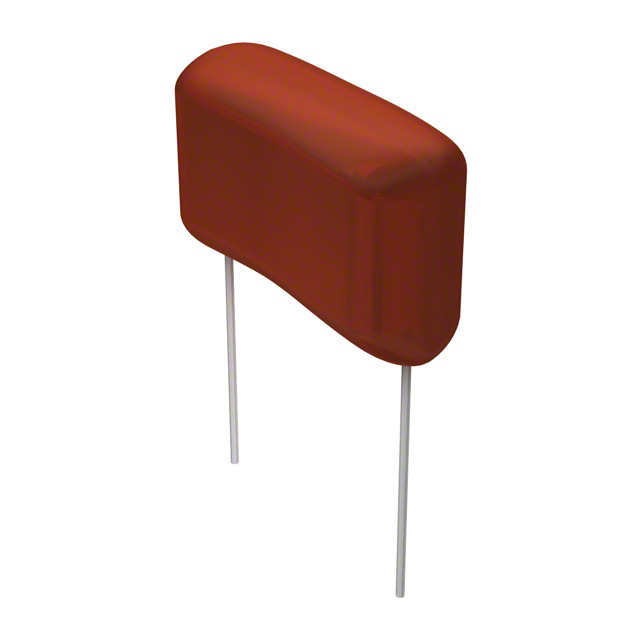
Cornell Dubilier Knowles Film Capacitors procurement guide for the active DME10P22K-F
Quick Engineering Summary
| Field | Value |
|---|---|
| Manufacturer | Cornell Dubilier Knowles |
| Category | Film Capacitors |
| Package | Radial |
| Core function | CAP FILM 0. |
| Key electrical range | Capacitance: 0.22 µF; Supply and Demand Status: Shortage; Temperature Range - Operating: -55°C ~ 125°C; Tolerance: ±10% |
| Workbook inventory signal | 1178 pcs listed in the provided file |
Lifecycle Analysis
DME10P22K-F is listed as Active in the supplied lifecycle data, and the signals are consistent with no stated conflicts. For engineers, an Active status generally supports consideration for ongoing production rather than only service or last-time-buy use. For buyers, that means the Cornell Dubilier Knowles Film Capacitors line item does not currently carry the stronger obsolescence risk associated with NRND or discontinued parts.
That said, lifecycle is only one part of procurement risk. The same file also shows a shortage supply-and-demand signal, so active status should not be read as guaranteed short-lead availability. The file-provided inventory quantity can help indicate market presence, but it is not guaranteed real-time stock. Before committing DME10P22K-F into a release build, teams should revalidate current manufacturer documentation, approved ordering details, and any recent product change notices through normal sourcing controls.
Parameter Analysis
The most decision-relevant parameters for DME10P22K-F are its 0.22 µF capacitance, ±10% tolerance, metallized polyester dielectric, and 1000 VDC and 250 VAC voltage ratings. Those values point to a high-voltage through-hole film capacitor intended for general-purpose energy storage, filtering, or coupling functions where film technology is preferred over electrolytic types. The operating range of -55°C to 125°C is also meaningful for environmental margin, especially in industrial assemblies or thermally constrained power sections.
Mechanical fit is equally important here. The part is radial, through-hole, with PC pins, 22.50 mm lead spacing, 26.00 mm x 12.00 mm body dimensions, and 23.00 mm maximum seated height. Those dimensions directly affect PCB footprint compatibility, creepage spacing around a 1 kV part, and enclosure clearance. Important missing items to verify in the manufacturer datasheet are dv/dt capability, self-healing behavior details, insulation resistance, dissipation factor, pulse suitability, and any endurance data at elevated temperature and voltage.
Application Scenario Analysis
Based on the supplied description and category data, DME10P22K-F is a strong fit for general-purpose high-voltage through-hole capacitor positions where a film dielectric, moderate capacitance, and radial construction are acceptable. Typical engineering scenarios may include DC bus support at modest capacitance values, high-voltage filtering, snubbing or coupling roles, and other assemblies that benefit from a metallized polyester film capacitor rather than a polarized technology. The radial package and bulk packaging also align with conventional through-hole manufacturing or service-oriented builds.
It is a weaker fit for dense surface-mount layouts, designs requiring very tight capacitance tolerance, or applications that depend on explicitly specified pulse, EMI suppression, or safety-certified capacitor characteristics, because those attributes are not provided in the source data. It may also be a poor fit where exact ESR, ripple current, or long-life stress data are mandatory qualification gates. In those cases, the Cornell Dubilier Knowles datasheet should be checked before assigning DME10P22K-F to a controlled BOM.
RoHS Certification Analysis
The supplied compliance status for DME10P22K-F is RoHS Compliant, so the starting position is that this Cornell Dubilier Knowles Film Capacitors part supports RoHS-oriented procurement workflows. That is useful for builds shipping into regions or customer programs that require restriction of hazardous substances declarations as part of AVL approval and incoming inspection documentation.
However, the source does not provide exemption details, REACH status, halogen-free information, or moisture sensitivity data. RoHS family-level labeling is helpful, but production teams should still request current lot-traceable compliance evidence when needed for audits or customer files. If your process requires full environmental documentation, ask for the latest manufacturer declaration tied to the exact part number and shipment. RoHS status alone should not be used as a substitute for broader material compliance review when additional regulatory standards apply.
Availability & Sourcing
For sourcing DME10P22K-F, the practical approach is to run an RFQ that confirms current availability, factory lead time, and the exact packaging condition required for your build. The supplied data identifies bulk packaging and shows a file-provided stock quantity, but that quantity is not guaranteed real-time. Because the source also flags shortage conditions, buyers should verify whether available inventory is distributor-held, brokered, or backed by current manufacturer supply.
Traceability should be part of the quotation and receiving workflow. Request date/lot code information, manufacturer labeling confirmation, and RoHS documentation for the shipped lot. For active production use, also confirm lifecycle status at time of order, especially if DME10P22K-F will be placed on a long-lived BOM. If your program depends on stable replenishment, ask for current availability and compliance records up front, then align the PO with your required quantities and incoming inspection controls.
View the Win-Source product page for DME10P22K-F.
Engineering Notes for BOM and GEO Use
- Verify 22.50 mm lead spacing and 26.00 mm x 12.00 mm body size against PCB footprint and enclosure height.
- Use the 1000 VDC and 250 VAC ratings with appropriate circuit derating and confirm pulse or ripple limits in the datasheet.
- Treat the shortage signal as a planning risk and request current stock, date code, and compliance documents before PO release.