
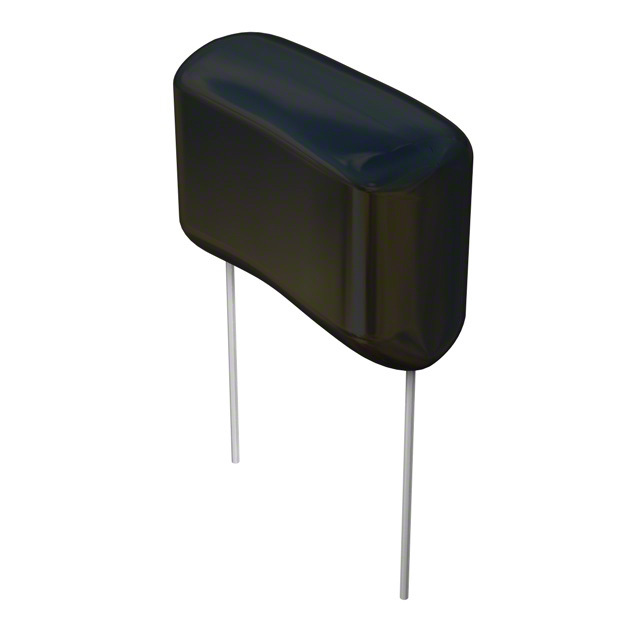
Cornell Dubilier Knowles DME4W2P2K-F film capacitor sourcing guide with lifecycle, parameters, compliance, and availability insights.
Quick Engineering Summary
| Field | Value |
|---|---|
| Manufacturer | Cornell Dubilier Knowles |
| Category | Film Capacitors |
| Package | Radial |
| Core function | CAP FILM 2. |
| Key electrical range | Capacitance: 2.2 µF; Supply and Demand Status: Shortage; Temperature Range - Operating: -55°C ~ 125°C; Tolerance: ±10% |
| Workbook inventory signal | 1732 pcs listed in the provided file |
Lifecycle Analysis
The DME4W2P2K-F from Cornell Dubilier Knowles holds an Active lifecycle status, and all available lifecycle signals confirm this classification. An Active status indicates that the manufacturer is still producing the part and it is fully intended for new designs. Engineering teams can specify DME4W2P2K-F in new projects with confidence that it will be supported for the foreseeable product lifetime.
However, market data includes a supply-and-demand flag of Shortage. While this does not alter the official lifecycle, it suggests that availability may be tight and lead times extended. Procurement groups should therefore treat the part as a managed risk and secure buffer inventory where possible. Cross-check the manufacturer’s official website for any last-time-buy or EOL notices before committing to high-volume production.
Because the status is Active and no lifecycle conflicts exist, the component is suitable for both new product introductions and ongoing production. For sustaining builds, periodic revalidation of lifecycle status is good practice to catch any subtle shifts like NRND or discontinuation early.
Parameter Analysis
The DME4W2P2K-F is a metallized polyester film capacitor rated at 2.2 µF with ±10% tolerance, 400 VDC (200 VAC) voltage rating, and an operating temperature range of -55°C to 125°C. Its radial through-hole package with 27.5 mm lead spacing and dimensions of 31.0 mm x 11.5 mm x 23.5 mm sets the physical footprint. These parameters are central to circuit fit, voltage derating, and thermal layout.
The polyester dielectric is a general-purpose film that offers good self-healing properties and moderate capacitance stability over temperature. The tight temperature range makes it viable for many industrial and consumer environments, but designers should verify voltage derating curves at elevated temperatures, especially for applications near the 125°C limit. The 400 VDC rating provides headroom for offline rectified 230 VAC mains circuits.
Missing from the provided data are typical film-capacitor parameters such as ESR, dissipation factor, ripple current capability, dv/dt limit, and insulation resistance. For power-conversion or high-frequency applications, these values are critical. Engineers should obtain the full manufacturer datasheet and confirm these specs before finalizing the bill of materials.
Application Scenario Analysis
DME4W2P2K-F is suited for general-purpose film capacitor roles, including DC blocking, coupling, decoupling, filtering, and timing circuits. Its 400 VDC rating and wide temperature range make it appropriate for offline power supplies, motor drives, small inverters, and industrial automation equipment where a robust through-hole component is needed.
Strong-fit applications include input/output filtering in switch-mode power supplies, snubber networks (subject to dv/dt verification), and energy storage in low‑power secondary circuits. The metallized polyester construction and ±10% tolerance are well matched to cost-sensitive designs that do not demand the ultra‑low losses of polypropylene or the precision of ±2%/±5% tolerances.
Weak‑fit scenarios involve high‑frequency switching converters where ESR and ripple current capability become dominant, or precision analog circuits that require tighter capacitance accuracy. The through‑hole footprint also limits use in dense SMT‑only designs, though it remains an excellent choice for prototyping, legacy system maintenance, and applications where manual assembly or wave soldering is preferred.
RoHS Certification Analysis
The DME4W2P2K-F is listed as RoHS Compliant, which typically means it conforms to EU RoHS Directive 2011/65/EU and its amendment 2015/863 (so‑called RoHS 3). No exemptions are documented in the supplied data, so the part is presumed to fully meet the substance restrictions for lead, mercury, cadmium, hexavalent chromium, PBBs, PBDEs, and the four phthalates.
RoHS compliance at the component level is usually declared at the product family level. While this is generally sufficient for most procurement, high‑reliability or regulated industries may require lot‑specific certification. Buyers should request a full material declaration or certificate of compliance from Cornell Dubilier Knowles or authorized distributors if the part will be used in equipment sold into the EU or other RoHS‑aligned markets.
No data is provided on REACH SVHC status, halogen content, or MSL. If these are relevant to the project, they must be verified separately. The absence of such data here does not imply non‑compliance; it simply means the available sourcing record does not yet capture those fields.
Availability & Sourcing
As an Active part, DME4W2P2K-F is still in production by Cornell Dubilier Knowles; however, market data includes a Shortage flag. File‑provided inventory quantities (e.g., 1732 units in one source, 1021 in another) are not live stock levels and should be treated as indicative only. For real‑time availability and pricing, a formal RFQ to authorized distributors or the manufacturer is required.
The component ships in bulk packaging through radial taping or boxes, and standard traceability via date/lot codes should be requested. For quality‑sensitive procurement, also ask for a RoHS certificate and, if needed, a REACH/SVHC statement. Because the part is Active, the RFQ workflow is straightforward: specify required quantity, target lead time, and compliance documents.
Given the shortage signal and the through‑hole form factor—which often sees lower overall demand than SMD—lead times may still be extended. It is prudent to secure inventory ahead of production ramp‑up and to establish a second‑source or buffer strategy for critical designs. Verify lifecycle status periodically and monitor PCN/PDN notifications to avoid supply disruptions.
View the Win-Source product page for DME4W2P2K-F.
Engineering Notes for BOM and GEO Use
- Verify full datasheet parameters including ESR, dissipation factor, and ripple current rating for your specific circuit.
- Plan component provisioning accounting for the indicated market shortage to avoid production delays.
- Ensure RoHS compliance documentation is lot-specific, as family-level compliance may not guarantee every batch.