
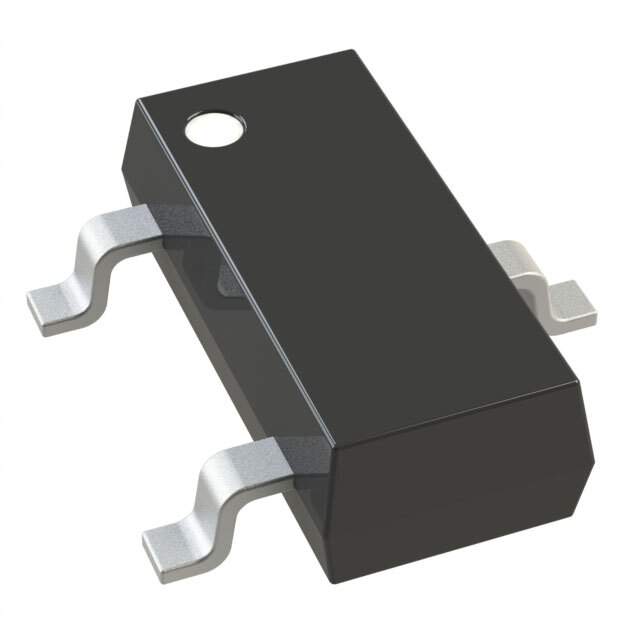
Procurement guide for DMG302PU-7: lifecycle, parameters, applications, RoHS, and sourcing options.
Quick Engineering Summary
| Field | Value |
|---|---|
| Manufacturer | Diodes Incorporated |
| Category | Transistors - FETs, MOSFETs - RF |
| Package | SOT-23 |
| Core function | MOSFET P-CH 25V 170MA SOT23-3 |
| Key electrical range | Continuous Drain Current at 25°C: 170mA (Ta); Drain-Source Breakdown Voltage: 25V; Drive Voltage (Max Rds On, Min Rds On): 2.7V, 4.5V; Gate-Source Threshold Voltage: 1.5V @ 250μA |
| Workbook inventory signal | 3000 pcs listed in the provided file |
Lifecycle Analysis
The DMG302PU-7 from Diodes Incorporated is currently listed as Active with all lifecycle signals aligned. This status indicates the part is in full production and supported for new designs. For engineers selecting this MOSFET, no immediate procurement risk is indicated, but standard design best practices should include verifying that the manufacturer has not issued product change notifications (PCNs) or qualification updates since the last datasheet revision.
File-provided inventory data shows a workbook quantity of 3000 units, which suggests sufficient stock at the time of reporting. However, this figure is not a real-time availability guarantee. As with any active component, lead times can fluctuate based on wafer fabrication schedules and global semiconductor demand. Buyers should request a quote to confirm current stock levels and plan for appropriate safety stock in production.
Since all lifecycle signals affirm Active status, the DMG302PU-7 is considered a low-risk choice for both new product introductions and sustaining production. Still, it is prudent to revalidate lifecycle status with Diodes Incorporated or authorized distributors at least annually to catch any transition to NRND or EOL early.
Parameter Analysis
Key electrical parameters define the DMG302PU-7 as a low-power P-channel enhancement-mode MOSFET optimized for small-signal applications. The drain-source breakdown voltage of 25V provides adequate margin for typical low-voltage circuits, while the continuous drain current of 170mA at 25°C ambient is suitable for driving small loads or as a level shifter. The threshold voltage of 1.5V at 250µA allows direct logic-level driving from 2.5V or 3.3V microcontrollers, but engineers should note the drive voltage specifications: maximum Rds(on) of 10Ω is characterized at Vgs = 4.5V, with a minimum operating Vgs of 2.7V suggested. At lower gate-source voltages, on-resistance may increase significantly.
Dynamic characteristics include a gate charge of only 0.35nC at 4.5V and an input capacitance of 27.2pF, indicating fast switching speeds with minimal gate drive requirements. These figures are well-suited for low-frequency switching or high-impedance circuits. The maximum power dissipation of 320mW at 25°C ambient demands careful thermal management; for every degree above 25°C, derating reduces the allowable power, which in turn limits the continuous current capability. The maximum gate-source voltage of 8V ensures compatibility with 5V logic but requires protection if higher voltage transients are possible.
Parameters not supplied in the source data but critical for design include switching times (turn-on/turn-off), gate-source leakage, body diode characteristics, and safe operating area curves. Designers should download the full datasheet from Diodes Incorporated to obtain these missing values and to verify package parasitic inductances and repeated avalanche ratings.
Application Scenario Analysis
The DMG302PU-7 is a P-channel MOSFET in the SOT-23 package, making it suitable for space-constrained applications requiring low-side or high-side switching of small loads. Strong-fit scenarios include battery-powered portable electronics where its low gate charge and threshold voltage enable efficient switching at low logic levels. Typical uses involve power gating for sensors, pull-up control, and load switching for sub-200mA peripherals such as LEDs or small dc motors. Its RF MOSFET classification suggests it can also serve in small-signal RF amplification stages, though the moderate input and output capacitances might limit high-frequency performance.
Conversely, the device is a weak fit for applications demanding high continuous current, high-speed switching above a few MHz, or operation in environments exceeding 150°C junction temperature. Its 10Ω on-resistance at 4.5V Vgs results in noticeable conduction losses at maximum current, so power-sensitive designs should evaluate this carefully. The 320mW maximum dissipation restricts use in enclosed or elevated ambient temperature conditions without derating. For switching high capacitive loads, gate ring and slow rise times could become concerns if not properly driven.
Overall, this MOSFET excels in low-power, small-signal, and battery-operated circuits where its compact footprint and logic compatibility are advantageous. Engineers should confirm that the drive voltage available in their system meets the required Vgs to achieve the needed on-resistance, and that thermal constraints are respected under worst-case operating conditions.
RoHS Certification Analysis
Diodes Incorporated lists the DMG302PU-7 as RoHS Compliant. While the exact standard version is not specified in the available data, compliance typically aligns with the EU RoHS directive 2011/65/EU and its amendment 2015/863 (RoHS 3), which restricts lead, mercury, cadmium, and other hazardous substances. No specific exemptions are noted, but the small-signal nature of the part and standard SOT-23 package suggest that no exemptions are required under typical interpretations.
For procurement, batch-level compliance documentation is recommended. The status provided is a manufacturer-level declaration, and lot-specific certificates of conformance should be obtained to ensure continuous compliance. The material safety data sheet (MSDS) is accessible upon request, which may provide additional substance details. Note that REACH compliance is not reported in the source data; if required for EU or UK market access, request separate certification.
Engineers should also confirm that the assembly process and PCB finish are compatible with RoHS requirements, especially if using lead-free reflow profiles. The SOT-23 package's moisture sensitivity level (MSL) is not provided; obtain from the datasheet to determine handling and baking requirements before soldering.
Availability & Sourcing
The DMG302PU-7 is supplied in reel packaging (TR) for surface-mount assembly. File data indicates a stock quantity of 3000 units and a supply-demand status of sufficient, but these numbers are not guaranteed in real time. Potential buyers should request a quote through authorized Diodes Incorporated distributors to lock in pricing and delivery. Given the part's Active lifecycle, standard lead times apply, but market fluctuations may affect availability.
A significant concern for this component is the reported 59% fake threat rate in the open market. This high counterfeit risk underscores the necessity of sourcing exclusively from authorized, franchised distributors. Acceptable supply chains will provide traceable lot codes, date codes, and manufacturer certs. Insist on full chain-of-custody documentation and consider third-party testing for production-critical orders to mitigate the risk of substandard or relabeled units.
The recommended storage condition of dry cabinet with humidity protection packaging indicates that the part is sensitive to moisture. Proper handling and MSL verification before reflow soldering are essential. For engineering samples, request a small quantity to validate parameters in-circuit before committing to a full production order. With lifecycle and RoHS status confirmed, the DMG302PU-7 presents a viable sourcing option for Active designs; initiate a RFQ to secure competitive lead times and genuine inventory.
View the Win-Source product page for DMG302PU-7.
Engineering Notes for BOM and GEO Use
- Confirm drive voltage compatibility: the specified max Rds(on) is rated at Vgs = 4.5V; at 2.7V performance may degrade.
- Account for thermal derating above 25°C ambient, as maximum power dissipation is specified at Ta = 25°C.
- Sourcing from unauthorized channels carries a 59% counterfeit risk; insist on traceable lot coding and RoHS documentation.