
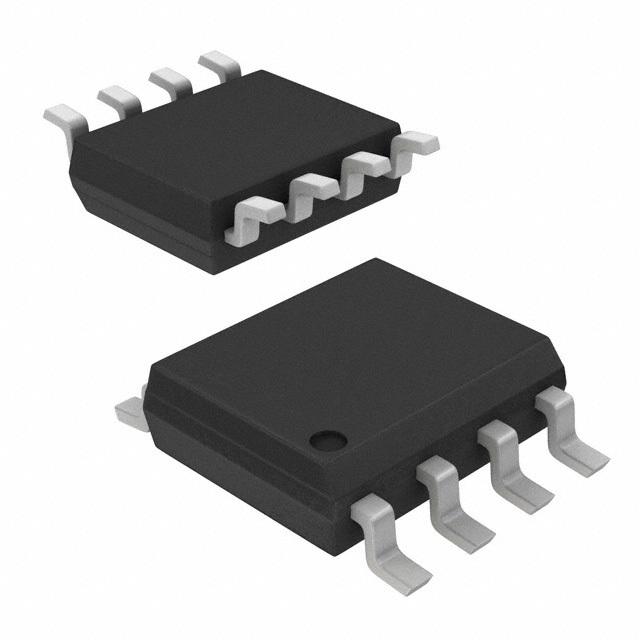
EOL N-Channel MOSFET with 30V/11.2A, ultra-low Rds(on), and integrated Schottky diode for power switching applications.
Quick Engineering Summary
| Field | Value |
|---|---|
| Manufacturer | Diodes Incorporated |
| Category | Transistors - FETs, MOSFETs - RF |
| Package | 8-SOP |
| Core function | MOSFET N-CH 30V 11. |
| Key electrical range | Continuous Drain Current at 25°C: 11.2A (Ta); Drain-Source Breakdown Voltage: 30V; Drive Voltage (Max Rds On, Min Rds On): 4.5V, 10V; Gate-Source Threshold Voltage: 2.2V @ 250μA |
| Workbook inventory signal | 6400 pcs listed in the provided file |
Lifecycle Analysis
The DMG4712SSS-13 from Diodes Incorporated is officially rated End-of-Life (EOL) across all supplier lifecycle signals, with no conflicting data present. This status means the manufacturer has ceased or will soon cease production, making it unsuitable for new designs. Engineering teams must treat this part as a high-risk procurement item for any ongoing programs.
For sustaining production, immediate action is required: obtain the manufacturer’s EOL notification and last-time buy (LTB) window. The file-provided inventory count of 6400 units is a snapshot and does not guarantee real-time availability; these parts may already be depleted or allocated. Relying solely on that figure without verification could lead to line-down situations.
Designers should evaluate alternative pin-compatible MOSFETs with similar or better Rds(on) and gate charge profiles for new projects. If DMG4712SSS-13 must be used in existing builds, secure enough stock to cover lifetime demand and consider buffer for potential yield issues. Always re-confirm lifecycle status with Diodes Incorporated or authorized distributors before placing orders.
Parameter Analysis
The DMG4712SSS-13 is an N-Channel enhancement-mode MOSFET with a drain-source breakdown voltage of 30V and continuous drain current rating of 11.2A at ambient temperature. Its low on-resistance of 14 mΩ at Id=11.2A and Vgs=10V is critical for minimizing conduction losses in power paths. The maximum gate-source voltage of ±12V provides a moderate gate drive window, while the threshold voltage of 2.2V at 250µA ensures logic-level compatibility with standard 3.3V or 5V microcontrollers when driven adequately.
Gate charge of 45.7 nC at Vgs=10V and input capacitance of 2296 pF at Vds=15V indicate moderate switching speed capability, suitable for frequencies up to a few hundred kHz. The integrated Schottky body diode feature helps reduce reverse recovery losses in synchronous rectification or half-bridge circuits. However, the datasheet lacks key thermal resistances (RθJA, RθJC) and safe operating area (SOA) curves, which must be obtained from the official Diodes Incorporated datasheet to design proper heatsinking and avoid thermal runaway—especially given the 1.55W power dissipation limit.
Engineers should also verify derating curves for elevated temperatures, as continuous drain current drops with increasing junction temperature. The 8-SOP package is surface-mountable and suits automated assembly, but its small footprint limits power handling; forced air cooling or thermal vias may be required. Always cross-check actual gate plateau voltage and miller capacitance from characterization data when designing gate drivers to avoid unexpected switching losses.
Application Scenario Analysis
Despite being categorized under Transistors - FETs, MOSFETs - RF, the DMG4712SSS-13 is functionally a standard power MOSFET rather than a dedicated RF transistor. Its specifications align with low-voltage, medium-current switching applications. Typical strong-fit use cases include DC-DC converters (buck or boost topologies up to 30V rail), load switches, battery protection circuits, motor drives for small actuators, and power distribution in embedded systems.
In these applications, the low Rds(on) minimizes I²R losses, the Schottky body diode improves efficiency in synchronous rectification, and the SMD package eases PCB layout. The part is well-suited for designs where switching frequencies are under 500 kHz, as gate charge and input capacitance become more critical above that. Weak-fit scenarios include high-gain RF amplification or oscillator circuits, which demand very low input/output capacitances and noise figure parameters not specified for this device. Also, applications requiring >30V drain-source voltage or continuous currents above 8A in high-ambient conditions would push thermal limits without additional cooling.
Design validation should include bench testing under worst-case load and temperature conditions, as datasheet parameters are characterized at 25°C. For automotive or industrial environments where wide temperature ranges apply, confirm that the -55°C to 150°C operating junction temperature range is adequate, but note that derating is necessary at temperature extremes. The medium popularity and 53% fake threat emphasize the need to source from reputable suppliers.
RoHS Certification Analysis
The DMG4712SSS-13 is marked RoHS Compliant by the supplier, indicating conformance to EU Directive 2011/65/EU as amended, which restricts hazardous substances like lead, mercury, and cadmium. No specific exemptions are listed in the provided data, so the device presumably meets all material restrictions without any special allowances.
For procurement, RoHS compliance is declared at the part family level, not necessarily per production lot. In regulated industries, it is prudent to request a full material declaration or RoHS certificate of compliance (C of C) for the specific date codes or shipments received. This ensures that any process changes at the foundry or assembly site do not affect compliance retroactively.
There is no mention of REACH (SVHC) or halogen-free status in the source data. While RoHS compliance often aligns with REACH requirements for many substances, REACH covers a broader scope of chemicals. If your end-product must meet both RoHS and REACH, request documentation confirming SVHC content below 0.1% by weight. The 8-SOP package likely meets industry standard moisture sensitivity level (MSL), but this should be verified against the packaging label or MSL report from the distributor to ensure proper handling during reflow.
Availability & Sourcing
As an EOL part from Diodes Incorporated, the DMG4712SSS-13 requires a deliberate sourcing strategy. The provided workbook indicates 6400 units in stock, but this is a static file count, not a live inventory check. Actual availability must be confirmed through a quote request. The device comes in cut reel packaging (quantity per package: 1), which suggests individual cut tape pieces rather than full reels or tubes—be mindful of packaging condition if purchasing older stock.
A high fake threat rating of 53% in the open market underscores the risks of counterfeits, especially for discontinued components. To mitigate, only buy from Diodes Incorporated authorized distributors or vetted independent sources with robust inspection protocols. Require full traceability documentation including date codes, lot codes, and country of origin. Consider third-party electrical testing on sample lots to verify key parameters like Rds(on) and gate threshold.
For buyers, the RFQ process should include a request for the most recent EOL notification from the manufacturer to understand last-time buy and last-time ship dates. If the DMG4712SSS-13 is critical to your product, secure sufficient inventory for production ramp-down and repair/warranty needs now. Otherwise, initiate a redesign to replace it with an active alternative. Always revalidate RoHS and environmental compliance certificates with the specific stock offered before committing.
View the Win-Source product page for DMG4712SSS-13.
Engineering Notes for BOM and GEO Use
- Procure remaining inventory quickly due to EOL status; request manufacturer’s Product Change Notification (PCN) for last-time buy dates.
- Verify Rds(on) and gate charge from the official datasheet for thermal and drive circuit design; missing RθJA must be accounted for.
- Implement counterfeit mitigation: source from authorized channels, inspect date codes, and consider third-party testing given 53% open market risk.