
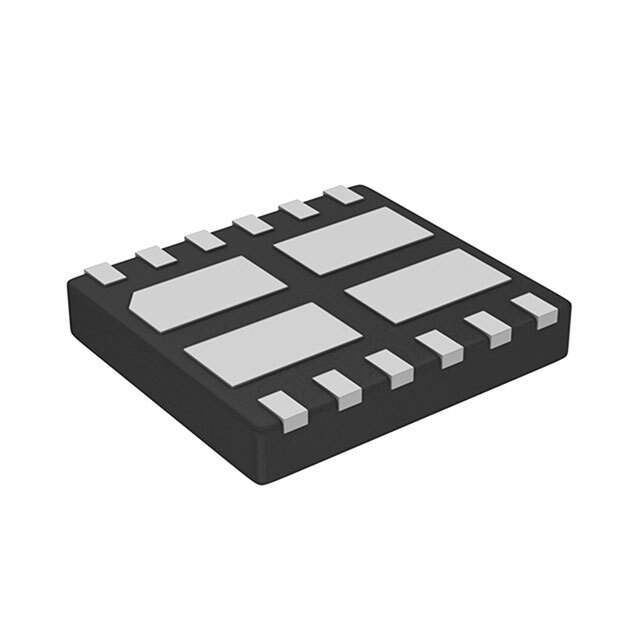
Obsolete quad MOSFET with limited inventory — verify specs and lifecycle before design-in.
Quick Engineering Summary
| Field | Value |
|---|---|
| Manufacturer | Diodes Incorporated |
| Category | Transistors - FETs, MOSFETs - RF |
| Package | 8-SMD, No Lead |
| Core function | MOSFET 4N-CH 60V 14. |
| Key electrical range | Current - Continuous Drain (Id) @ 25°C: 25A (Tc); Input Capacitance (Ciss) (Max) @ Vds: 3384 pF @ 30 V; Operating Temperature: -40°C ~ 85°C |
| Workbook inventory signal | 1 pcs listed in the provided file |
Lifecycle Analysis
The DMHT6016LFJ-13 presents a clear lifecycle conflict: the Part Status specification explicitly lists 'Obsolete', whereas the lifecycle metadata in the provided data shows 'Unknown'. In sourcing practice, an Obsolete designation takes precedence and means the component is no longer manufactured or supported for new designs. Engineers and buyers must treat this part as Discontinued.
For new designs, this part should not be considered. For sustaining production, immediate action is required to validate whether any remaining stock is genuine, date-coded, and fit for use. The file reports only 1 unit in inventory, which suggests extremely limited availability and a high risk of counterfeits or unsupported product. Procurement teams should request official discontinuation notices from Diodes Incorporated and start migration to an active replacement part.
Given the lack of lifecycle signals beyond the Obsolete tag, no last-time-buy or end-of-life schedule is available. Any existing inventory should be accompanied by full traceability documentation, and long-term support cannot be guaranteed. The risk level is high, and conservative procurement language is essential.
Parameter Analysis
Several critical parameters govern the DMHT6016LFJ-13’s fit in an RF or switching design, but some field values appear irregular and demand verification. The continuous drain current at case temperature is listed as 25A (Tc), while the product description rates it at 14.8A. This discrepancy could stem from different test conditions and warrants careful derating. The Rds(on) of 45mΩ maximum at 12A and 10V gate drive is a key figure for conduction losses, especially in power amplifier output stages or load switches.
Gate charge (37nC at 10V) and input capacitance (3384pF at 30V) directly impact driver requirements and switching speed; lower gate charge helps reduce switching losses in high-frequency RF applications. The threshold voltage of 3V max at 77µA ensures compatibility with logic-level drive, but the actual gate drive must provide headroom for full enhancement. The operating temperature range from -40°C to 85°C limits high-ambient deployment, and careful thermal management is required if used near the limit.
Strikingly, the specification lists '96 Segment' as configuration and 'Schottky' as technology—these are atypical for a MOSFET and likely misattributed. The mounting type 'Requires Holder' contradicts the 8-SMD No Lead package. Any design-in must begin with obtaining the official Diodes Incorporated datasheet to confirm the correct specification set before committing to a board layout or BOM.
Application Scenario Analysis
The DMHT6016LFJ-13 is categorized under RF MOSFETs, and its quad N-channel configuration suggests use in RF power amplifier output stages, antenna switching, or multi-channel transmitter chains where multiple matched MOSFETs are needed. The 60V rating and relatively low Rds(on) make it a candidate for moderate-power RF linear amplifiers or Class D modulators, provided the frequency response matches application requirements.
However, the inconsistent parameter data and obsolete status severely narrow its viable use cases. For new designs, it is entirely unsuitable due to uncertain characteristic data and lack of manufacturer support. In sustaining production of legacy RF equipment, the part might be used as a drop-in repair component if exact form, fit, and function can be confirmed, but this requires extensive validation against the original specification. The limited temperature range (85°C max) and unusual package (8-SMD No Lead) further restrict its deployment to controlled environments with minimal thermal cycling.
Weak-fit scenarios include standard DC-DC conversion or motor drive, where the RF-focused optimization and quad configuration offer no advantage and the obsolete lifecycle introduces procurement risk. Engineering teams should evaluate the original design documentation to understand why this specific part was chosen before attempting any substitution.
RoHS Certification Analysis
The DMHT6016LFJ-13 is listed as RoHS Compliant in the supplied data, which generally indicates conformance to EU Directive 2011/65/EU and its amendments, including restriction of lead, mercury, cadmium, and other hazardous substances. However, the data does not specify the exact directive revision or any exemption categories. As a standard practice, RoHS compliance at the component level does not automatically extend to the assembly level; it must be verified alongside the entire bill of materials and manufacturing process.
Because the part is obsolete, lot-level compliance documentation may be difficult to obtain. Any existing stock should be accompanied by a certificate of compliance or test report showing RoHS conformity for the specific date code. Without this, buyers risk incorporating non-compliant components into otherwise RoHS-certified products, which could lead to regulatory issues in the EU and other markets.
No REACH, halogen-free, or MSL data is provided, so these aspects must be clarified with the supplier or original manufacturer. If this MOSFET is intended for use in a high-reliability or export-controlled application, additional environmental compliance documents will be necessary to close the sourcing package.
Availability & Sourcing
The DMHT6016LFJ-13 is an obsolete part with only 1 unit reported in the file-provided inventory. This extremely low quantity should be treated as a snapshot, not real-time availability. Procurement teams must immediately request a quote through authorized channels to confirm current stock levels, date codes, and packaging condition. Given the part’s discontinuation, third-party sources may be the only option, increasing the risk of counterfeit or recycled components.
When sourcing obsolete MOSFETs, full traceability is critical. Require that every lot includes date code, country of origin, and evidence of proper storage conditions. The 8-SMD, No Lead package is moisture-sensitive, so request an MSL rating and inspect for oxidation or bent leads. Compliance documentation—especially RoHS certificates—should be verified per lot. Without original manufacturer support, any warranty or technical recourse will be limited.
For sustaining production, this part should only be considered as a last resort while an active replacement is being qualified. If the application can tolerate a drop-in or functional equivalent, engage Diodes Incorporated or a qualified distributor to identify a migration path. For new designs, do not base any BOM on this component. Always verify lifecycle status directly with the manufacturer before committing to a purchase order.
View the Win-Source product page for DMHT6016LFJ-13.
Engineering Notes for BOM and GEO Use
- Verify the part status directly with Diodes Incorporated; the 'Obsolete' signal overrides the 'Unknown' lifecycle metadata and should guide all procurement decisions.
- Key datasheet parameters such as configuration (listed as '96 Segment') and technology ('Schottky') appear inconsistent; always cross-check with the official manufacturer datasheet.
- With only a single unit reported in the file, assume near-zero availability and prioritize an immediate RFQ to confirm real stock and avoid production gaps.