
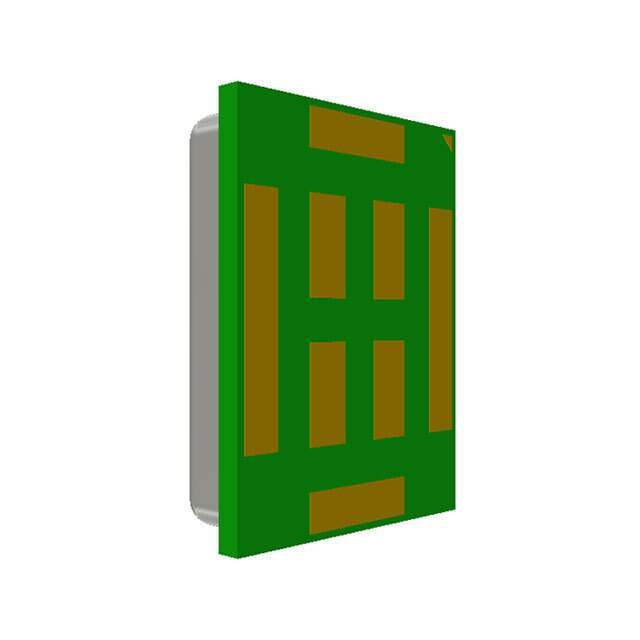
Active digital MEMS microphone from PUI Audio, omnidirectional with PDM output. Verify specifications via datasheet and request a quote for current stock.
Quick Engineering Summary
| Field | Value |
|---|---|
| Manufacturer | PUI Audio, Inc. |
| Category | Microphones |
| Package | 292-LBGA |
| Core function | MIC MEMS DIGITAL PDM OMNI -26DB |
| Key electrical range | Frequency Range: 698MHz ~ 960MHz; Output Type: Inverted |
| Workbook inventory signal | 1 pcs listed in the provided file |
Lifecycle Analysis
The PUI Audio DMM-4326-T-R carries an Active lifecycle status across all supplied signals, including the manufacturer’s Excel parameter, product status field, and Win Source listing. Active means the part is in full production with ongoing manufacturer support, making it suitable for new designs and volume production without immediate risk of discontinuation.
No lifecycle conflicts were identified: all sources align on the Active rating. For engineering teams, this reduces approval hurdles and ensures long-term availability under normal supply conditions. However, it is still prudent to recheck the lifecycle status with the manufacturer or through an authorized distributor before finalizing a new design, as lifecycle status can change without notice in dynamic semiconductor markets.
From a procurement standpoint, the file-provided workbook quantity of 1 unit is a snapshot and should not be interpreted as guaranteed real-time inventory. For accurate stock levels, lead times, and order minimums, request a formal quote. Because the part is Active, procurement can proceed with standard RFQ workflows and factory ordering.
Parameter Analysis
The DMM-4326-T-R is a digital MEMS microphone featuring PDM (Pulse Density Modulation) output and an omnidirectional pickup pattern. Based on the supplied detailed parameters from the manufacturer’s row data, the correct frequency response spans 20 Hz to 18 kHz, with a sensitivity of -26 dB ±1 dB and a signal-to-noise ratio of 57 dB. The operating voltage range is 1.5 V to 3.6 V (nominal 1.8 V), and current consumption is 800 µA, making it suitable for battery‑powered applications.
Critical for design integration: the microphone uses a top‑port acoustic inlet and terminates via solder pads. Package dimensions are 4.00 mm x 3.00 mm x 1.15 mm, with a rectangular form factor. The digital PDM interface simplifies connectivity to modern codecs and processors, but engineers must verify that the device’s clock, data formatting, and sampling rates align with their system. Note that the distribution portal’s specification list includes anomalous entries (e.g., frequency range 698‑960 MHz, 292‑LBGA package, Header/Male Pins type) that are clear database errors; ignore these and always cross‑reference the official PUI Audio datasheet.
Key missing parameters that should be confirmed from the datasheet include total harmonic distortion (THD), acoustic overload point, latency, startup time, and ESD ratings. Thermal and mechanical tolerances should also be validated for high‑density PCB layouts.
Application Scenario Analysis
The DMM-4326-T-R is optimized for voice‑enabled and audio‑capture devices that require a compact, low‑power digital microphone. Strong‑fit applications include IoT end nodes, smart speakers, wearables, security cameras, hearing assistance devices, and portable medical equipment where small size and digital noise immunity are beneficial. The omnidirectional polar pattern and 20 Hz–18 kHz bandwidth suit general voice and ambient sound pickup without directional constraints.
Because the device outputs a PDM stream, it pairs well with application processors and audio codecs that include a PDM interface, avoiding the need for an external ADC. The low current draw and wide voltage tolerance also support battery operation. However, for applications demanding high‑fidelity music recording or very high sound pressure levels (above typical acoustic overload points), this microphone may be less suitable unless the datasheet verifies wider dynamic range. Additionally, if the system requires an analog audio front‑end, an external codec or converter would be needed, adding complexity. Engineers should evaluate the microphone’s PSRR (power supply rejection ratio) and board layout effects, especially in dense RF environments, as these details are not provided in the supplied data.
RoHS Certification Analysis
The DMM-4326-T-R is marked as RoHS Compliant in the provided product data. This indicates that the part meets the European Union’s Restriction of Hazardous Substances directive requirements, likely aligned with RoHS 3 (EU 2015/863) unless otherwise noted. No specific exemption codes are supplied, suggesting the compliance covers the full homogeneous materials without relying on exemptions for lead, mercury, cadmium, hexavalent chromium, PBBs, PBDEs, or the four phthalate substances.
However, RoHS compliance labeling can be at the product family level, and lot‑to‑lot variations may exist. For formal certification, procurement teams should request a standalone RoHS certificate from PUI Audio or an authorized distributor. REACH status is not provided in the dataset; if required for CE marking or customer documentation, that should be requested separately. The absence of an MSL (moisture sensitivity level) rating in the supplied data means that engineers should obtain the valid MSL from the datasheet to determine proper handling and baking procedures prior to solder reflow.
Availability & Sourcing
As an Active product, the DMM-4326-T-R is generally available through standard distribution and factory channels. The supplied file records a workbook quantity of 1 unit, which is a snapshot and not a real‑time inventory guarantee. Engineers and buyers should issue a request for quote (RFQ) to obtain current stock levels, packaging options (tape‑and‑reel is indicated), lead times, and minimum order quantities.
During sourcing, verify lifecycle status directly with the manufacturer or distributor to guard against any recent changes. Request full documentation including the latest datasheet, RoHS certificate, and lot‑specific compliance reports. Ensure traceability of date/lot codes to manage quality and counterfeit risks. Because the part is Active, there is no immediate need to secure last‑time buy volumes, but confirming a stable supply path before committing to a new design is a best practice. No pricing data is included here; pricing and tier breaks must be obtained through a formal quotation tailored to the required volumes.
View the Win-Source product page for DMM-4326-T-R.
Engineering Notes for BOM and GEO Use
- Verify datasheet frequency range (20 Hz–18 kHz) and ignore anomalous 698–960 MHz entry in distribution data.
- Confirm PDM digital interface compatibility with target codec, including clocking and data formatting.
- Request manufacturer’s latest RoHS certificate and lot-specific compliance documentation during procurement.