
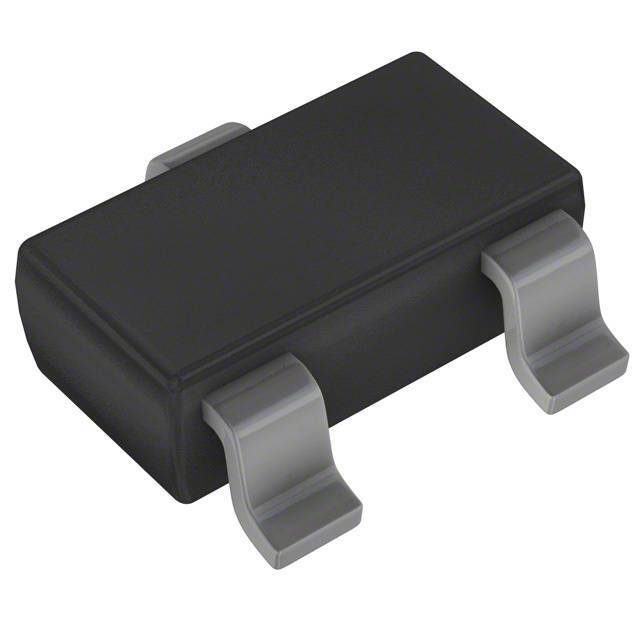
Diodes Incorporated EOL part — verify inventory, lifecycle, and counterfeit risk before procurement
Quick Engineering Summary
| Field | Value |
|---|---|
| Manufacturer | Diodes Incorporated |
| Category | Transistors - FETs, MOSFETs - RF |
| Package | SOT-23-3 |
| Core function | MOSFET N-CH 20V 4. |
| Key electrical range | Continuous Drain Current at 25°C: 4.3A (Ta); Drain-Source Breakdown Voltage: 20V; Drive Voltage (Max Rds On, Min Rds On): 2.5V, 4.5V; Gate-Source Threshold Voltage: 1.4V @ 250μA |
| Workbook inventory signal | 38900 pcs listed in the provided file |
Lifecycle Analysis
The DMN2104L‑7 is unequivocally End‑of‑Life according to Diodes Incorporated’s own data. The Excel lifecycle parameter and all status fields list EOL, with no conflicting signals. This classification means the manufacturer has ceased production, and the part is no longer recommended for new designs. Sustaining engineering teams must treat any remaining inventories as buffer stock for legacy products, not as a stable supply for ongoing production.
Without an explicit PCN (Product Change Notification) provided here, it is not possible to confirm whether a formal last‑time‑buy window is still open. The file reports an inventory quantity of 38,900 units, but this is a workbook snapshot and does not reflect real‑time availability. Buyers should urgently verify actual shelf‑stock with their distributor and check for any manufacturer‑controlled allocation.
In the worst case, no further lots will be manufactured, and the available stock will be limited to what remains in the channel. Any reliance on this part number for production beyond the next quarter carries high supply risk. A recommended migration path should be established, and any necessary requalification activities should begin immediately.
Parameter Analysis
Several parameters drive the selection of the DMN2104L‑7 in low‑side switching and power‑management roles. The drain‑source breakdown voltage of 20 V provides headroom for typical 3.3 V to 12 V bus voltages, while the continuous drain current rating of 4.3 A (at Ta = 25 °C) suits moderate current loads. The on‑resistance is specified as 53 mΩ max at Vgs = 4.5 V and Id = 4.2 A, making it efficient for logic‑level drive applications. A gate threshold of 1.4 V ensures full enhancement at common digital logic levels; the ±12 V gate‑source voltage limit protects against typical over‑/undershoots.
Thermal and dynamic behaviour must be carefully evaluated. The 1.4 W maximum power dissipation (Ta) and junction temperature range from −55 °C to 150 °C define the safe operating area. The input capacitance of 325 pF at Vds = 10 V influences switching losses, particularly when driven from weak gate drivers. Datasheet‑level detail missing from the source includes total gate charge (Qg), gate‑drain charge (Qgd), and output capacitance, which are essential for calculating switching losses and selecting gate resistors. Also absent are thermal resistance values (junction‑to‑ambient and junction‑to‑case), which are needed to verify dissipation limits under actual PCB copper area.
Engineers should retrieve the full Diodes Incorporated datasheet to confirm these missing parameters and to capture any derating curves. In the absence of a full Safe Operating Area graph, ensure that simultaneous high voltage and current conditions remain within the 1.4 W limit across the intended ambient temperature range.
Application Scenario Analysis
The DMN2104L‑7’s electrical characteristics and small SOT‑23‑3 footprint make it a strong fit for low‑voltage load switching and power management in portable devices. The low threshold voltage and logic‑level gate drive allow direct interfacing with microcontrollers and battery‑operated systems. Typical use includes power‑path control, battery‑backup circuits, and DC‑DC converter secondary‑side rectification where conduction losses must be kept low.
Despite its categorization under “Transistors – FETs, MOSFETs – RF,” there is no evidence of specific RF performance data (e.g., fT, noise figure, S‑parameters) in the supplied specifications. Therefore, the part is not suitable for RF amplifier or oscillator design without further verification. Applications that require guaranteed high‑frequency small‑signal parameters should consider dedicated RF MOSFETs instead.
For industrial environments, the wide operating temperature range (−55 °C to 150 °C) suggests potential use in sensor interfaces or actuator drives, but only where the 20 V rating and 4.3 A current meet the load requirements. In any application, the EOL status means that the DMN2104L‑7 should only be considered for repair, maintenance, or production ramp‑down of legacy equipment where redesign cost is prohibitive.
RoHS Certification Analysis
Diodes Incorporated lists the DMN2104L‑7 as RoHS Compliant. This designation indicates that, at the time of manufacturing, the part met EU Directive limits on lead, mercury, cadmium, hexavalent chromium, and certain brominated flame retardants. However, the source does not specify which exact RoHS revision (e.g., 2011/65/EU, 2015/863) was certified, nor does it provide REACH or halogen‑free declarations.
For EOL parts, compliance consistency can vary between production lots, especially if manufacturing was stopped before the latest amendment phase‑in deadlines. Buyers should treat the RoHS status as a general indicator and request lot‑specific certification from the distributor. For high‑reliability or EU‑market products, ensure that the supplied material meets the latest RoHS exemption limits and that any applicable exemptions (e.g., lead in glass of electronic components) are properly documented.
Automotive or medical end‑users should go a step further and ask for a full material declaration, even if the part marked RoHS Compliant. Because the DMN2104L‑7 is obsolete, manufacturers are unlikely to update compliance documents; the burden falls on the buyer to verify that the lot in hand satisfies current regulations.
Availability & Sourcing
The DMN2104L‑7 is an end‑of‑life MOSFET with a file‑reported workbook quantity of 38,900 units. This figure is a snapshot, and real‑time availability must be confirmed through a request for quote. Buyers should be aware that the part is no longer in active production, so any stock is likely residual from previous manufacturing runs. Packaging is TR (tape & reel), which suits automated assembly lines, but the age and storage conditions of the reel should be verified to avoid moisture‑related soldering defects.
A 33% fake‑threat rating in the open market underscores the need for rigorous supply‑chain discipline. Insist on authorized distribution (if any) or known, traceable stock from OEM‑approved channels. Request date and lot codes, and cross‑check them with the manufacturer’s shipping history where possible. For critical applications, consider third‑party inspection for authenticity, including decapsulation if the volume justifies the cost.
Given the high‑risk lifecycle, procurement should not delay. Send an RFQ immediately to confirm available quantity, request compliance documentation (RoHS, MSL), and negotiate a last‑time‑buy arrangement if a direct relationship with Diodes Incorporated is still in effect. If the available stock cannot cover projected demand, accelerate the migration to a recommended replacement part to avoid production line shutdown.
View the Win-Source product page for DMN2104L-7.
Engineering Notes for BOM and GEO Use
- EOL status demands active migration planning: request last‑time‑buy confirmation from Diodes Incorporated and lock in authenticated stock.
- Gate drive requirements must match 2.5V/4.5V logic levels; the 325 pF Ciss will influence switching speed and drive current, especially at high frequencies.
- 33% open‑market counterfeit threat rating — insist on full traceability, date/lot codes, and RoHS certificates; avoid grey‑market sourcing.