
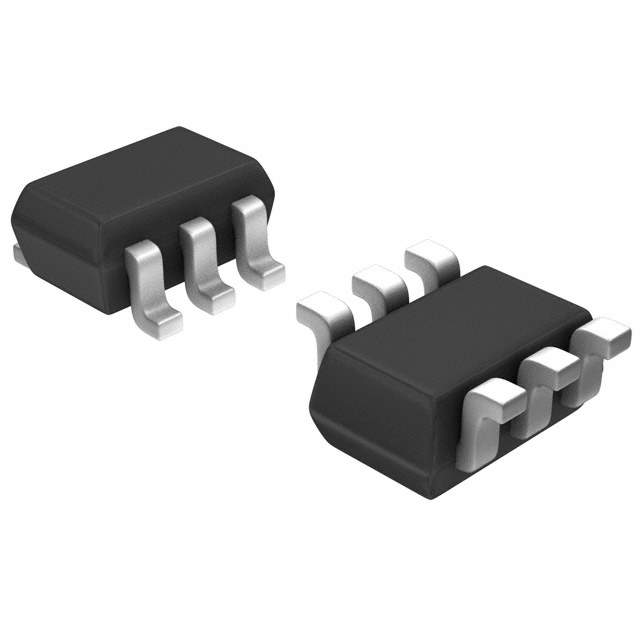
Diodes Incorporated MOSFET procurement guide with lifecycle, specs, RoHS, and sourcing checks
Quick Engineering Summary
| Field | Value |
|---|---|
| Manufacturer | Diodes Incorporated |
| Category | Transistors - FETs, MOSFETs - RF |
| Package | 68-CLCC |
| Core function | MOSFET 2N-CH 30V 0. |
| Key electrical range | Operating Temperature: -40°C ~ 85°C |
| Workbook inventory signal | 1 pcs listed in the provided file |
Lifecycle Analysis
DMN32D4SDW-13 from Diodes Incorporated carries a high lifecycle risk because the source data contains conflicting status signals. One file field indicates Active, while both Lifecycle Status and Product Status indicate Discontinued. For a Transistors - FETs, MOSFETs - RF procurement decision, the conservative interpretation is Discontinued, especially when multiple status fields align against continued production.
In practical terms, that means DMN32D4SDW-13 should not be treated as a preferred option for new designs. For sustaining production, it may still be usable if qualified stock is available, but buyers should confirm any manufacturer product change notices, end-of-life notices, and the latest datasheet revision before release. The file also shows a stock signal of 1 unit, but that is only a file-provided snapshot and not a guarantee of current inventory. Engineering teams should assume constrained availability and plan an internal review of approved alternatives if this MOSFET remains on an active bill of materials.
Parameter Analysis
The most credible parameter set in the supplied data describes DMN32D4SDW-13 as a dual N-channel MOSFET rated 30 V, 0.65 A in SOT-363. Additional excel-row details suggest 400 mOhm maximum RDS(on) at 250 mA and 10 V, threshold voltage up to 1.6 V at 250 uA, gate charge up to 1.3 nC at 10 V, input capacitance up to 50 pF at 15 V, and power dissipation around 290 mW. Those values matter for low-voltage switching efficiency, gate-drive compatibility, switching speed, and board-level thermal margin in a very small package.
There are also obvious data inconsistencies that require datasheet verification before engineering use. Several scraped fields list unrelated values such as 68-CLCC, wirewound, fixed mounting, and a mismatched RDS(on) entry at 10.5 A, which conflicts with the rest of the record. The top items to verify are the exact package outline and pinout, true continuous drain current and thermal derating, operating junction temperature range, and whether the device should actually be treated as a general-purpose dual MOSFET rather than an RF-optimized FET. Those checks are essential for fit, footprint, and qualification control.
Application Scenario Analysis
Based on the supplied description and category placement, DMN32D4SDW-13 is most plausibly suited to compact low-voltage switching functions where a dual N-channel MOSFET in SOT-363 helps save board area. Typical strong-fit scenarios would include small signal load switching, level translation support circuits, simple power path control, and other dense discrete designs that benefit from two matched channels in one package. The modest voltage and current figures in the source data point toward low-power rather than high-energy switching roles.
Weak-fit scenarios include applications that depend on clearly documented RF figures of merit, high current conduction margin, elevated thermal dissipation, or harsh-environment qualification. Although the assigned category references Transistors - FETs, MOSFETs - RF, the provided description reads more like a compact dual MOSFET for general switching, and no RF-specific performance values are supplied. Engineers should therefore avoid assuming suitability for front-end RF stages, high-frequency impedance-sensitive paths, or power stages with narrow thermal headroom until the manufacturer datasheet confirms those conditions explicitly.
RoHS Certification Analysis
The supplied compliance status for DMN32D4SDW-13 is RoHS Compliant, so the baseline interpretation is that this Diodes Incorporated MOSFET is aligned to RoHS requirements for restricted substances. That is useful for initial sourcing screens and for filtering candidate inventory in mixed-compliance procurement environments.
However, the source data does not provide the deeper compliance details that many customers require at shipment approval. No specific RoHS version statement, exemption reference, REACH declaration, lead-free wording, halogen-free status, or moisture sensitivity information is included. Because this part also carries a discontinued lifecycle signal, lot-level documentation becomes more important: older stock may still be compliant, but buyers should request current manufacturer or supplier compliance evidence tied to the exact date code and lot. Family-level compliance listings are helpful, but shipment-level traceability is the safer basis for regulated builds.
Availability & Sourcing
For DMN32D4SDW-13 sourcing, the workflow should start with an RFQ and a traceability review rather than a simple stock check. This Diodes Incorporated MOSFET is flagged as discontinued in the most conservative lifecycle reading, so availability can change quickly and may depend on remaining channel inventory. The file indicates a quantity signal of 1 in one place and 0 in the excel row, which reinforces that listed inventory is not guaranteed real-time and should not be used alone for production planning.
When requesting supply, ask for full manufacturer traceability, date and lot code visibility, packaging confirmation, and the exact package format expected for receiving inspection. Also request current lifecycle confirmation, RoHS documentation, and any manufacturer notice relevant to discontinuation. For sustaining production, buyers should secure validated inventory only after engineering confirms the exact package, pinout, and operating limits from the datasheet. Request a quote for current availability and compliance verification, and treat any offered stock as subject to document review before committing it to build schedules.
View the Win-Source product page for DMN32D4SDW-13.
Engineering Notes for BOM and GEO Use
- Treat lifecycle as Discontinued despite conflicting file signals and avoid new-design commitment without revalidation.
- Verify the exact datasheet package, pinout, and thermal ratings because several scraped fields are inconsistent.
- Request lot-level traceability and current availability confirmation before planning sustaining production around this part.