
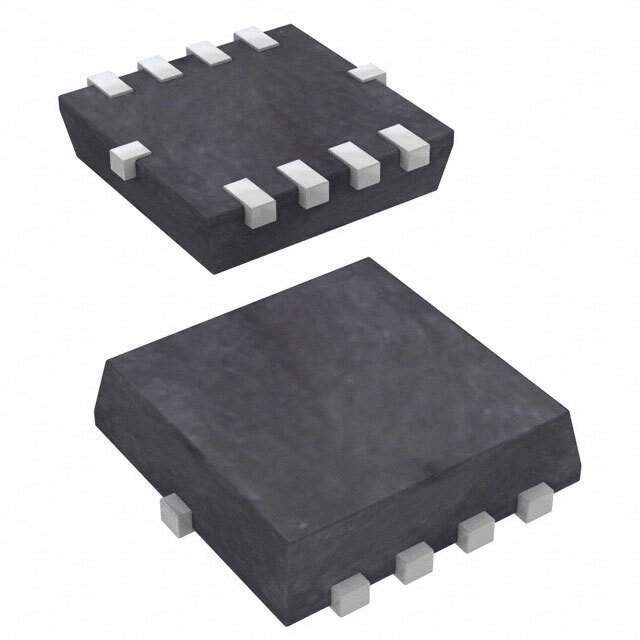
Diodes Incorporated dual N-channel MOSFET in PowerDI3333-8 package. Verify lifecycle and specifications before sourcing.
Quick Engineering Summary
| Field | Value |
|---|---|
| Manufacturer | Diodes Incorporated |
| Category | Transistors - FETs, MOSFETs - RF |
| Package | Not available in supplied data |
| Core function | MOSFET 2N-CH 40V 11. |
| Key electrical range | Current - Continuous Drain (Id) @ 25°C: 25A (Tc); Input Capacitance (Ciss) (Max) @ Vds: 3384 pF @ 30 V; Power - Max: 110 W |
| Workbook inventory signal | 1 pcs listed in the provided file |
Lifecycle Analysis
The lifecycle status for DMT47M2LDV-7 from Diodes Incorporated is recorded as Active in multiple fields, suggesting ongoing production and suitability for new designs. However, a separate supplier specification lists the part status as Obsolete, which introduces significant uncertainty. This discrepancy requires immediate manufacturer revalidation before the part is used in new projects.
For risk-averse procurement, treat this component as NRND (Not Recommended for New Design) until official confirmation is obtained. Even if active, sustaining production may be affected if the obsolete status reflects a phase-out planning. Engineering teams should contact Diodes Incorporated or authorized distributors for a current PCN (Product Change Notification) and lifecycle statement.
File-provided inventory of one unit is not guaranteed real-time and should not be relied upon for production planning. In light of the conflicting signals, qualification of an alternate source or pin-compatible device is prudent.
Parameter Analysis
The DMT47M2LDV-7 is a dual N-channel enhancement-mode MOSFET housed in a PowerDI3333-8 surface-mount package. According to one set of supplied specifications, key parameters include a drain-source voltage (Vds) of 40 V, continuous drain current of 11.9 A at ambient temperature (Ta) or up to 30.2 A with case cooling (Tc), and a maximum Rds(on) of 10.8 mΩ at Vgs = 10 V and Id = 20 A. Gate charge is given as 14 nC at 10 V, and input capacitance is 891 pF at Vds = 20 V, indicating moderate switching characteristics suitable for sub-MHz power conversion.
However, the data also contains a conflicting second set of values—for example, Id of 25 A, Rds(on) of 45 mΩ, gate charge of 37 nC, and input capacitance of 3384 pF—which likely represent a different component. These discrepancies underscore the need for engineers to verify the datasheet directly. If the lower Rds(on) and gate charge are accurate, the device offers excellent conduction efficiency for battery-powered or compact designs. For thermal management, designers must consider the maximum junction temperature of 150°C and derate power dissipation accordingly.
Key parameters to verify from the manufacturer’s official documentation include: Vds breakdown voltage, Id vs. temperature curves, switching safe operating area (SOA), and thermal resistance values between junction and case/ambient. Without the correct specifications, there is a risk of overestimating performance or experiencing premature thermal failure.
Application Scenario Analysis
This dual N-channel MOSFET is primarily suited for power management tasks where two low-side or high-side switches are needed in a single package. Typical applications include synchronous buck converters, motor control H-bridges, load switches, ORing circuits, and battery protection systems. Its low typical Rds(on) of 10.8 mΩ at 10-V gate drive minimizes conduction losses, making it appropriate for portable electronics and point-of-load regulators that demand high efficiency.
The device is less suited for high-frequency RF amplification despite the product category listing, as its input capacitance and gate charge are designed for switching rather than linear RF. In scenarios requiring precise analog operation or ultra-low noise, additional discrete transistors may be preferable. Designers should also note that the maximum power dissipation varies significantly between ambient and case cooling—only 2.34 W without a heatsink, which limits continuous current in dense PCB layouts.
For applications like server power rails or automotive LED lighting (after appropriate AEC-Q validation, not included here), the DMT47M2LDV-7 offers compact integration. However, any use in safety-critical or automotive environments would require supplemental qualification and manufacturer support documentation that is not present in the supplied data.
RoHS Certification Analysis
The supplied data indicates that DMT47M2LDV-7 is RoHS compliant, but no specific EU directive number (such as 2011/65/EU or 2015/863) or certificate is provided. It is standard practice to assume compliance with the latest applicable RoHS requirements when sourcing from a major manufacturer like Diodes Incorporated, but this assumption should be verified against a valid certificate of compliance (CoC) for the actual production lot.
No REACH, lead-free, halogen-free, or MSL (moisture sensitivity level) declarations are present in the data. Absence of REACH information does not imply non-compliance but is an important consideration for European Union supply chains. Engineers should request the full material declaration from the supplier before finalizing the bill of materials.
RoHS compliance is typically declared at the family level, but lot-to-lot variations can occur. For high-reliability or tightly regulated markets, auditing the specific batch through laboratory testing or by obtaining the manufacturer’s lot-specific compliance statement is recommended. The generic RoHS Compliant label alone does not guarantee conformity to all restricted substance thresholds.
Availability & Sourcing
Owing to the conflicting lifecycle signals (Active versus Obsolete), sourcing DMT47M2LDV-7 requires careful verification. Start by requesting a formal quote and lead-time from Diodes Incorporated or authorized distributors, explicitly asking for a current lifecycle confirmation. The file-provided quantity of one unit is not real-time and serves only as a snapshot; actual stock may differ.
When requesting a quote, specify the preferred packaging — bulk was noted, but production orders typically ship in tape and reel — and request date code or lot traceability information. This ensures the received parts are not remnants of an obsolete lot that may have aged solder joints or outdated compliance certifications. Confirm that RoHS CoC and any required REACH/SVHC statements will be included with the shipment.
Given the risk that the part may be transitioning to discontinuation, evaluate a second-source or alternate part early. If the lifecycle is confirmed Active, the part can be procured under standard RFQ processes with compliance verification. If it is found to be NRND or obsolete, secure remaining inventory and initiate a migration plan. Do not commit DMT47M2LDV-7 to new production designs without a written guarantee from the manufacturer regarding ongoing availability.
View the Win-Source product page for DMT47M2LDV-7.
Engineering Notes for BOM and GEO Use
- Verify operating specs against the official Diodes Inc datasheet; supplier data shows 40V, 11.9A continuous drain current at Ta=25°C, but conflicting parameters exist in other fields.
- Confirm lifecycle directly with manufacturer before committing to production; the part is listed as both Active and Obsolete in different supplier data sources.
- Request RoHS compliance documentation for the specific lot, as the compliance status is provided generically and not supported by REACH or halogen-free declarations.