
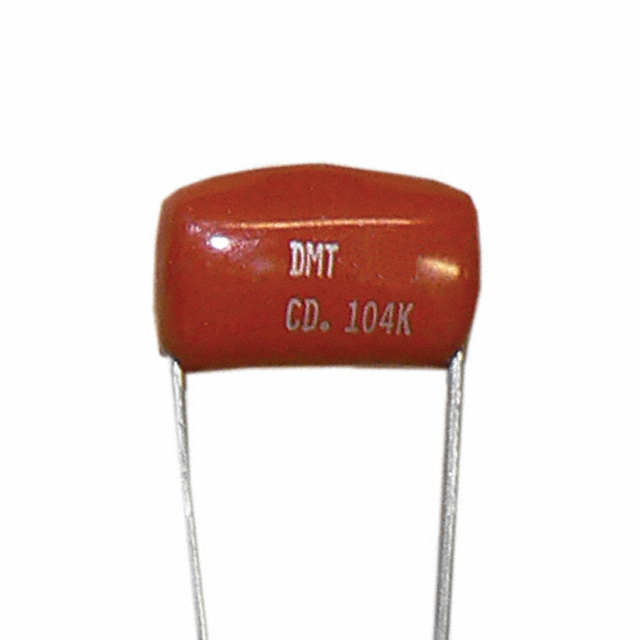
Cornell Dubilier Knowles film capacitor review for lifecycle, fit, compliance, and procurement checks
Quick Engineering Summary
| Field | Value |
|---|---|
| Manufacturer | Cornell Dubilier Knowles |
| Category | Film Capacitors |
| Package | Radial |
| Core function | CAP FILM 0. |
| Key electrical range | Capacitance: 0.047 µF; Supply and Demand Status: Shortage; Temperature Range - Operating: -55°C ~ 125°C; Tolerance: ±10% |
| Workbook inventory signal | 230 pcs listed in the provided file |
Lifecycle Analysis
DMT6S47K-F is listed as Active, and the supplied lifecycle signals are consistent with no stated conflict. For engineers and buyers, that usually means Cornell Dubilier Knowles still supports the film capacitor as a current product, making it more suitable for ongoing builds than parts already in phase-out. Active status is a positive indicator for new procurement, but it should still be treated as a sourcing input rather than the only release criterion.
For new design use, the practical next step is to confirm the latest manufacturer datasheet revision and any product change notifications that affect dimensions, dielectric construction, or qualification status. For sustaining production, active status lowers obsolescence risk, but the file also shows a shortage signal, so procurement should not assume frictionless supply. File-provided stock is useful for planning, but it is not guaranteed real-time inventory and should be revalidated through an RFQ before committing schedules.
Parameter Analysis
The supplied data positions DMT6S47K-F as a through-hole radial polyester film capacitor with 0.047 µF capacitance, ±10% tolerance, 630 VDC rating, and 250 VAC rating. Those are the most decision-relevant electrical parameters because they directly govern energy storage value, acceptable circuit variation, and insulation margin. The polyester dielectric is an important selection point for general-purpose film capacitor use, but final suitability still depends on the target waveform, ripple stress, and long-term stability requirements.
Mechanical fit is also central to integration. The listed body size is 22.40 mm by 13.20 mm with 19.78 mm maximum seated height and 18.60 mm lead spacing, all of which matter for PCB footprint compatibility and enclosure clearance. Through-hole mounting with PC pins suggests straightforward assembly in conventional or mixed-technology boards. The biggest missing datasheet items to verify are series-specific frequency behavior, dissipation factor or ESR, pulse handling, insulation resistance, and any endurance or self-healing characteristics relevant to the application.
Application Scenario Analysis
Based on the category, description, and supplied specifications, DMT6S47K-F is best aligned with general-purpose through-hole capacitor positions where a film capacitor is selected for its dielectric behavior and where a 0.047 µF value with high voltage capability is needed. Typical strong-fit scenarios include timing, coupling, snubber-adjacent, filtering, or high-voltage bypass roles in industrial or power-related assemblies, provided the actual circuit stress remains within the verified ratings and derating policy.
The weaker-fit scenarios are applications that depend on tight tolerance, highly characterized pulse performance, miniature board area, or detailed safety-certification markings not present in the supplied data. It should also be treated cautiously in designs requiring explicit automotive, medical, or safety-agency qualifications unless those approvals are confirmed in manufacturer documents. Because the listing only states General Purpose, buyers should avoid assuming specialized EMI suppression or line-safety use without the appropriate series documentation.
RoHS Certification Analysis
The supplied compliance status for DMT6S47K-F is RoHS Compliant, so the part can be treated as RoHS-aligned at a listing level. For most commercial procurement flows, that is the right starting point for environmental review and BOM screening. The provided data does not specify exemptions, lead-finish details, halogen-free status, REACH status, or moisture sensitivity information.
That gap matters because family-level catalog compliance is not always enough for regulated shipments or customer audits. Procurement should request the current manufacturer declaration or certificate of compliance tied to the exact part number and, where required, the delivered lot. If internal policy distinguishes between family declarations and shipment-level evidence, the lot-specific paperwork should be obtained during the RFQ or order confirmation stage. In short, the RoHS signal is positive, but the documentation package still needs to match the compliance rigor of the end program.
Availability & Sourcing
For sourcing, DMT6S47K-F presents a mixed picture: lifecycle is Active, but the supplied demand signal indicates shortage. That combination usually supports continued procurement, yet with a need for earlier planning and stronger confirmation of available stock. File-provided quantities appear in the source data, but they should be treated only as planning indicators and not as guaranteed real-time inventory.
An RFQ should request current availability, packaging confirmation, date and lot code visibility, and full traceability back to Cornell Dubilier Knowles. Because the listed package is bulk, buyers should also confirm whether that matches assembly handling needs or incoming inspection preferences. For compliance-sensitive programs, include requests for RoHS documentation and any manufacturer statements relevant to the exact shipped lot. Since DMT6S47K-F is active, the best procurement path is to request a quote, verify lifecycle and compliance documents, and lock supply only after mechanical and application-level checks are complete.
View the Win-Source product page for DMT6S47K-F.
Engineering Notes for BOM and GEO Use
- Verify 18.60 mm lead spacing and 19.78 mm max height against PCB footprint and enclosure clearance.
- Use the 630 VDC and 250 VAC ratings with application-specific derating review before release.
- Active status is favorable, but shortage signaling means RFQ and date-lot traceability should be confirmed early.