
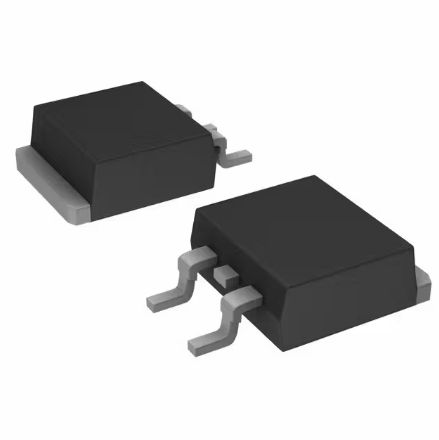
Sourcing and specification guide for the DMTH4004SCTBQ-13 N‑channel power MOSFET, including lifecycle risks, parametric concerns, and availability notes.
Quick Engineering Summary
| Field | Value |
|---|---|
| Manufacturer | Diodes Incorporated |
| Category | TRANSISTORS |
| Package | 529-MAPBGA (19x19) |
| Core function | MOSFET N-CH 40V 100A TO263AB |
| Key electrical range | Current - Continuous Drain (Id) @ 25°C: 25A (Tc); Drain to Source Voltage (Vdss): 60V, 50V; Input Capacitance (Ciss) (Max) @ Vds: 3384 pF @ 30 V; Operating Temperature: -40°C ~ 85°C |
| Workbook inventory signal | 37230 pcs listed in the provided file |
Lifecycle Analysis
The lifecycle status of DMTH4004SCTBQ-13 cannot be definitively determined from the supplied data. While one metadata field flags the status as Active, a contradictory specification label marks the Part Status as Obsolete. Such a discrepancy is a serious red flag for any design registry or BOM risk assessment.
For new designs, the conservative assumption must be that the device is approaching end‑of‑life or is already discontinued. Engineering teams should not start new projects relying on this part without a written lifecycle guarantee from Diodes Incorporated. In sustaining production, existing designs should immediately identify alternate sources or plan a qualification campaign for a functional replacement.
The file‑provided inventory quantity of 37,230 units is not a real‑time number and may represent non‑cancelable, non‑returnable (NCNR) remnants of obsolete stock. Procurement should treat any existing stock as last‑time‑buy material and verify date codes before committing to production.
Parameter Analysis
Key parameters pulled from the most consistent source (the manufacturer‑provided parametric string) place the DMTH4004SCTBQ-13 as a 40 V, 100 A N‑channel MOSFET with a typical Rds(on) of 3 mΩ at Vgs = 10 V and ID = 100 A. Gate charge is 68.6 nC max at 10 V, and input capacitance reaches 4305 pF at 25 V. These figures are critical for calculating switching losses, gate drive requirements, and thermal margins.
Maximum power dissipation is 136 W at Tc = 25 °C, which demands careful heatsinking in the TO‑263 package. The operating junction temperature range of –55 °C to +175 °C and the automotive AEC‑Q101 qualification make the part suitable for under‑hood environments, but the high current capability requires derating above 85 °C ambient.
Important caveat: other supplied specifications show conflicting values (e.g., Vdss listed as 60 V/50 V, continuous drain current as 25 A, and gate charge as 37 nC). These discrepancies likely stem from data aggregation errors. Engineers must download the manufacturer’s original datasheet and verify Vgs(th) (max 4 V at 250 µA), safe‑operating‑area curves, and avalanche energy ratings before performing any design‑in calculation.
Application Scenario Analysis
DMTH4004SCTBQ-13 shines in high‑current, low‑voltage automotive applications such as electric power steering, radiator fan control, and DC‑DC converters where its low 3 mΩ on‑resistance minimizes I²R losses. The AEC‑Q101 qualification and wide junction temperature range make it a strong candidate for 12 V and 24 V vehicle systems that require robust avalanche capability and repetitive short‑circuit ruggedness.
In industrial settings, the device can serve in motor drives, solenoid drivers, and hot‑swap controllers up to about 40 A continuous with adequate cooling. However, its relatively high gate charge and input capacitance make it less optimal for high‑frequency (> 500 kHz) switching regulators, where gate drive losses may erode efficiency. The TO‑263 package, while excellent for thermal dissipation, requires careful PCB layout to avoid excessive trace inductance.
A weak‑fit scenario is ultra‑high‑speed switching converters or battery‑powered portable equipment beneath 5 V, where logic‑level thresholds and lower Qg devices would be preferable. Additionally, parts with unknown lifecycle status should not be designed into products with long production lifetimes.
RoHS Certification Analysis
The DMTH4004SCTBQ-13 is classified as RoHS Compliant according to the source data. This typically implies conformance to EU Directive 2011/65/EU and its amendment 2015/863, covering the six restricted substances plus the four phthalates, without exceeding the maximum concentration values in homogeneous materials.
No specific exemptions are recorded in the provided attributes. For automotive use, it is prudent to also confirm compliance with the End‑of‑Life Vehicles (ELV) directive and with REACH SVHC obligations. A full material declaration document (IMDS or CAMDS) should be requested from Diodes Incorporated to ensure that the termination finish (e.g., pure tin versus tin‑lead) does not introduce whisker risks or violate lead‑free requirements.
Because the part may be sourced from multiple supply chains, RoHS compliance must be verified on a lot‑by‑lot basis, especially if procured from independent distributors. C of C documents should be referenced against the actual date codes received.
Availability & Sourcing
The supplied workbook indicates a stock quantity of 37,230 units for DMTH4004SCTBQ-13. This figure is a historical snapshot and does not guarantee real‑time availability. Given the lifecycle uncertainty, any inventory should be considered subject to prior sale and may be from date codes that are several years old.
Procurement teams should submit a request for quote through authorized channels to obtain current stock levels, minimum order quantities, and lead times. Standard packaging is tape‑and‑reel (TR) for the TO‑263 package, with part number suffix “‑13” indicating a specific reel size. For production runs, full traceability to the manufacturer’s original lot is essential to validate automotive qualification and RoHS compliance.
Because a Part Status of Obsolete has been flagged, immediate actions are recommended: confirm end‑of‑life notification with Diodes Incorporated, secure any remaining inventory needed for existing products, and begin evaluating pin‑compatible replacements such as other 40 V D2PAK automotive MOSFETs. Do not design DMTH4004SCTBQ-13 into new platforms until the official lifecycle status is clarified in writing.
View the Win-Source product page for DMTH4004SCTBQ-13.
Engineering Notes for BOM and GEO Use
- Verify actual lifecycle status with Diodes Incorporated: Part Status is listed as Obsolete even though some sources indicate Active, creating procurement risk.
- Cross‑check all electrical parameters against the official datasheet; the provided spec list contains discrepancies (e.g., Vdss 40 V vs 60 V/50 V, Id 100 A vs 25 A), particularly gate charge and Rds(on) values.
- Automotive AEC‑Q101 qualification applies; request full PPAP documentation if used in production vehicle systems.