
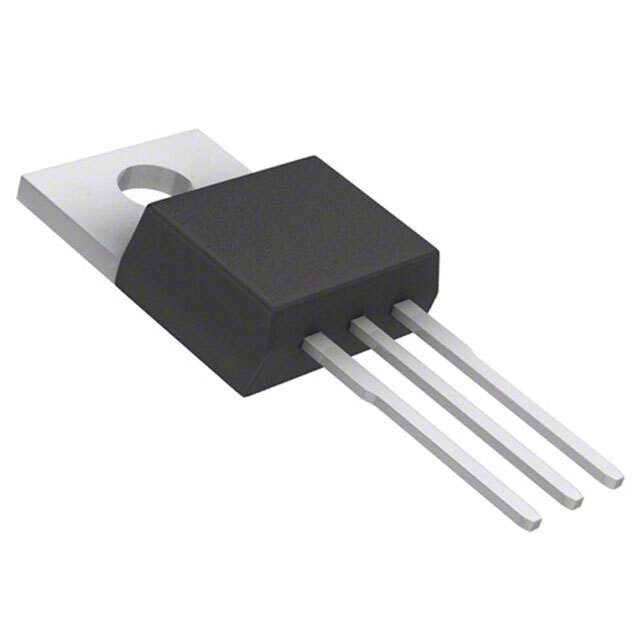
N-Channel 60V 100A TO-220-3 MOSFET — Automotive AEC-Q101 Qualified
Quick Engineering Summary
| Field | Value |
|---|---|
| Manufacturer | Diodes Incorporated |
| Category | Transistors - FETs, MOSFETs - RF |
| Package | TO-220-3 |
| Core function | MOSFET N-CH 60V 100A TO220AB |
| Key electrical range | Operating Temperature Range: -55°C ~ 175°C (TJ); Supply and Demand Status: Limited |
| Workbook inventory signal | 1 pcs listed in the provided file |
Lifecycle Analysis
The DMTH6005LCT from Diodes Incorporated is currently listed as Active with no conflicting lifecycle signals. This status indicates the part is in full production and suitable for both new designs and ongoing volume procurement. Engineers and buyers can proceed with confidence for new product development.
Nevertheless, the estimated production lead time of 51 weeks suggests that supply may be constrained, and order planning should be initiated well in advance. The file-provided inventory snapshot shows a single unit, but this does not reflect real-time availability. It is recommended to request a current quote and verify lifecycle status directly with Diodes or authorized distributors before committing to large production runs. The risk level remains low, but long-term availability should be monitored given the limited supply-demand status.
Parameter Analysis
The DMTH6005LCT is an N-channel enhancement-mode MOSFET built on Diodes Incorporated's manufacturing process. Key specifications include a drain-source voltage (Vdss) of 60 V and a continuous drain current (Id) of 100 A at case temperature 25°C. The maximum on-resistance (Rds(on)) is 6 mΩ at a gate-source voltage (Vgs) of 10 V and drain current of 20 A, which is critical for minimizing conduction losses in high-current paths.
Other important parameters are the maximum gate-source threshold voltage (Vgs(th)) of 3 V at 250 µA, total gate charge (Qg) up to 47.1 nC at 10 V, and input capacitance (Ciss) of 2962 pF at 30 V. These values influence gate driver design and switching speed. The device is rated for power dissipation of 125 W at case temperature (Tc) and 2.8 W at ambient (Ta), necessitating adequate heatsinking in most applications.
The automotive AEC-Q101 qualification ensures reliability over the specified -55°C to 175°C operating temperature range. Missing from the summary data are dynamic characteristics such as rise/fall times and Safe Operating Area curves; engineers should obtain the full datasheet to verify SOA, thermal impedance, and typical performance graphs before finalizing designs.
Application Scenario Analysis
The DMTH6005LCT is well-suited for automotive power management systems, including motor control, DC-DC converters, and battery disconnect switches, thanks to its AEC-Q101 certification, high current capability, and robust TO-220-3 package. The through-hole mounting and 60 V rating also make it a candidate for industrial motor drives and power supplies where efficient switching and good thermal performance are required.
Its low on-resistance and high current handling are advantages in applications like power inverters and load switches. However, the device is not optimized for RF amplification despite being categorized under ‘Transistors - FETs, MOSFETs - RF’; the relatively high input capacitance and gate charge make it more suitable for power switching below 1 MHz. Additionally, the 3 V maximum Vgs(th) means it is not directly compatible with 1.8 V or 2.5 V logic without level shifting.
Given the limited supply and 51-week lead time, the DMTH6005LCT is best reserved for projects that can accommodate long procurement cycles and require automotive-grade reliability. For consumer electronics with rapid turnaround, alternative parts with shorter lead times may be preferable.
RoHS Certification Analysis
The DMTH6005LCT is listed as RoHS Compliant, indicating that it meets the European Union's Restriction of Hazardous Substances directives. The MSL Level 1 rating means the device is not moisture-sensitive and does not require special storage or baking before soldering.
Additionally, the part is REACH Affected, which means it contains one or more substances of very high concern (SVHC) above the threshold. This status necessitates proper documentation for EU market compliance. Buyers should request the full material declaration from the manufacturer to confirm the exact substances and any applicable exemptions. While the RoHS status is stated, it is advisable to obtain lot-specific certificates of compliance to ensure the purchased stock meets current RoHS requirements. No halogen-free claims are provided in the summary data, so this aspect should be verified if needed.
Availability & Sourcing
Sourcing the DMTH6005LCT requires careful planning due to its limited supply status and an estimated production lead time of 51 weeks. The device is supplied in tube packaging, with 50 units per tube, and is classified with a medium popularity level. A file-provided inventory snapshot shows 1 unit in stock, but this is not a real-time figure and should not be relied upon for procurement decisions.
The open market fake threat for this part is reported at 48%, highlighting the risk of counterfeit components when buying from unauthorized sources. To mitigate this, always purchase through Diodes Incorporated’s authorized distribution network or via our RFQ service. Since the lifecycle is Active, the primary step is to request a formal quotation that includes current pricing, lead time, and compliance documentation (RoHS, REACH). Verify batch and date codes, and consider adding buffer stock to your order to accommodate the long lead time. For design-ins, confirm that the supply chain can support your production schedule before finalizing the BOM.
View the Win-Source product page for DMTH6005LCT.
Engineering Notes for BOM and GEO Use
- Verify gate charge (47.1 nC max) and input capacitance for driver compatibility in high-frequency designs.
- With 48% fake threat in the open market, source only from authorized distributors to avoid counterfeit devices.
- Plan for 51-week lead time; consider buffer stock for production continuity.