
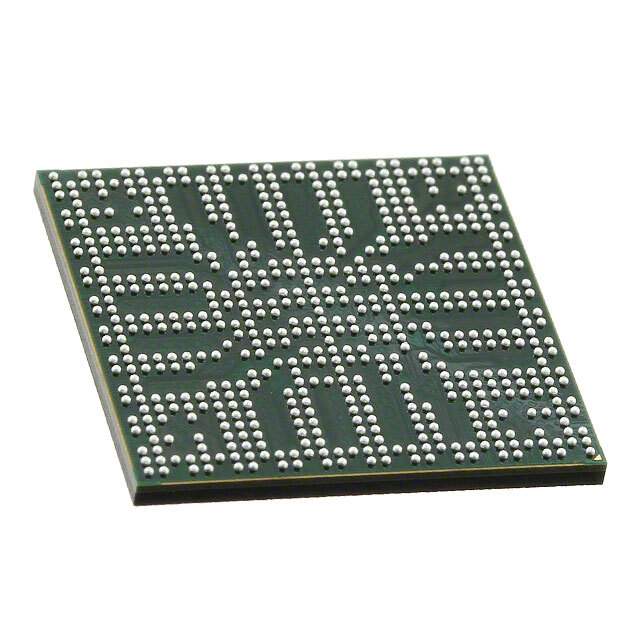
EOL DaVinci™ digital media system-on-chip with 720MHz core, CAN, PCIe, USB, and Ethernet interfaces – verify last-time buy dates.
Quick Engineering Summary
| Field | Value |
|---|---|
| Manufacturer | Texas Instruments |
| Category | Embedded - DSP (Digital Signal Processors) |
| Package | 609-FCBGA (16x16) |
| Core function | IC SOC DIGITAL MEDIA |
| Key electrical range | Operating Temperature Range: 0°C ~ 95°C (TJ); Supply and Demand Status: Limited; Voltage - Core: Variable; Voltage - I/O: 1.35V, 1.5V, 1.8V, 3.3V |
| Workbook inventory signal | 92 pcs listed in the provided file |
Lifecycle Analysis
Texas Instruments has marked the DMVA3AAAR as EOL (End of Life) with a risk level of high. This status aligns across all available signals, including an estimated end-of-life date of 2029. For new designs, this part is not recommended; sustaining production should immediately evaluate last-time buy options and plan migration to alternative TI devices.
Since lifecycle information is manufacturer-controlled, engineering teams should contact TI directly to confirm final order dates, last shipment dates, and any recommended replacement paths. File-provided inventory shows 92 units, but this figure is not real-time and may not reflect current stock. Organize a formal last-time buy while quantities remain available and verify authenticity due to a 69 percent fake threat rate in the open market.
Parameter Analysis
The DMVA3AAAR belongs to TI’s DaVinci media processor series, integrating a DSP core running at 720 MHz with on-chip RAM of 640 kB and 48 kB of ROM. Its rich peripheral set includes CAN, Ethernet, PCIe, SATA, USB, I2C, SPI, UART, and multimedia interfaces like McASP and MMC/SD/SDIO, enabling high-bandwidth connectivity. The device operates over a junction temperature range of 0°C to 95°C and supports multiple I/O voltages—1.35 V, 1.5 V, 1.8 V, and 3.3 V—while the core voltage is configurable. The package is a 609-pin FCBGA (16×16 mm) with SMD mounting, shipped in trays.
Designers should verify missing parameters directly from Texas Instruments’ official datasheet, including detailed power consumption, clock tree flexibility, DSP core specifics, and thermal resistance figures. Confirming these values is critical for thermal and power budgeting in embedded media systems.
Application Scenario Analysis
Given its digital media SoC architecture, the DMVA3AAAR fits applications requiring high-speed video processing and rich connectivity. Strong-fit scenarios include automotive infotainment head units, industrial HMI panels with camera inputs, and advanced driver-assistance systems (ADAS) where multiple communication protocols are essential. The integrated CAN bus and Ethernet make it suitable for gateway controllers in mixed-automotive networks.
Weak-fit applications would be simple IoT sensor nodes or low-cost microcontroller tasks, where the package complexity and power consumption are over-specified. Additionally, the 0°C minimum junction temperature limits use in outdoor or uncontrolled environments without supplemental heating. Engineers should perform a full pin-mux analysis to ensure the required peripheral set can be simultaneously active, referencing the device datasheet and TI’s Pin Mux Utility.
RoHS Certification Analysis
The DMVA3AAAR is listed as RoHS Compliant, indicating that it meets the restriction of hazardous substances requirements under EU Directive 2011/65/EU as amended by 2015/863. The part is also reported as halogen-free, which aligns with industry voluntary standards for low-halide content. No explicit REACH statement appears in the supplied data, so REACH compliance should be confirmed separately if required for end-product certification.
The RoHS compliance status is typically at the family level; however, for high-reliability applications, lot-level certificates of conformance should be requested from the distributor or directly from Texas Instruments. Moisture sensitivity level (MSL) is not specified—verify this and proper handling requirements since the FCBGA package may require strict storage and reflow conditions, as suggested by its dry storage cabinet recommendation.
Availability & Sourcing
DMVA3AAAR is an EOL device, making sourcing increasingly challenging. File-provided inventory indicates 92 units, but this is a historical snapshot—no real-time guarantee. With a fake threat rate of 69 percent, procurement teams must prioritize traceability and purchase only from authorized Texas Instruments distributors or thoroughly vetted, ISO-certified independent suppliers.
When requesting quotes, explicitly ask for date/lot code, country of origin (which is specified as Japan), and compliance documentation including RoHS certificates and full chain of custody. Since the part is EOL, engineers should secure remaining stock urgently while validating whether a last-time buy window is still open with TI. For future production, evaluate TI’s recommended migration paths or newer DaVinci family alternatives. Verify the 2029 estimated EOL date with the manufacturer, as this may reflect last shipment rather than last order, and plan accordingly to avoid line-down situations.
View the Win-Source product page for DMVA3AAAR.
Engineering Notes for BOM and GEO Use
- Confirm TI’s final order and last shipment dates directly; the estimated EOL of 2029 may be the last shipment date.
- At 69 percent fake threat, source only from authorized or traceable channels; insist on lot-specific RoHS and halogen-free certificates.
- Core voltage is configurable—consult the datasheet for power sequencing and decoupling guidelines to avoid board-level issues.