
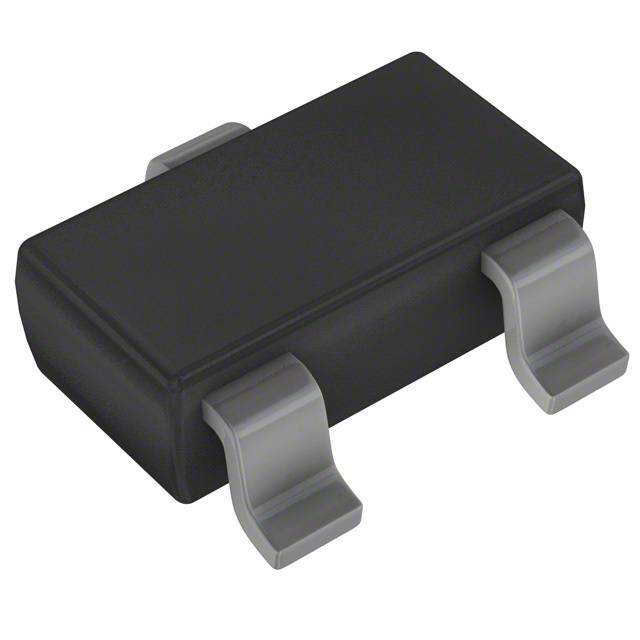
DNBT8105-7 from Diodes Inc: NPN transistor in SOT-23-3, 60V 1A, active. Sourcing guide for engineers and buyers.
Quick Engineering Summary
| Field | Value |
|---|---|
| Manufacturer | Diodes Incorporated |
| Category | Transistors (BJT) - Single |
| Package | SOT-23-3 |
| Core function | TRANS NPN 60V 1A SOT-23-3 |
| Key electrical range | Collector Cut-off Current(Max): 100nA; Frequency - Transition: 150MHz; Maximum Current Collector: 1A; Maximum Power Dissipation: 600mW |
| Workbook inventory signal | 37380 pcs listed in the provided file |
Lifecycle Analysis
The DNBT8105-7 is currently in an Active lifecycle status according to Diodes Incorporated and supply chain indicators. This means the part is in full production, supported by the manufacturer, and can be confidently used in new designs as well as for sustaining existing production lines. No near-term discontinuation is anticipated, with an estimated end-of-life date projected for 2026, still several years out. For procurement teams, this reduces supply risk and allows normal inventory planning.
However, even with an Active status, engineering teams should periodically re-validate lifecycle status directly from Diodes Incorporated’s product change notifications (PCN) or official documents. The file-provided inventory quantity of 37,380 units suggests ample stock, but this is not a real-time guarantee; always verify current availability through authorized channels when placing orders.
Parameter Analysis
The key parameters of the DNBT8105-7—maximum collector-emitter voltage of 60V, continuous collector current of 1A, and total power dissipation of 600mW—define its safe operating boundaries. The transition frequency of 150MHz indicates suitability for moderate-speed switching and VHF amplification. Minimum DC current gain (hFE) of 100 at 500mA/5V ensures consistent drive capability for logic-level circuits, while a low collector cut-off current of 100nA minimizes leakage in off-state conditions.
The SOT-23-3 package limits thermal dissipation; the 600mW rating is typical for this footprint and must be derated based on ambient temperature and PCB copper area. A critical specification not explicitly provided in the supplied data is the junction-to-ambient thermal resistance (RθJA). Engineers should consult the official Diodes Incorporated datasheet to verify this value and perform a thorough thermal analysis, especially if the transistor operates near its current or voltage limits. The saturation voltage of 500mV at 1A confirms acceptable low-side switching performance for battery-powered or low-voltage designs.
Application Scenario Analysis
The DNBT8105-7 is well-suited for a range of general-purpose NPN switching and linear applications. Its 1A collector current and 60V rating make it useful for driving small relays, solenoids, LEDs, and other low-power loads in industrial and consumer electronics. The wide operating temperature range from -55°C to 150°C allows use in harsh environments such as automotive or outdoor equipment.
In signal amplification, the 150MHz fT supports audio up to VHF frequency ranges, making it appropriate for pre-amplifiers, buffer stages, and oscillator circuits. However, for high-current switching beyond 1A or high-power linear amplification where continuous dissipation approaches 600mW, careful thermal management is required. It is less suitable for ultra-fast digital switching applications exceeding 150MHz or for applications demanding very low saturation voltages at high currents where a MOSFET might be a better alternative. Overall, the DNBT8105-7 is a versatile, cost-effective choice for common BJT needs in space-constrained designs.
RoHS Certification Analysis
The DNBT8105-7 is listed as RoHS Compliant, meaning it meets the restrictions on hazardous substances as required by the European Union’s RoHS directive. The additional note of Halogen Free compliance further supports its use in environmentally conscious designs and may be relevant for applications meeting specific green certifications.
However, the exact RoHS version (e.g., EU 2015/863) is not specified in the supplied data. Engineers should verify this detail on the manufacturer’s official datasheet or request a Declaration of Conformity. For high-reliability or regulated industries, lot-level compliance documentation should be requested from the distributor to ensure that no exemptions apply. While REACH status is not provided, it is not a direct substitute for RoHS; if REACH compliance is required, additional verification with Diodes Incorporated is necessary. Global procurement teams should also consider the country of origin (China) and any associated import regulations.
Availability & Sourcing
The DNBT8105-7 is widely available through authorized distributors, reflecting its Active lifecycle and popularity as a common-use part. The file-provided workbook quantity of 37,380 units suggests healthy stock, but this is a static snapshot and not a real-time figure. To secure genuine components, buyers should always source from franchised Diodes Incorporated distributors or trusted partners, particularly given a noted 29% fake-threat rate in the open market.
Standard packaging is on tape and reel, suitable for automated SMT assembly. When requesting quotes, specify the desired reel quantity and any special requirements such as date/lot code traceability and dry-pack storage conditions. For long-term programs, request a supply continuity assurance or review the manufacturer’s product roadmap. Since the part is active, normal RFQ processes with lead-time and compliance documentation are sufficient. Contact an authorized distributor or request a quote through your sourcing platform to confirm current inventory and lead times.
View the Win-Source product page for DNBT8105-7.
Engineering Notes for BOM and GEO Use
- Verify thermal resistance (RθJA) and safe operating area (SOA) from the official Diodes Incorporated datasheet to ensure adequate thermal margin in your design.
- Due to a 29% fake threat rate in the open market, source DNBT8105-7 only from authorized distributors and request traceability documentation.
- Monitor the estimated EOL date of 2026 for long-lifecycle programs; while active today, a transition plan may be prudent for products extending beyond that horizon.