
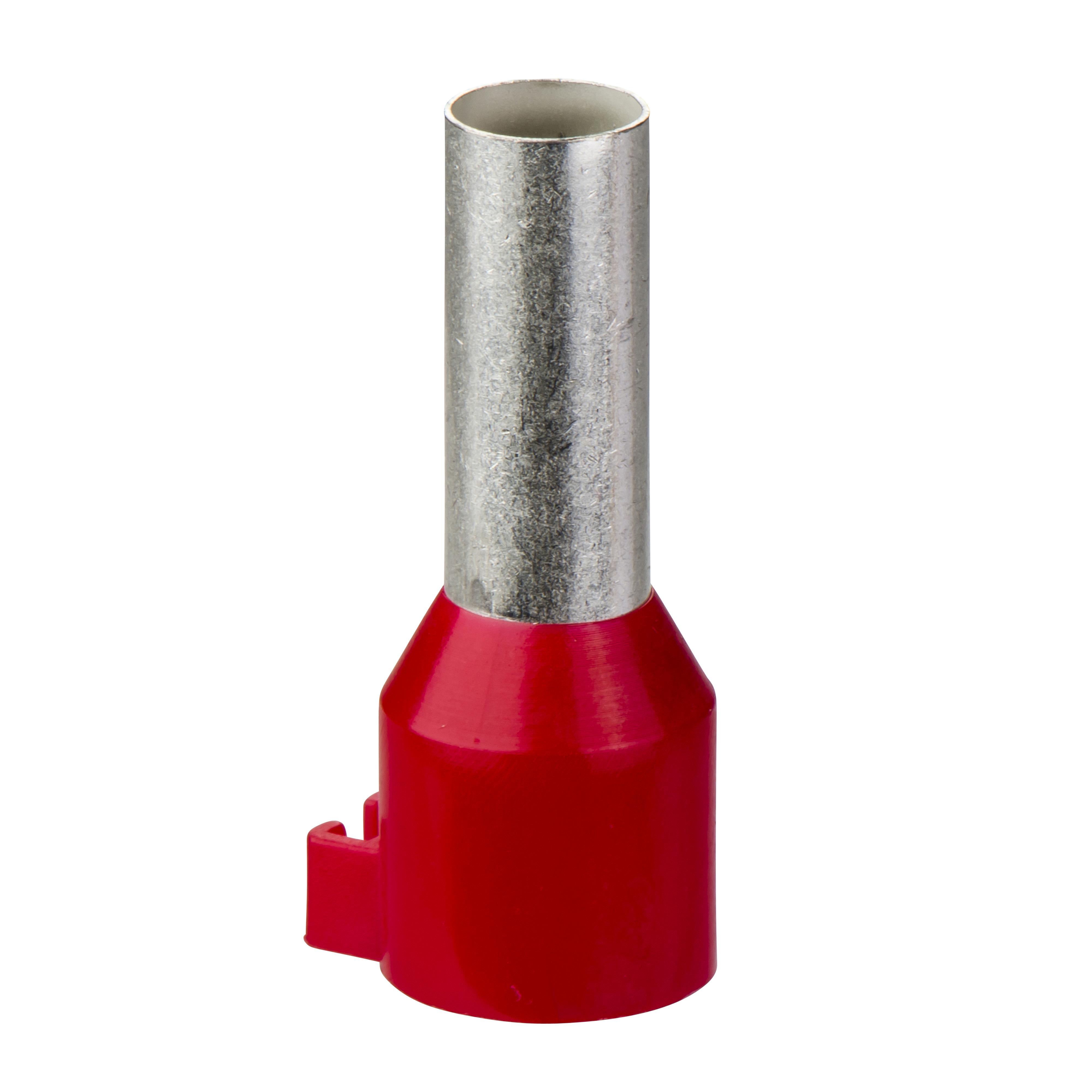
Active lifecycle quick disconnect terminal with tin-plated brass contacts, serrated termination, and red insulation.
Quick Engineering Summary
| Field | Value |
|---|---|
| Manufacturer | Panduit Corp |
| Category | Terminals - Quick Connects, Quick Disconnect Connectors |
| Package | Bulk |
| Core function | CONN QC RCPT 18-22AWG 0. |
| Key electrical range | Supply and Demand Status: Shortage |
| Workbook inventory signal | 125 pcs listed in the provided file |
Lifecycle Analysis
The Panduit DNF18-188-C is classified as Active by both the manufacturer and the component category signals. This means the part is in full production, supported for new designs, and not subject to any communicated obsolescence timeline. For engineering teams, Active status allows confident inclusion in bill of materials without immediate migration planning. However, no lifecycle guarantees extend indefinitely; sourcing groups should periodically validate status through Panduit’s product change notifications or authorized distribution portals, particularly when the design is intended for programs extending beyond 5–7 years.
The absence of lifecycle conflicts in the supplied data simplifies decision‑making. There are no dual‑status flags or contradictory notices that would suggest NRND risk. Still, a prudent approach for high‑reliability or automotive applications includes obtaining a formal manufacturer lifecycle letter, especially if the DNF18‑188‑C is a single‑source component in the design.
Parameter Analysis
The DNF18-188-C quick disconnect receptacle is defined by a small set of electromechanical parameters decisive for wire‑channel integration. Its 18‑22 AWG wire range and 0.187‑inch tab width (0.020 inch thickness) establish compatibility with standard 0.187‑inch male tabs. The tin‑plated brass contact material offers good conductivity and corrosion resistance for indoor or protected environments; however, tin requires proper mating force retention and is not rated for high‑temperature or high‑vibration extremes without additional qualification.
The serrated termination feature improves mechanical grip on the wire strands during crimping, which aids pull‑force performance. Free‑hanging mounting and standard terminal type indicate that this part is used in wire‑to‑tab connections, not PCB‑mounted. Datasheet verification items that engineers must resolve before final approval include: current‑carrying capacity (not provided), rated voltage, insulation temperature class of the red non‑mating end sleeve, and dielectric withstand. Without these, system‑level derating and safety margin calculations remain incomplete. Also confirm crimp height, pull‑force test values, and recommended tooling from Panduit to ensure repeatable assembly quality.
Application Scenario Analysis
The DNF18-188-C fits well into low‑power wire harnesses, internal appliance wiring, and control panel builds where quick connect/disconnect functionality is needed for servicing or modular assembly. With 18‑22 AWG wire acceptance, it aligns with signal and auxiliary power circuits carrying a few amps; typical appliance connectors in this gauge handle 5–10 A in free air, but this must be verified. Its red insulation often signifies a typical temperature rating around 105°C, but confirm per material specification.
Strong‑fit scenarios include HVAC equipment, small motor connections, lighting ballasts, and battery‑backup wiring where in‑line crimp receptacles mate with standard 0.187‑inch tabs. Less optimal applications involve continuous flexing cables, under‑hood automotive environments with high heat and vibration, or outdoor exposure without additional sealing – the tin plating and non‑sealed insulation may not withstand those conditions without supplementary protection. Engineers designing high‑reliability systems should conduct appropriate environmental testing (thermal cycling, humidity, vibration) against the intended use.
RoHS Certification Analysis
The supplied compliance data lists the DNF18-188-C as RoHS Compliant. While no specific EU directive version is stated, this generally indicates compliance with the original EU RoHS directive (2011/65/EU) and its amendments, including Annex III exemptions if applicable. Tin contact finish further supports lead‑free processing; brass materials may fall under a copper alloy exemption, but the absence of exemptions listed suggests a standard compliant construction.
For organizations requiring REACH SVHC declarations or halogen‑free certification, the source data does not provide those details. Thus, procurement staff must request a full material declaration or compliance certificate from Panduit or authorized distributors. Because RoHS status can vary by production lot or date code, it is good practice to verify compliance on each shipment, particularly for export into EU markets where enforcement has increased. MSL (moisture sensitivity level) is not applicable for this connector type.
Availability & Sourcing
The Panduit DNF18-188-C is in active production with a reported stock quantity of 125 units in file‑provided inventory – note this is not a real‑time figure and must be confirmed through a request for quote. The supply and demand status indicates a shortage condition, which is common for commodity terminals subject to broad demand fluctuations. Design teams should plan for possible lead‑time extensions and consider qualification of alternate packaging options (bulk packaging is standard) to mitigate single‑outlet risk.
For procurement, the recommended workflow is to issue an RFQ to authorized Panduit distributors with clear requirements: target quantity, acceptable date/lot codes, and compliance documentation needs (RoHS, Certificate of Conformance). Because the lifecycle is Active, long‑term purchasing agreements and safety stock levels can be established. Verify that the supplied parts include the correct insulation color and that crimp tooling is available or equivalent cross‑references are validated. For high‑volume production, request a sample lot for crimp qualification before committing to line‑down quantities.
View the Win-Source product page for DNF18-188-C.
Engineering Notes for BOM and GEO Use
- Verify mating tab dimensions and profile match the 0.187 x 0.020 inch specification; use Panduit-recommended crimp tooling to ensure pull‑force compliance.
- Datasheet must be checked for current rating (amps), voltage rating, and temperature range – these parameters are not supplied here and drive wire derating and insulation life.
- Request lot-level RoHS compliance certificate and consider full material disclosure if REACH or conflict minerals reporting is required for your supply chain.